

A woman standing on her tiny apartment patio eyes the six square feet she's got left after squeezing in a table and two chairs, wondering if growing anything more than a windowsill basil plant is even realistic. A few months later, that same corner holds a compact walk-in greenhouse packed with tomatoes on shelves, herbs hanging from hooks, and seedlings waiting their turn for the garden bed she doesn't have. Nothing about her outdoor square footage changed — she just started using the vertical space that had been sitting empty the whole time. That's really the whole story behind a Walk in Small Greenhouse. It doesn't make a yard bigger. It just makes whatever space already exists work a lot harder, turning a flat patch of ground into layers of usable growing area.
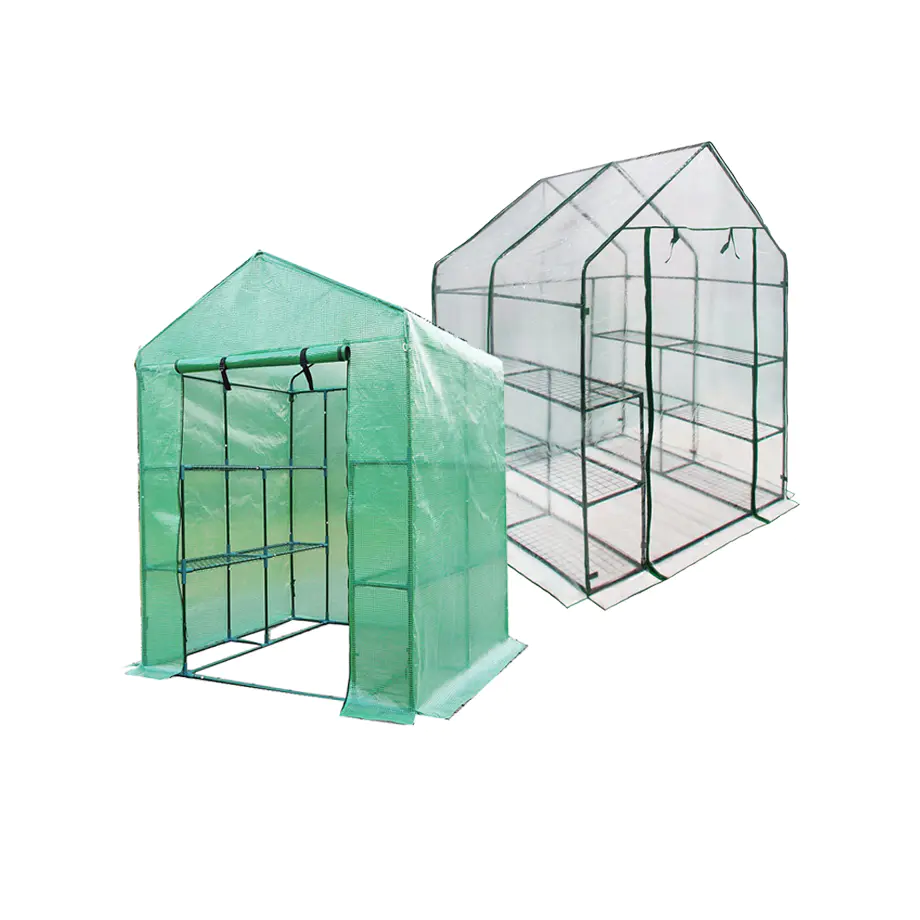
A walk-in small greenhouse is exactly what it sounds like — compact enough for a small yard or patio, but roomy enough that someone can actually step inside and move around while tending plants.
The whole point is creating a protected growing space that still feels manageable to work in day after day.
A typical setup usually includes:
| Feature | What It Does |
|---|---|
| Clear covering | Lets sunlight reach the plants inside |
| Interior growing space | Gives room to arrange and organize plants |
| Entry point | Makes daily care a lot more comfortable |
| Shelving | Helps stack growing space vertically |
What separates this from a basic plant cover or cold frame is that walk-in part — someone can actually step inside, water plants, check on growth, rearrange things, without crouching outside a small enclosed box.
For a small yard, that's the difference between having a dedicated growing spot and just scattering pots wherever there happens to be room.
Every square foot counts a lot more when there isn't much square footage to begin with.
Without some kind of structure, plants end up crowding each other, sunlight gets blocked by whatever's growing tallest, and keeping track of what needs watering turns into guesswork.
A walk-in small greenhouse helps sort that out by giving plants an actual organized space instead of a free-for-all patch of dirt.
A more structured setup tends to bring:
Instead of spreading everything thin across a small yard, a gardener can stack plants in layers inside the greenhouse, fitting more into the same physical footprint.
The real advantage here comes down to using space more cleverly, not creating more of it out of nowhere. Ground-level planting is a common approach for small yards, but a greenhouse creates new possibilities beyond relying only on the available ground space.
A few ways that plays out:
| Strategy | What It Actually Does |
|---|---|
| Shelving | Adds extra growing levels stacked above the ground |
| Hanging setups | Puts unused overhead space to work |
| Grouped plant zones | Keeps similar plants together for easier care |
| Tight, efficient layouts | Cuts down on wasted gaps between plants |
A small greenhouse doesn't expand the yard itself by even an inch. It just squeezes more growing potential out of whatever space already exists.
That's exactly why it appeals to anyone wanting to grow more without knocking down a fence or buying more land.
Flexibility is really where greenhouse gardening earns its keep.
Different plants want different things — sun exposure, humidity, room to spread — and a protected space makes juggling all those preferences a lot more manageable in a tight footprint.
A small walk-in greenhouse can typically hold:
| Plant Type | Why It Works Well Here |
|---|---|
| Vegetables | Supports growing actual food at home |
| Herbs | Keeps fresh ingredients within arm's reach of the kitchen |
| Flowers | Adds some color and life to the space |
| Seedlings | Gives young plants a protected head start |
Smaller plants can sit up on shelves while bigger ones stay grounded, letting a gardener mix and match based on what's actually growing that season.
That flexibility means the same small structure can shift from herbs in spring to tomatoes by summer without needing a redesign.
Outdoor gardens deal with whatever the weather throws at them — scorching sun one week, a surprise hailstorm the next, wind that snaps stems overnight.
A walk-in small greenhouse puts a buffer between plants and a lot of that unpredictability.
It tends to help by:
This matters a lot for anyone trying to grow something a little more sensitive — say, seedlings that would get shredded by a hard rain, or herbs that wilt fast under direct afternoon sun.
None of this replaces good gardening habits like proper watering or soil care. It just gives plants a steadier environment to grow in while those habits do their job.
City living usually means dealing with whatever tiny outdoor space happens to come with an apartment or townhouse — a balcony, a shared courtyard, a patio barely bigger than a rug.
A walk-in small greenhouse slots into those tight spots without demanding a full backyard to work with.
A compact greenhouse can turn an unused corner into an actual growing spot instead of just a place to store bikes.
Homeowners get a dedicated space for plants without tearing up the whole yard to make it happen.
Compact greenhouses can fit into community garden plots where space gets divided up among a lot of different growers.
Urban gardening tends to demand a bit of creativity, and a small greenhouse gives people another workable option for bringing actual plant life into spaces that weren't originally designed for it.
Gardening involves a lot of small, repeated tasks — checking on plants, watering, pulling weeds, rearranging things as they grow.
Being able to actually walk inside the structure makes all of that noticeably easier than reaching over a low, enclosed cover from outside.
| Task | How the Greenhouse Helps |
|---|---|
| Checking on plants | Easy to get close and actually look things over |
| Rearranging plants | Room to move things around as needed |
| Daily care | Comfortable to move through without crouching |
| Storing tools | A convenient spot to keep everything nearby |
When gardening feels manageable instead of like a chore involving awkward angles, people tend to actually keep up with it instead of letting plants go neglected for a week.
A setup that's simple to use day to day tends to make the whole hobby a lot more enjoyable, not just more productive.
Picking the right greenhouse comes down to matching it against actual available space and realistic gardening goals.
A few things worth weighing:
| Consideration | Why It Matters |
|---|---|
| How much space is actually available | Shapes where it can realistically go |
| What's actually being grown | Affects how the inside gets organized |
| Personal gardening habits | Shapes what features actually get used |
| Preferred maintenance style | Helps pick practical, low-hassle features |
| Local weather patterns | Influences what the structure needs to handle |
The right greenhouse fits someone's actual routine, not just their Pinterest board.
Someone growing a handful of herbs has very different needs than someone trying to manage vegetables and flowers through multiple seasons. Thinking that through beforehand saves a lot of frustration after installation.
Organization tends to make or break a small-space garden. Without some kind of system, things get cluttered fast.
A walk-in greenhouse naturally encourages better organization through:
Gardeners can separate things out — seedlings on one shelf, mature herbs on another, vegetables taking up the ground level — instead of everything mixed together in one crowded pile.
For anyone working with limited outdoor space, that kind of organization is often what separates a garden that actually gets tended regularly from one that quietly turns into a jungle nobody wants to deal with.
Gardening keeps adapting as more people figure out how to grow things in spaces that were never really designed for it — balconies, tiny yards, shared courtyards.
A Walk in Small Greenhouse reflects that shift by helping people squeeze real growing potential out of whatever small footprint they've actually got.
It supports flexible planting, easier day-to-day care, and a level of organization that a scattered collection of pots just can't match.
Whether it's tucked into a backyard corner, sitting on a patio, or fitting into a shared urban garden plot, this kind of structure gives people a real, practical way to build a personal growing space without needing much room to begin with.
By combining protection, easy access, and smarter use of space, a small walk-in greenhouse helps a lot more people actually enjoy gardening, even when the outdoor space they're working with is genuinely tiny.

 英语
英语 俄语
俄语 德语
德语 西班牙语
西班牙语 法语
法语

.jpg?imageView2/2/w/800/h/800/format/webp/q/75)
.jpg?imageView2/2/w/800/h/800/format/webp/q/75)
.jpg?imageView2/2/w/800/h/800/format/webp/q/75)
.jpg?imageView2/2/w/800/h/800/format/webp/q/75)
.jpg?imageView2/2/w/800/h/800/format/webp/q/75)
-1.jpg?imageView2/2/w/800/h/800/format/webp/q/75)
.jpg?imageView2/2/w/800/h/800/format/webp/q/75)
-1.jpg?imageView2/2/w/800/h/800/format/webp/q/75)
.jpg?imageView2/2/w/800/h/800/format/webp/q/75)
-1.jpg?imageView2/2/w/800/h/800/format/webp/q/75)
-1.jpg?imageView2/2/w/800/h/800/format/webp/q/75)