
Indoor gardening appeals to people who want to grow plants without a yard. Tight outdoor space, unpredictable weather, and the wish for a more controlled environment have pushed many toward growing indoors. A grow tent gives that effort a practical shape. It creates a dedicated space where plants grow under managed light, airflow, and conditions.
For a newcomer, though, putting a growing space together can feel like a lot. Each piece of equipment does a different job. Grow lights feed plant development, ventilation keeps air moving, and accessories help with temperature and humidity. Buying each item separately takes time and some understanding of how they fit together.
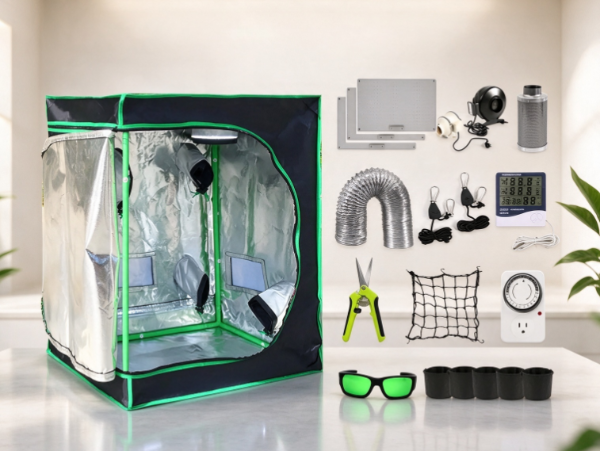
That's where a complete grow tent setup kit comes in. It usually bundles the essential items into one package and gives beginners an organized place to start. Rather than researching every component alone, new growers get a set of equipment designed for indoor growing.
Does having everything in one box make indoor gardening easy? Not automatically. Beginners still have to learn their plants, get comfortable with the equipment, and build good growing habits. The real value of a kit depends on its design, how well the components match, how simple it is to install, and whether it suits the plants you plan to grow.
A complete kit is a collection of equipment for building an indoor growing environment. The idea is to put related products together so growers can set up a planting area without buying each part on its own.
Contents differ between suppliers, but most kits revolve around a few basics.
The tent is the enclosed space for planting. It typically has a supporting frame and a fabric cover, and the inner surface is made to spread artificial light around the growing area.
The enclosure also separates the growing space from the rest of the room, which makes lighting, airflow, and other conditions easier to manage.
For beginners, the tent is the starting point. Its size, internal layout, access openings, and frame design all affect how easily the whole space comes together.
Natural sunlight indoors is often too weak or too inconsistent. Grow lights supply an artificial source that supports plant development.
Plants don't all need the same light. Some want strong exposure, while others do better under softer conditions. The lighting in a kit should match the intended use.
Beginners also need to learn how to position and run the lights. Wrong placement or an unsuitable lighting schedule can hurt plant growth.
Air movement is a key part of indoor gardening. Ventilation exchanges the air inside the tent and keeps the environment from going stale.
Many setups include an exhaust fan, ducting, or other airflow accessories. Some also add circulation fans to spread air through the growing area.
These parts serve different purposes. Exhaust equipment pushes air out of the enclosure, while circulation fans keep air moving inside.
Temperature and humidity affect how plants develop. Monitoring tools show growers what's happening inside the tent.
Depending on the package, you may get thermometers, humidity meters, or combined devices. They let beginners watch conditions change and spot anything that needs attention.
Some kits add accessories for daily growing tasks: hanging gear, timers, plant containers, duct connectors, and other installation materials.
Packages aren't identical. Read the product description closely to see what's included and whether you'll need to buy anything extra.
So a complete kit is more than a fabric box. It combines several elements that work together to form a manageable indoor growing space.
Starting out means making lots of small decisions. A beginner may grasp the idea of growing plants yet have little experience picking equipment or arranging a suitable environment.
A complete kit eases some of that by offering an organized equipment solution.
Buying parts one by one means comparing products and figuring out whether they'll work together. Unfamiliar terms in product descriptions make this even more confusing.
A kit puts related equipment in a single package. New growers get a clearer starting point and fewer separate purchasing decisions.
You'll still need to do some research, but the selection becomes easier to handle.
Compatibility is a common worry when building an indoor growing space.
A light has to fit the tent. Ventilation gear must connect to the available openings. Hanging accessories need to support the equipment they hold.
When the parts come as one coordinated package, some of these worries are easier to manage.
Beginners should still review the specifications and installation instructions, though. A package labeled complete doesn't always contain everything every growing situation needs.
New growers often can't decide where each component should go. They may buy equipment without thinking about the overall layout.
A complete kit offers a more structured arrangement. The tent, lighting, ventilation, and accessories are generally meant to serve related functions.
That makes the relationship between the parts of the growing environment easier to understand.
Buying items one at a time over weeks means repeated deliveries and more shopping decisions. A new component may also turn out not to fit the existing setup.
A package with several essentials cuts down on these problems. Beginners can set up the main growing area first and decide later whether extra accessories are worth it.
How convenient this is depends on what's actually in the package, so tell essential equipment apart from optional extras.
Installation worries many people who've never used indoor growing gear. A complete kit can make it more straightforward, but the difficulty depends on the structure and how clear the instructions are.
Most grow tents go together in a fairly simple way. You connect the frame to form the structure, fit the fabric cover around it, and then install the light and ventilation equipment.
The general process involves a few tasks.
The frame holds up the tent and provides attachment points for other equipment. Beginners should identify the different frame sections before they start.
Connecting parts in the right order produces a stable structure. The cover should fit well, without too much stretching or loose spots.
The installation spot matters too. Leave enough room around the tent for access, adjustments, and routine maintenance.
The light usually hangs from the top of the tent. Its position should let light reach the intended growing area.
Follow the equipment instructions when installing and adjusting the lighting, and make sure the supporting accessories are secure.
Ventilation gear may need duct connections and proper mounting positions. Beginners should understand the direction of airflow and what each fan is for.
An exhaust fan should be set up to pull air out of the enclosure, while circulation equipment should spread air inside it.
Wrong installation can cut airflow efficiency or add needless noise.
Arrange electrical cables, timers, and other accessories with care. Loose cables get hard to manage and can get in the way of routine tasks.
Keep the growing area accessible so you can inspect plants and adjust equipment without awkward reaching.
For beginners, clear instructions and an uncomplicated design make the first setup less stressful. If the instructions are vague or parts need fiddly adjustments, a bit of outside help can be useful.
A tent creates an enclosed planting area, but the enclosure alone doesn't give plants everything. Lighting and ventilation are the two systems that help keep conditions right.
Knowing what each does helps beginners dodge common mistakes.
Plants use light for photosynthesis, the process that makes the energy they need to grow.
Outdoors, the sun supplies it. Indoors, plants depend on artificial lighting when natural light is limited.
Plant varieties differ in what they need. Leafy plants, flowering plants, and young seedlings can respond differently to light intensity and exposure.
Learn what your chosen plants need before you set a lighting schedule. Leaving the lights on longer doesn't automatically help. Too much exposure can stress some plants.
The distance between the light and the plant canopy matters as well. Follow the equipment guidance and watch how your plants react.
Plants need fresh air, and an enclosed space can see swings in temperature and humidity. Without good airflow, moisture can build up and the environment gets hard to control.
Ventilation equipment swaps air between the tent and the room. Circulation fans keep air moving inside and reduce dead spots.
The two functions are related but not interchangeable. Exhaust ventilation removes air, while circulation spreads it around.
Grow lights give off heat while running. Depending on the gear and the room, that heat can change the temperature inside the tent.
Ventilation manages the air in the enclosure, while lighting supplies the energy plants need to develop.
Plan the two together when designing an indoor growing space.
For beginners, grasping this link is more useful than switching everything on at once. Regular observation shows whether the lighting and ventilation suit the plants.
A full set of equipment doesn't guarantee smooth growing. Beginners can still run into trouble, because indoor gardening takes attention to plant needs and changing conditions.
Some mistakes come from installation, while others come from unrealistic expectations or too little monitoring.
The tent should fit its location. Beginners sometimes focus on the inside growing area and forget the space needed for setup and upkeep.
The room should let the tent doors open and leave access to fans, cables, and other equipment.
Think about height too. Hanging lights and ventilation accessories take up internal room, so the usable growing area can be smaller than the enclosure's overall size.
New growers may assume stronger lighting or longer exposure always helps.
In truth, plants have different light needs. Too much light can cause stress, while too little can hinder healthy development.
Find out what your plants need, and adjust lighting gradually.
A grow tent is an enclosed environment, so conditions shift when lights, fans, and other gear are running.
Some beginners watch the lighting but forget temperature and humidity. Then it's hard to work out why the plants look stressed.
Use monitoring tools as part of regular growing, not as optional decoration.
Installing an exhaust fan doesn't guarantee good air circulation throughout the tent.
Fan location, duct layout, and the internal arrangement all influence airflow. Position equipment according to its function.
Also avoid blocking ventilation openings with containers or other accessories.
Beginners may believe a more complicated setup gives better results. They add extra lights, fans, filters, and accessories without knowing whether they're needed.
A more practical path is to begin with the essentials and see how the environment responds. Add components when a clear need shows up.
No single kit suits every beginner. Different plants, spaces, and personal needs call for different equipment.
Before buying, weigh these factors.
| Selection Factor | What Beginners Should Consider |
|---|---|
| Tent size | Available room space and intended planting area |
| Tent structure | Frame stability, fabric quality, and access design |
| Grow lighting | Compatibility with the intended plant varieties |
| Ventilation | Suitable air exchange and internal circulation |
| Monitoring tools | Ability to observe temperature and humidity |
| Installation | Clear instructions and manageable assembly |
| Accessories | Whether essential mounting and connection parts are included |
| Maintenance | Ease of cleaning, adjustment, and component replacement |
Let the plants guide the equipment. Seedlings, herbs, leafy vegetables, and flowering plants can have different environmental needs.
Settle on what you want to grow before comparing packages. That prevents needless purchases and makes it easier to pick suitable lighting and ventilation.
The tent should match the room where it will stand. A large enclosure offers more planting space but also needs more room for access and equipment.
A smaller setup may be easier to organize and maintain while you're learning.
Check available height as well, especially when equipment hangs above the plants.
A complete package should hold equipment that installs and runs as a coordinated system.
Look at how the tent, lighting, ventilation, and mounting accessories relate to one another.
Confirm whether the package includes the necessary connections and whether you'll have to buy anything else.
Good installation guidance makes a real difference for inexperienced growers.
Instructions should cover assembling the tent, installing the lights, arranging ventilation, and running the included accessories.
Access to replacement parts and technical help is also useful when equipment needs adjusting or servicing.
In many cases, yes. Most basic indoor setups are built around understandable functions: providing light, moving air, and monitoring conditions.
Running the equipment and growing healthy plants are two separate skills, though.
A beginner may put the tent together perfectly and still struggle with plant care. Watering, choice of growing medium, nutrients, and watching the environment all affect how plants develop.
Learning goes more smoothly when new growers tackle each task on its own.
Knowing what each part does prevents needless tinkering. Understand why the tent is enclosed, how the lights support growth, and what the ventilation is meant to achieve.
That basic knowledge makes problems easier to spot.
Choose plants that fit your equipment and space. Beginners may find it easier to start with plants whose care is manageable in their setting.
Research each plant's growing conditions instead of assuming every variety can share the same light, water, and humidity.
Indoor gardening depends on observation. Leaf color, growth patterns, and general appearance can change when conditions are wrong.
Check the growing area often and note anything unusual. That shows you how plants respond when you adjust lighting, airflow, and watering.
A kit pairs electrical equipment with an environment full of water and humidity, so cable placement, connections, and installation need care.
Follow the manufacturer's safety instructions, keep electrical connections away from water, and don't overload power outlets.
Anything beyond routine user maintenance on the electrical side should go to a qualified professional.
A complete grow tent setup kit can give beginners a structured way into indoor gardening. How useful it turns out to be depends on whether the components fit the plants, whether installation is manageable, and whether the grower is willing to learn how the indoor environment works.

 英语
 俄语
 德语
 西班牙语
 法语