Ice Bubble Bag Kit Custom

Home / Products / More Garden Supplies / Compost Supplies / Ice Bubble Bag Kit
  • str_replace('
  • str_replace('
  • str_replace('
  • str_replace('
  • str_replace('
  • str_replace('
  • str_replace('
  • str_replace('
  • str_replace('
  • str_replace('
  • str_replace('
Ice Bubble Bag Kit

Ice Bubble Bag Kit

Bubble Bag Kit for Herbal and Dry Ice

1 gallon 5 Gallon 3/4/5/8 Bags Nylon All Mesh Plant Extraction Bubble Hash Herbal Smash Ice Bubble Filter Bags with Pressing screen

These bubble bags are used to extract plant essence, it allows separating your herbal extract into different grades; different plants have varying crystal sizes so this will let you keep the bestpossible extract from your garden.

Contact us

  • Details
  • leave a message
  • The matching screen is a high-quality monofilament screen, the nylon screen is heat stamped to keep the fibers from shifting, retaining a consistent pore size and preventing contamination of your extracts.

    The bubble bags use high quality material which has a PVC free waterproof coating of nylon and is triple stitched with 100% nylon bonded thread for extra strength and longevity.

    Product Name
    ICE Extraction Bag / Herbal Bubble Bag
    Material
    Oxford, nylon mesh
    Capacity
    1 or 5 gallon
    Quantity
    3/4/5/8 bags 
    Color
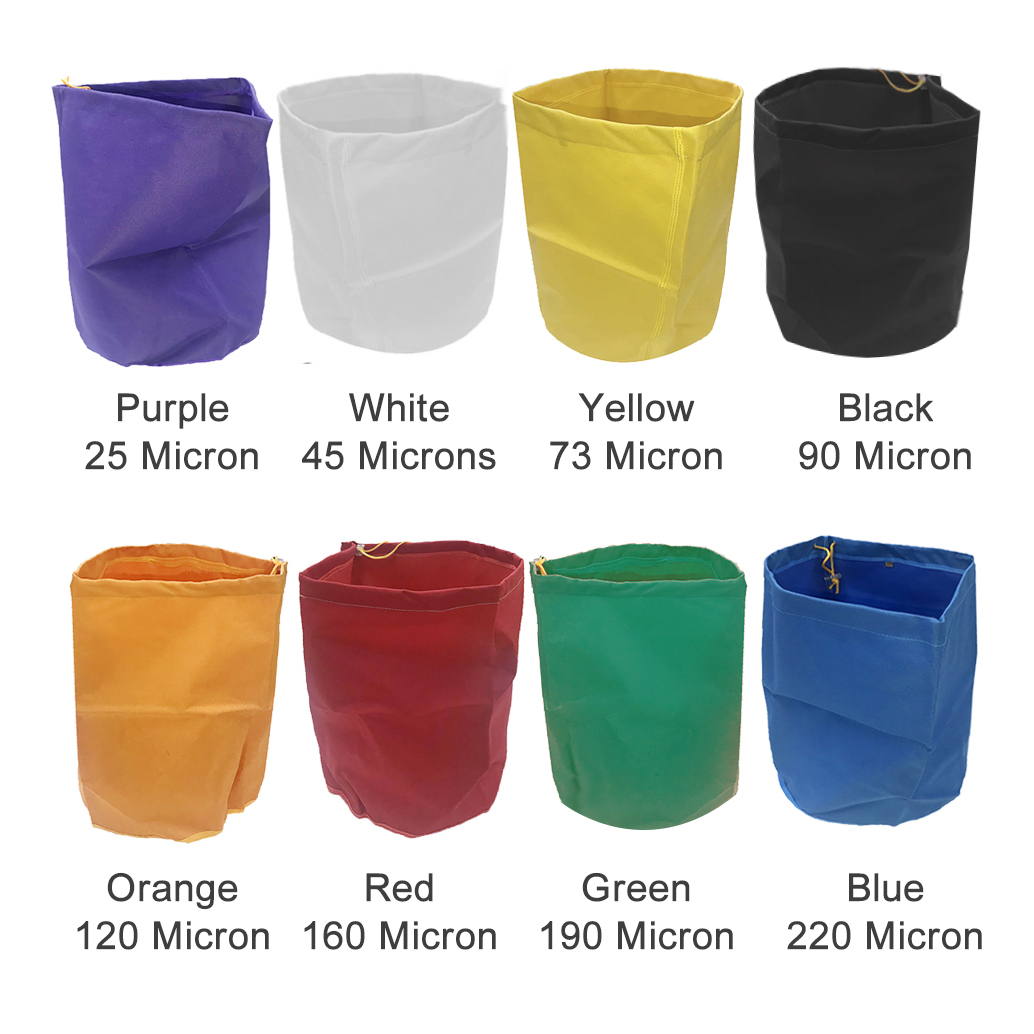
    purple, yellow, red, blue, orange, black, white, green
    Features
    1) Easy to clean and can be used repeatedly. Prevents from flaking and chipping after several uses.

    2) Bubble Bags offer 8-layer of industrial-grade filtration allowing you to easily and safely extract the essential oils and valuable herbal resins without any chemical or binding agents.

    3) Included a 25 microns pressing screen and a black carrying bag for easy storage. Pressing screen removes leaf, dust and other contaminants to extract valuable high quality herbal crystals.

    4) Bags are labeled and color coded to corresponding micron rating. Larger bag selection permits for more precise filtering into different grades.

    ice bubble bag kit
  • If you want to know us, please contact us!

    We always adheres to the quality policy of "Innovation is infinity, to keep improving",adhering to the enterprise tenet of "Veracity,Customer regarded supreme".

    • Company.
    • E-mail*.
    • Name*.
    • Phone.
    • Message*.
About Sunshine
Since 2011
SUNSHINE GARDEN is leading in manufacturing home garden and hydroponic grow equipment in China with 12 years OEM & ODM experience. We are famous Ice Bubble Bag Kit supplier and manufacturer in China. Our main products can be divided into two series, including Hydroponic Grow Equipmentslike Full completed grow tents and kits, Grow tables and trays, Grow bags, Seeding propagation, another series is Home Garden Products like Mini Greenhouses, Hanging planters, Garden waste bags and so on. Custom made Ice Bubble Bag Kit to help build your perfect garden and hydroponic grow system.
View More

Factory Tour

Offers everything you need to build complete gardening and hydroponic systems.

News
Suitable Color Temperature and Light Efficiency of CMH Sodium Light
Feb 06.2026
Definition of color temperature: Color temperature, measured in Kelvin (K), indicates the hue of light emitted by a lamp. It plays a crucial role in both human perception and plant growth. Typical CMH Sodium Light ranges: CMH Sodium Lights operate between 3100K and 4200K, providing a balanced spectrum suitable for various horticultural applications. Impact on plants and humans: Lower color temperatures (around 3100K) offer warmer, more reddish light that enhances flowering stages, while higher color temperatures (around 4200K) provide cooler, bluish light that promotes vegetative growth. Advantages of CMH Light Spectrum Broad-spectrum lighting: Unlike traditional HPS lamps that primarily emit yellow-orange light, CMH Sodium Light delivers a wider spectrum, including UV-A and UV-B light. Enhanced photosynthesis: The inclusion of blue, red, and UV wavelengths allows plants to utilize light more efficiently for both vegetative growth and flowering, enhancing overall yield. Closer to natural sunlight: The spectrum mimics the sun’s natural light more closely, reducing plant stress and producing healthier growth patterns. Evaluating Light Efficiency Lumens per watt: CMH Sodium Lights typically offer 80–100 lumens per watt, which is more efficient than traditional HPS lighting in similar power ranges. Par value and photon flux: These lights deliver high Photosynthetically Active Radiation (PAR), ensuring plants can absorb and use energy effectively. Energy-saving benefits: Higher efficiency means lower electricity consumption for the same light output, which is particularly beneficial for indoor growers managing operational costs. Practical Implications for Indoor Horticulture Customizing color temperature for plant stages: Vegetative stage: Use CMH lamps around 4000–4200K to encourage leafy growth. Flowering stage: Switch to 3100–3500K to stimulate bud formation and blooming. Mixing CMH with other light types: Some growers combine CMH lights with LEDs or HPS lamps to fill spectrum gaps, enhancing both growth speed and quality. Optimizing light placement: Proper positioning ensures uniform coverage, improving light penetration to lower leaves and avoiding energy waste. Comparing CMH with Other Lighting Options CMH vs HPS: While HPS lamps produce higher light intensity, they lack a full spectrum and may cause nutrient deficiencies or uneven growth. CMH lights provide a more balanced spectrum that reduces plant stress. CMH vs LEDs: Modern LED systems allow precise wavelength control but may require high upfront costs. CMH offers an affordable, reliable full-spectrum solution with proven effectiveness. Longevity and maintenance: CMH bulbs generally last longer than HPS lamps, maintaining consistent color temperature and light intensity over time, which helps reduce frequent replacements and operational disruptions. Considerations for Optimal Performance Ballast compatibility: Using the correct ballast ensures stable power delivery, preserving both light efficiency and color spectrum integrity. Temperature management: CMH lights generate less heat than HPS lamps but still require adequate ventilation to prevent canopy overheating. Regular monitoring: Checking for color shift or intensity drop helps maintain suitable plant growth conditions, as prolonged use can slightly alter the spectrum over time. CMH Sodium Light offers versatile color temperature options and efficient light output, making it a good choice for both horticultural and indoor lighting applications. Its broad spectrum closely resembles natural sunlight, promoting healthy plant growth throughout different stages. By understanding the specific color temperature ranges, improve yield and reduce energy consumption. Compared to HPS or conventional lighting, CMH lights provide a balanced combination of quality light, energy efficiency, and long-term reliability, making them an essential tool for modern indoor horticulture.
Advantages and features of large plastic storage sheds
Jan 30.2026
As a manufacturer specializing in the design and production of large plastic storage sheds, we approach this product category from an engineering and manufacturing standpoint rather than a retail-driven one. For B2B buyers, project planners, and brand owners, understanding the real advantages and structural features of large plastic storage sheds starts at the source—how they are designed, manufactured, and validated for long-term use. Below, we outline the key advantages and functional features of large plastic storage sheds, based on our experience in large-scale plastic structure manufacturing. 1. Structural Stability Designed for Large-Format Applications One of the core advantages of a large plastic storage shed lies in its engineered structural system. Unlike small consumer-grade sheds, large-format designs require careful consideration of load distribution, wind resistance, and long-term deformation control. From a manufacturing perspective, this is achieved through: Reinforced wall and roof panels with integrated rib structures Load-bearing frame design at corners and high-stress connection points Modular panel systems that evenly distribute structural forces These features are not added at the retail level; they are built into the product during the design and mold-development stage. 2. Material Performance Optimized for Outdoor Environments Material selection is a defining feature of high-quality large plastic storage sheds. As a factory, we control material specifications to ensure: Use of high-density HDPE or PP compounds for enhanced strength and impact resistance UV-stabilized formulations to prevent fading, cracking, and embrittlement Consistent material flow during injection molding to avoid internal weak points This material-driven approach ensures that large plastic storage sheds maintain dimensional stability and mechanical performance throughout extended outdoor use. 3. Scalable Design for Industrial Manufacturing A key advantage of plastic storage sheds at scale is their suitability for standardized, repeatable production. From a manufacturing standpoint, large plastic storage sheds are designed with: Modular components suitable for mass production Mold structures optimized for dimensional consistency Assembly systems that reduce tolerance stacking across large spans This allows us to deliver consistent quality across large production volumes—an essential factor for OEM, ODM, and long-term B2B partnerships. 4. Low Maintenance as a Functional Feature While often highlighted at the retail level, low maintenance is fundamentally a result of manufacturing decisions. Large plastic storage sheds benefit from: Corrosion-resistant materials that require no surface treatment Integrated color-in-material solutions, eliminating repainting Smooth, non-porous surfaces that resist moisture and mold These features reduce lifecycle costs and make plastic sheds suitable for commercial, industrial, and institutional applications. 5. Design Flexibility for OEM and Custom Projects As a manufacturer, one of the very important features we offer is design adaptability. Large plastic storage sheds can be customized in terms of: Dimensions and internal layouts Door systems, ventilation, and roof structures Surface textures, colors, and branding elements This flexibility allows brand owners and project buyers to develop differentiated products without compromising structural integrity or production efficiency. Manufacturer Insight: Advantages That Start at the Factory Level The true advantages of large plastic storage sheds are not defined by retail descriptions, but by how the product is engineered, tested, and manufactured. From raw material formulation to mold precision and assembly validation, every stage of production contributes directly to performance, durability, and consistency. About Us We are a direct manufacturer of large plastic storage sheds, with in-house capabilities covering product design, mold development, and large-scale production. Our focus is on providing stable, scalable manufacturing solutions for OEM, ODM, and B2B clients worldwide. For partners seeking a manufacturing source rather than a trading intermediary, product reliability begins at the factory.
Is it cheaper to build a shed or buy one premade?
Jan 27.2026
When evaluating storage solutions, one common question arises: Is it cheaper to build a shed from scratch or buy a premade one? From a retail perspective, the comparison often focuses on upfront price alone. However, as a manufacturer of large plastic storage sheds, we view this question through the lens of materials, labor efficiency, structural performance, and long-term cost. This article explores the real cost considerations behind building versus purchasing a premade shed—particularly for large-format plastic storage structures. The True Cost of Building a Shed from Scratch Building a shed independently may appear cost-effective at first glance, especially when material costs are considered in isolation. However, for wide-span or large-capacity structures, the hidden costs add up quickly. From a manufacturing standpoint, self-built sheds typically involve: Higher labor input and extended construction time. Limited access to engineered materials and structural testing. Greater variability in quality, alignment, and load resistance. For large sheds, ensuring consistent wall alignment, roof strength, and long-term stability without industrial tooling or molds is challenging and often leads to higher maintenance or early replacement costs. The Manufacturing Economics of Premade Large Plastic Storage Sheds Premade large plastic storage sheds benefit from industrial-scale efficiencies that individual construction cannot replicate. As a factory, we optimize cost and performance through: High-volume material procurement with controlled formulations Precision injection molds that ensure structural consistency Standardized assembly systems that reduce labor time on site These efficiencies allow premade sheds to deliver predictable quality at a lower total cost when labor, waste, and lifecycle maintenance are considered. Upfront Cost vs. Long-Term Value While DIY construction may seem cheaper initially, the long-term cost often tells a different story. Premade large plastic storage sheds are designed to: Resist corrosion, moisture, and UV exposure without surface treatment Maintain dimensional stability over years of outdoor use Require minimal maintenance compared to wood or metal structures From a manufacturer’s perspective, the lower lifecycle cost is a direct result of material selection and engineered design—not a retail pricing strategy. Scalability and Consistency: An Often-Overlooked Factor For commercial projects, property developments, or B2B buyers, cost is not limited to a single unit. Premade large plastic storage sheds offer: Consistent specifications across multiple units Predictable installation time and labor requirements Easier logistics planning and quality control These advantages are difficult to achieve when sheds are built individually on-site. So, Is It Cheaper? From a purely short-term, single-unit material perspective, building a shed may appear cheaper.From a manufacturing and lifecycle perspective, premade large plastic storage sheds are generally more cost-efficient, especially for large formats and long-term use. The cost advantage comes not from retail markup reduction, but from: Engineered structures Manufacturing scale Controlled material performance Manufacturer Insight: Cost Efficiency Starts at the Factory As a manufacturer, we design large plastic storage sheds with cost efficiency in mind from the earliest stages—mold design, material formulation, and structural optimization. What end users see as a “premade product” is, in reality, the result of hundreds of manufacturing decisions aimed at balancing durability, stability, and total cost of ownership. About Us We are a direct manufacturer of large plastic storage sheds, focusing on product engineering, mold development, and large-scale production. Our role is not retail distribution, but creating reliable, repeatable storage solutions for OEM, ODM, and B2B partners. When evaluating whether to build or buy, the real cost difference begins at the factory level.
Improving Light Efficiency Using Grow Tent Kit Accessories
Jan 27.2026
Reflective Materials in Grow Tents One of the key components in indoor horticulture is the Grow Tent Kit Accessories, particularly reflective materials. These materials play a crucial role in directing light efficiently toward plants, ensuring suitable growth and improving energy use. By understanding the function of reflective surfaces and employing proper strategies, growers can significantly improve light distribution, increase photosynthesis, and achieve better yields. Purpose of Reflective Materials Reflective materials in grow tents serve several essential purposes: Enhanced Light Distribution: Reflective walls redirect light from grow lights to areas that would otherwise receive minimal exposure, ensuring even coverage across all plants. Increased Photosynthetic Efficiency: By improving the amount of light reaching plant leaves, reflective surfaces allow plants to absorb more photons, promoting photosynthesis and healthier growth. Energy Savings: Reflective materials reduce wasted light by keeping illumination within the tent, which decreases the need for additional lighting and lowers electricity costs. Minimized Hotspots: High-quality reflective surfaces can diffuse light, reducing concentrated bright spots that may damage plant tissue or create uneven growth patterns. Common Types of Reflective Materials Grow tents utilize various materials for reflectivity, each with unique properties: Mylar: Highly reflective and durable, Mylar is widely used due to its ability to reflect up to 90–95% of light while being easy to clean. White Fabric (Polyester or Canvas): Provides diffuse reflection, which spreads light evenly and prevents sharp hotspots. Aluminum Foil: Although inexpensive, it is less effective due to uneven reflection and potential hot spots; not typically recommended for professional setups. Titanium Oxide Coatings: Used in some advanced tents, offering diffuse and high-intensity reflection for good light distribution. Strategies to Improve Light Utilization To improve the benefits of reflective materials in grow tents, consider the following strategies: Maintain Clean Surfaces: Dust, dirt, or water stains on reflective walls reduce efficiency. Regularly wipe down Mylar or white fabric walls to maintain reflectivity. Optimize Light Positioning: Hang grow lights at appropriate heights and angles to ensure light hits reflective surfaces before reaching plants. Use adjustable light hangers to shift light distribution as plants grow. Utilize Diffusers or Secondary Reflectors: Mirrors or secondary reflective panels can redirect light to shadowed areas. Diffusers soften intense light and reduce hotspots, promoting uniform plant growth. Match Reflectivity to Growth Stage: Seedlings require gentle, diffuse light; use white reflective materials for soft distribution. Flowering plants benefit from intense, directed light; Mylar’s high reflectivity is ideal. Regular Inspection: Check for tears, wrinkles, or peeling in reflective materials, as these defects reduce light efficiency. Replace worn sections promptly to maintain consistent growth conditions. Additional Benefits of Effective Reflective Use Enhanced Yield: More light reaching the canopy improves flowering, fruiting, and overall biomass. Temperature Control: Reflective walls can help balance heat by dispersing light energy more evenly. Flexibility: A Proper reflective setup allows for multi-tiered plant arrangements without compromising light exposure. Reflective materials are a vital element in Grow Tent Kit Accessories, ensuring that every photon of light contributes to plant growth. By selecting high-quality reflective surfaces, maintaining them, and positioning lights strategically, growers can improve light utilization, promote healthier plants, and achieve higher yields. Attention to these details ensures that the indoor garden operates efficiently, making use of both lighting resources and energy investments.

Recommended Products

Ice Bubble Bag Kit

Ice Bubble Bag Kit

Bubble Bag Kit for Herbal and Dry Ice1 gallon 5 Gallon 3/4/5/8 Bags Nylon All Mesh Plant Extraction ...

Compost Tea Bag

Compost Tea Bag

Compost Tea Brewing Bag400 micron nylon mesh compost tea bagsDurable Nylon Handle Heavy Harvest Bubb...

Compost Bin Tumbler

Compost Bin Tumbler

Compost Bin TumblerNew Design Outdoor Garden Compost Bin Plastic Composting Barrels Compost Bin Tumb...

Canvas Garden Leaf Tarp Bag

Canvas Garden Leaf Tarp Bag

Leaf Waste TarpNew Arrival Multi-size Outdoor Waterproof Heavy Duty Poly Yard Clean Up Waste Tarp Be...

Leaf Waste Tarp

Leaf Waste Tarp

Reusable Gardening Clean Up Lawn Garden Yard Leaf Waste Tarp with Strong Corner Handles1) Fit Everyw...

Green Garden Waste Bags

Green Garden Waste Bags

16 32 72 132 gallons reusable heavy duty leaf dumpster trash bag large garden waste bag with handles...