
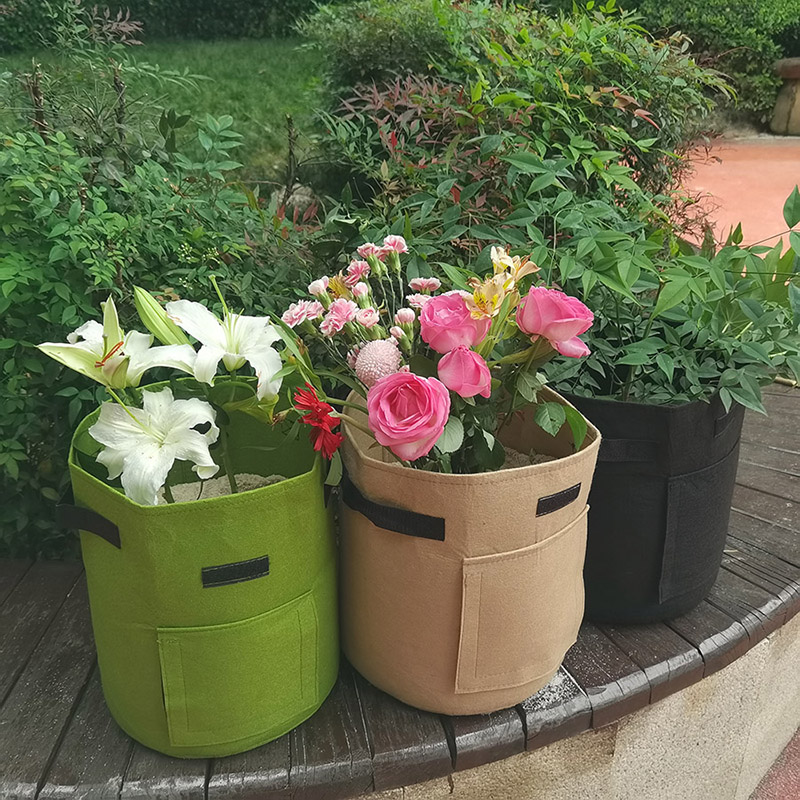
When people start growing plants at home, the container often shapes more than expected. It affects how water behaves, how roots move, and even how often care is needed. Among different container choices, fabric-style options have become more common in balconies, patios, and indoor corners.
A Felt Pot sits in this category. It is not rigid, and it doesn't behave like ceramic or plastic containers. Instead, it interacts with soil and air in a more open way, which changes the daily rhythm of plant care in small but noticeable ways.
At a glance, a clear difference is the structure. Traditional pots hold soil inside a hard shell. A Felt Pot uses a soft, fabric-like wall that behaves differently when it meets water and roots.
A few practical differences people usually notice:
In everyday use, this changes how the plant "fills" the space. Instead of circling tightly around the edge, roots often spread in a less uniform pattern. Some growers like this because it feels closer to how plants behave in open soil.
There is also a simple practical reason for attention: these containers are easy to move, store, and adjust in small growing areas without much effort.
Roots do not only grow downward. They react to moisture, space, and even air exposure. With a Felt Pot, air can pass through the sides instead of being blocked completely.
This creates a slightly different environment:
| Container type | Side airflow | Root movement pattern |
|---|---|---|
| Hard plastic pot | Very limited | Often circles along the wall |
| Ceramic pot | Low | Mostly downward expansion |
| Felt Pot | Continuous through fabric | More outward spread and adjustment |
This doesn't automatically improve or reduce growth outcomes. It simply changes the environment roots respond to.
Water behavior is often one of the noticeable changes when switching to fabric-based containers. Instead of acting like a sealed space that keeps moisture inside, a Felt Pot allows water and air to interact through its material, which gradually changes how soil feels over time.
Moisture does not stay evenly distributed for long periods. The outer edges of the soil tend to feel drier earlier than the center, especially when the container is placed in warmer or more open environments. At the same time, air movement through the fabric influences how quickly evaporation happens, so the overall soil condition can shift depending on placement and surrounding weather.
Because of this, watering habits often adjust without strict planning. Some people naturally check the soil more frequently, especially during warmer or wind-exposed conditions, while others make small changes to their soil mix to help retain moisture a bit longer.
A Felt Pot does not function like a rigid container that locks water in one place. Instead, it behaves more like a responsive layer between soil and the surrounding environment, where moisture and airflow are always in subtle balance.
Which Plants Are Commonly Suitable for Felt Pot Growing in Home and Garden Use
| Plant type | Growth behavior | Container interaction |
|---|---|---|
| Herbs | Steady, manageable growth | Usually adapts well |
| Leafy greens | Regular regrowth cycles | Responds to consistent care |
| Fruiting plants | Needs stable support | Works with attention to watering |
| Decorative foliage | Varies widely | Depends on placement and care |
The main point is balance. Plants that tolerate slight shifts in moisture and airflow tend to adapt more easily.
In small gardening spaces, containers are not just functional items but part of the overall spatial arrangement. Plant placement often changes over time, and flexibility becomes an important factor in maintaining a workable setup.
A Felt Pot is often chosen in these environments for several practical reasons:
In many small spaces, plant arrangement is not fixed. The direction of sunlight, airflow around windows or balconies, and even daily use of the space can influence where plants are placed. This means containers that can be adjusted with minimal effort tend to fit more naturally into these environments.
A Felt Pot also works well in areas where available space does not follow standard shapes. Instead of requiring a defined platform or rigid support, it can be positioned in narrower or uneven areas, which makes it easier to integrate into compact gardening setups.
Choosing the right size is often less about appearance and more about how the root system behaves. A container that feels comfortable to the eye may still be too narrow or too deep for the plant's growth pattern. When the space around the roots is too tight, care becomes less predictable. When it is too large, moisture may stay longer than expected in some areas of the soil.
The better approach is to look at how the plant grows rather than how the container looks on a shelf. Plants with compact roots usually need a different setup from those that spread more freely. Some plants stay near the surface, while others move deeper into the soil and need a little more room below.
| Plant growing habit | Container feel | Practical fit |
|---|---|---|
| Compact root growth | Snug and controlled | Often easier for small herbs and smaller greens |
| Deeper root movement | More open and balanced | Better for plants that need extra room below |
| Wider spreading roots | Flexible around the sides | Useful when the plant expands steadily |
| Young starter plants | Small and manageable | Helps avoid excess unused soil |
In everyday use, the right choice often shows itself after the plant has settled in. If the roots seem crowded too quickly, the container may have been too limited. If the soil stays wet longer than expected, the space may have been larger than needed for that plant stage.
Indoor use brings a different set of concerns. The container is no longer sitting in open garden conditions, so the room itself becomes part of the growing environment. Floors, furniture, airflow, and light all influence how the setup behaves.
A Felt Pot can work indoors, but the surrounding area needs a bit more attention. Since moisture can move more freely through the fabric, the surface underneath should be able to handle occasional dampness. Some people place the container in a tray or on a protected surface so the space stays tidy and easier to maintain.
Placement also matters. A corner with weak airflow may hold moisture differently from a brighter spot near a window. That affects both the plant and the room around it. Indoors, the goal is usually not just plant care but also keeping the growing area visually calm and easy to manage.
It helps to think of the container as part of the room rather than something separate from it. When the setting is simple and stable, the plant usually becomes easier to care for over time. When the surrounding space is crowded or uneven, the setup may need extra attention to stay clean and balanced.
Longer use depends on how the container is handled after watering and during storage. A fabric-style container can stay useful for a long time when it is not kept damp for too long or left in a closed, poorly ventilated place. The condition of the container often reflects small habits rather than one large maintenance step.
After watering, drying matters. If the container stays wet for long periods, odor or surface buildup can appear more easily. In many cases, simply allowing it to dry in open air makes a noticeable difference. Cleaning should also be gentle, since rough handling can affect the fabric structure and shape.
The setting matters too. A shaded, still corner may hold moisture more than a space with better airflow. When the container is not in use, keeping it fully dry and stored in a clean area can help preserve its condition. Many of the problems people notice later are linked to trapped dampness rather than the container itself.
Over time, good upkeep is usually less about special treatment and more about consistency. Dry it well, store it well, and check it from time to time. That routine tends to keep the container in a more reliable condition for regular gardening use.

 英语
英语 俄语
俄语 德语
德语 西班牙语
西班牙语 法语
法语

.jpg?imageView2/2/w/800/h/800/format/webp/q/75)
.jpg?imageView2/2/w/800/h/800/format/webp/q/75)
.jpg?imageView2/2/w/800/h/800/format/webp/q/75)
.jpg?imageView2/2/w/800/h/800/format/webp/q/75)
.jpg?imageView2/2/w/800/h/800/format/webp/q/75)
-1.jpg?imageView2/2/w/800/h/800/format/webp/q/75)
.jpg?imageView2/2/w/800/h/800/format/webp/q/75)
-1.jpg?imageView2/2/w/800/h/800/format/webp/q/75)
.jpg?imageView2/2/w/800/h/800/format/webp/q/75)
-1.jpg?imageView2/2/w/800/h/800/format/webp/q/75)
-1.jpg?imageView2/2/w/800/h/800/format/webp/q/75)