
Indoor growing gives people greater control over the environment around their plants. A closed growing space brings its own challenges, though. Warm air collects near the top of a tent, moisture lingers around leaves and fresh air doesn't always reach every corner. These conditions affect plant health and make the space harder to manage.
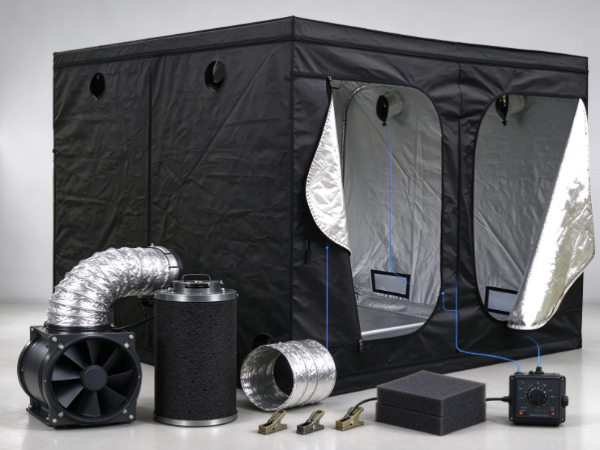
A grow tent ventilation kit tackles these issues by moving air through the growing space. Depending on the design, the kit includes an exhaust fan, ducting, a carbon filter, mounting accessories and other components. Each part has a job: moving air, removing stale air or managing odors.
Good airflow isn't about making air move faster. It's about creating a steady exchange between the inside of the tent and its surroundings while keeping air circulating around the plants. Knowing how a ventilation kit works helps growers choose suitable equipment, arrange components properly and catch problems before they hit daily growing conditions.
Airflow shapes the environment around plants throughout the growing process. In an enclosed tent, air turns stagnant when it barely moves or exchanges with the outside. Warmth and moisture build up, and some areas get less fresh air than others.
Moving air evens out these differences. It carries heat away from areas where it gathers and helps moisture disperse. Air moving around leaves also stops a still layer of humid air from sitting close to their surfaces for long periods.
Without suitable ventilation, different parts of the same tent develop different conditions. Plants near a light source get more heat than those farther away. Dense foliage blocks movement between leaves, while corners and spaces behind equipment get little circulation.
These differences make environmental management harder. Adjusting a fan or moving a plant improves one area and leaves another largely untouched.
A grow tent ventilation kit offers a coordinated way to manage these conditions. The exhaust system moves air out of the tent, while internal circulation distributes air within it. When the two work together, the growing space is easier to manage.
Airflow matters for another reason: indoor growing equipment generates heat. Lighting, electrical devices and other gear warm the surrounding air. Ventilation carries some of that heat away instead of leaving it trapped inside the enclosure.
The goal isn't a strong, constant blast of air across every plant. Excessive direct airflow keeps leaves in constant motion and increases moisture loss. A suitable arrangement supports gentle circulation and regular air exchange without stressing the plants.
A ventilation kit improves airflow by creating a path for air to enter, move through and leave the growing space. The exact arrangement depends on the tent, the equipment and the surrounding room.
Most systems rely on several components that perform different but related functions.
The exhaust fan removes air from the tent. As it draws air through the outlet, the air pressure inside the enclosure changes. Replacement air then enters through an intake opening or another suitable gap.
This creates a continuing exchange between the growing space and its surroundings. Warm air and moisture leave instead of staying trapped.
The exhaust outlet's location affects how air travels through the tent. Warm air often rises, so an upper exhaust position helps remove accumulated heat. The arrangement should still reflect the position of the light, the plants and other equipment.
A poorly matched fan won't deliver the expected airflow. Restrictions from filters, long duct runs, tight bends or blocked openings cut the amount of air that moves through the setup.
Ducting connects the fan to the air outlet and, when included, the filter. It sends air along a planned route instead of letting it escape randomly around the equipment.
A clear, fairly direct duct route reduces needless resistance. Sharp bends, crushed sections and loose connections interfere with airflow. Ducting that's too long or full of turns makes the system work harder.
Secure connections matter too. Gaps between components let air escape before it reaches the intended outlet. That lowers ventilation efficiency and makes odor management less predictable when a filter is part of the setup.
Removing air is only half of ventilation. The tent also needs a way for replacement air to come in.
Some setups use passive intake openings, while others add an intake fan. The right arrangement depends on the tent structure, the exhaust system and the conditions of the surrounding room.
If the intake opening is blocked or too restrictive, the exhaust fan struggles to move air as intended. The tent fabric gets sucked inward, and the actual air exchange falls below expectations.
When the intake and exhaust paths are arranged sensibly, air moves through the enclosure with fewer obstacles. The ventilation system then keeps a more consistent flow.
Exhaust fans and circulation fans both move air, but they serve different purposes. Knowing the difference explains why one fan alone doesn't solve every airflow problem.
An exhaust fan removes air from the tent and encourages replacement air to enter. Its main role is air exchange. A circulation fan moves air within the enclosure. It reduces stagnant pockets and spreads air around plants and equipment.
A tent can have effective exhaust ventilation and still contain areas where air barely moves. That happens when plants are crowded, equipment blocks the path or the internal fan points the wrong way.
Internal circulation fixes these dead spots. Position a fan so it moves air across the growing space. Pointing all its force at a single plant misses the point. Air then travels around foliage, passes through open areas and mixes with air from other parts of the tent.
Placement matters. A fan aimed straight at nearby leaves creates strong movement in one spot and leaves the opposite side of the tent still. Adjusting the angle spreads the airflow more evenly.
Height affects reach too. Air moving near the floor doesn't circulate well through dense foliage higher up. A fan mounted too high does little for lower areas.
Growers should watch how plants respond after moving a fan. Leaves should sway gently, not get pushed constantly in one direction. If some sections stay still, change the fan's angle or location.
The two systems work best when their roles complement each other. One removes air from the enclosure, the other distributes it. Don't confuse the two functions, and don't assume more fans automatically mean better airflow.
Heat and humidity are closely tied to air movement. When ventilation is limited, warmth from lights and equipment collects inside the tent. Moisture from plants and damp growing materials stays in the enclosure too.
A grow tent ventilation kit helps by replacing some of the air inside the tent with air from the surrounding room. If the incoming air is cooler, ventilation helps remove heat. If it holds less moisture, air exchange also helps cut excess humidity.
Ventilation doesn't guarantee a cooler or drier tent, though. The effect depends on the condition of the incoming air, the heat produced inside the enclosure and how the system is installed.
Drawing warm air from a poorly ventilated room, for example, gives limited cooling. If the surrounding air is already humid, replacing indoor air won't reduce moisture as much as expected.
So look at the room around the tent as well as the tent itself. Ventilation equipment moves air. It doesn't control every environmental condition by itself.
Air circulation also helps moisture disperse around leaves and within dense growth. When air sits still, humid pockets form in areas with little movement. Gentle circulation reduces these local differences and supports a more even environment.
Excess moisture deserves attention because persistently damp conditions encourage mold and other plant health problems. Ventilation helps manage the surrounding environment, but it doesn't replace proper watering, plant spacing or regular inspection.
When heat or humidity stays hard to manage, examine the entire setup. Likely causes include restricted intake openings, an obstructed exhaust route, a badly positioned fan, excessive heat from equipment or unfavorable conditions in the room.
Changing fan speed without finding the cause brings only temporary relief. A better approach is to check how air enters, travels through and leaves the enclosure.
A carbon filter is common in ventilation kits when odor control matters. Its filtering material captures certain odor-causing compounds as air passes through.
The filter usually connects to the exhaust system. Air is drawn through the filter before it travels through the ducting and leaves the growing area. This puts odor treatment and air exchange in the same airflow path.
A filter also adds resistance to the system. Air has to pass through the filtering material, so the fan moves less air than it would through an open outlet.
That means choosing a ventilation kit takes more than looking at the fan. The fan, filter and ducting have to work together as a complete system. A fan that looks suitable alone may underperform once the other components are installed.
Filter condition affects airflow as well. Over time, dust and other particles collect on the filter or its protective surfaces. Depending on the design, that buildup restricts movement and raises the effort needed to draw air through the system.
Regular inspection reveals blockage or wear. Follow the component manufacturer's cleaning and replacement instructions. Not every filter is maintained the same way.
Installation details count too. Loose connections let untreated air bypass the filter. An awkward duct arrangement adds resistance, and an unsuitable connection makes maintenance difficult.
Treat the carbon filter as part of the overall ventilation design. It isn't an accessory you add without thinking about its effect on the system. Proper matching balances odor management against the need to move air through the tent.
How a grow tent ventilation kit is installed influences its performance as much as the individual components. Even suitable equipment struggles when the airflow path is obstructed or poorly arranged.
Several practical details deserve attention during installation.
After installation, check the system while it runs. Look for obstructed ducts, loose connections, unusual fan movement and areas where air seems to sit still. Small adjustments often improve circulation without extra equipment.
Reduced airflow doesn't always mean the fan has failed. Often the cause is a restriction, a layout issue or a change in the growing environment.
Blocked ducting is a common culprit. A bent or compressed section restricts the air path, especially when the duct runs behind a tent or through a narrow space. Checking the entire route reveals problems you can't see from the fan opening.
A dirty filter is another cause. Dust and other particles accumulate during normal use and cut the amount of air passing through the filtering material. Inspection and proper maintenance restore normal operation when buildup is the cause.
Check the fan's condition too. Loose fittings, damaged components or dust around moving parts hurt performance. If the fan makes unfamiliar sounds or shows damage, inspect it according to the manufacturer's guidance.
Plant growth creates new restrictions. As foliage thickens, spaces that once let air move freely get crowded. A ventilation arrangement that worked early in the growth cycle needs repositioning as plants develop.
The surrounding room also influences the result. If doors, windows or room ventilation change, the air available to the tent changes as well. An exhaust fan can't keep the same environmental effect under every surrounding condition.
A simple troubleshooting process helps pinpoint the source:
Change one thing at a time and watch the result. Adjusting several components at once makes the cause harder to find.
If airflow stays weak after basic checks, the system may not suit the combined resistance of its components or the needs of the enclosure. Reviewing the full setup shows whether a different arrangement or a replacement component is necessary.
Choosing a grow tent ventilation kit starts with understanding the growing space and the conditions the system must manage. The kit should fit the enclosure, work with its intended airflow route and accommodate any extra equipment used for odor control.
Tent size is one consideration, but not the only one. The amount of equipment inside the tent, plant density, surrounding room conditions and the arrangement of intake and exhaust openings all influence ventilation needs.
The type of kit matters too. Some packages focus on exhaust ventilation, while others include circulation fans, filters, ducting and mounting accessories. Check exactly what's included. Don't assume every kit provides the same components.
Compatibility matters most when a filter is included. The fan must suit moving air through the complete system, not just through an open duct. Consider connection sizes, mounting options, duct routing and maintenance access before installation.
Noise can sway the decision when the tent sits in a bedroom, shared room or other occupied space. Fan design, mounting, vibration and duct arrangement all affect the sound during operation. Reviewing these factors avoids needless disturbance.
Ease of maintenance is another practical point. Filters need inspection or replacement, ducts collect dust and fans need periodic checks. A kit with accessible components makes routine care less of a chore.
Buyers should also ask whether the setup will change. A tent that starts with a few plants gets more crowded as growth continues. Equipment positions shift, and the need for internal circulation shifts with them. A flexible arrangement makes these adjustments easier.
Clear product information helps when comparing options. Descriptions should explain the included components, intended application, connection compatibility, maintenance requirements and installation considerations. These details let buyers judge whether a kit suits their growing environment without leaning on vague performance claims.
A suitable grow tent ventilation kit supports a clear airflow path, consistent air exchange and practical day-to-day management. When its components match the enclosure and are installed with care, airflow problems are easier to identify, changing conditions are easier to handle and the growing space suffers less from stagnant air.

 英语
 俄语
 德语
 西班牙语
 法语