

A grower walking through a greenhouse at dusk, watching workers duck under fixture mounts to reach the irrigation valves, understands exactly why lighting design can't get treated as an afterthought bolted onto the ceiling. Greenhouse lighting isn't simply a matter of adding lamps above plants. The arrangement, fixture design, mounting position, growing area, and daily production routine all affect how artificial light actually fits into a working greenhouse.
An HPS Grow Light Fixture is one type of lighting equipment used in controlled growing environments. Its design can influence how light gets positioned across plant areas and how easily the lighting system fits into an existing greenhouse layout, rather than fighting against it.
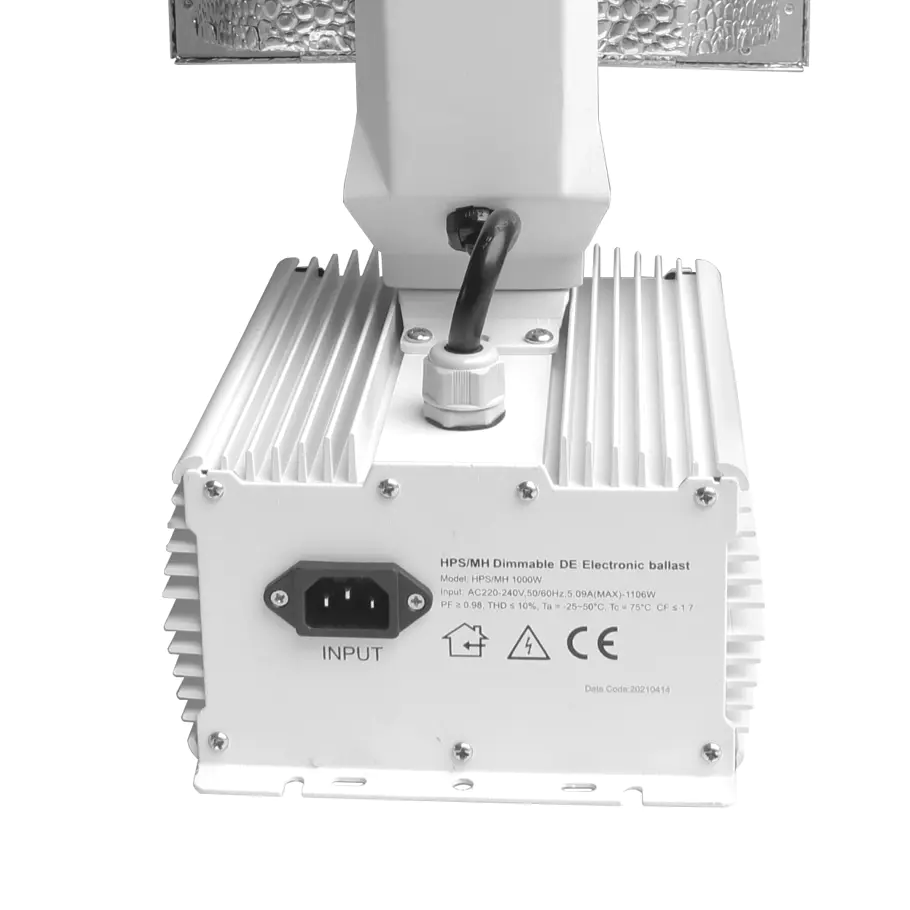
The term HPS refers to high-pressure sodium lighting. This technology has been used in agricultural lighting applications because its warm light output can fit certain plant-growing environments well.
A Sodium Grow Light can be considered where growers need supplemental lighting during periods when natural daylight doesn't fully support the intended growing routine. High Sodium Grow Lights may also get selected for larger growing areas where fixture placement and coverage need careful planning across a bigger footprint.
The choice isn't only about the lamp itself. Greenhouse structure, crop arrangement, installation access, plant height, and working conditions all influence how the fixture should actually get used.
A greenhouse is a genuinely active working environment, not a static display space.
Plants need room to grow. Workers need space to move through without ducking and weaving. Irrigation equipment, ventilation systems, support structures, and other equipment may also occupy the same overhead area competing for the same real estate.
An HPS Grow Light Fixture needs to fit within this environment without making routine work unnecessarily difficult for the people actually running the place.
The layout can influence several practical decisions.
| Greenhouse Area | Lighting Consideration |
|---|---|
| Growing beds | Light should be positioned around the plant area |
| Walkways | Fixtures should not interfere with movement |
| Tall crops | Mounting position may need adjustment |
| Propagation areas | Lighting arrangement can differ from mature crops |
| Service areas | Access should remain practical |
A fixture placed without considering the greenhouse layout may create shadows or make maintenance genuinely harder down the line.
The position of the plants matters just as much. A greenhouse with evenly arranged growing beds presents different lighting challenges from one with multiple crop zones running side by side.
This is why lighting planning often starts with the physical layout, rather than choosing fixtures from a catalog right away.
Plants don't all grow in the same way, obviously, but it's easy to underestimate how much that affects lighting design.
Some crops get grown close to the ground. Others develop taller canopies reaching toward the roof. Some are arranged in rows, while others occupy benches or containers spread across the floor.
The lighting system needs to accommodate these differences rather than applying one blanket approach.
A Sodium Grow Light can provide supplemental artificial light when natural conditions aren't sufficient for the growing schedule at hand. The fixture's position can then get adjusted according to the crop arrangement in that specific zone.
For example, a low-growing crop may allow a more straightforward overhead arrangement without much fuss. Taller plants can change the relationship between the lamp and the upper plant area considerably.
Plant spacing also matters quite a bit here.
When plants are packed closely together, leaves can shade nearby plants from each other. The lighting arrangement may need to account for these natural differences within the canopy itself.
| Crop Arrangement | Possible Lighting Focus |
|---|---|
| Low-growing plants | Even overhead placement |
| Tall plants | Consideration of canopy height |
| Row planting | Alignment with growing rows |
| Bench growing | Fixture placement around bench layout |
| Mixed crops | Separate lighting zones |
The purpose isn't treating every greenhouse the same way, since they rarely are.
A practical lighting system should fit the crops actually being grown in that specific space, not a generic assumption.
Placement affects how artificial light actually reaches the growing area below it.
An overhead fixture may illuminate a broad area, while its position relative to plants can change the distribution of light across the crop considerably.
This makes mounting location a genuinely important part of greenhouse planning, not an afterthought.
The fixture should be positioned with nearby structures in mind. Roof supports, irrigation lines, ventilation equipment, and hanging accessories can all influence the installation process in ways that may not be obvious at a glance.
A suitable arrangement should also let workers move through the greenhouse without constantly working around lighting equipment hanging in the way.
The height and position of the fixture can get considered together with plant development over time.
Young plants and mature plants may occupy genuinely different amounts of vertical space. A lighting arrangement that works for one stage may need adjustment as the crop develops toward harvest.
For growers, flexibility can therefore prove genuinely useful.
A fixture that can be installed and serviced without major disruption can fit a lot more naturally into a changing agricultural environment throughout a growing cycle.
Larger greenhouses often contain multiple growing zones running at once, each with their own needs.
A single lighting arrangement may not suit every part of the facility equally.
Different zones can have different crops, plant heights, working schedules, or natural light conditions depending on orientation and structure. High Sodium Grow Lights can get arranged as part of a broader lighting plan where supplemental illumination is needed most.
The fixtures can get considered in groups, rather than one at a time in isolation.
For example, a greenhouse may divide its lighting into main growing areas, propagation areas, areas with lower natural light, areas with different crop layouts, and spaces used for specific growing routines.
This approach can make the lighting system a lot easier to manage overall.
It also allows growers to think about which areas actually need supplemental lighting, rather than treating the entire greenhouse as one uniform space needing identical treatment.
The fixture design should support this zoned approach.
Mounting options, access for servicing, and the relationship between neighboring fixtures can all affect how a larger installation actually functions once it's running.
Greenhouses already make use of sunlight, obviously, and that's part of the appeal of the structure itself.
Artificial lighting is therefore often considered as part of a combined lighting environment, rather than a complete replacement for natural light streaming through the roof.
The amount of daylight entering a greenhouse can change with weather, season, roof structure, plant growth, and surrounding conditions throughout the year.
An HPS Grow Light Fixture can get incorporated into a system where artificial lighting supports the growing environment as natural light shifts through the seasons.
This requires attention to the greenhouse's existing design from the start.
A fixture shouldn't be placed without considering how sunlight enters the space. Natural shadows created by the greenhouse structure can also change the light reaching the plant area below.
The goal is creating a practical relationship between natural and artificial light working together, rather than one fighting the other.
For growers, this can mean using lighting in selected areas or during particular periods, rather than running every fixture continuously regardless of conditions.
Such an arrangement may also make it easier to manage different crop zones with different light needs.
Installation can get genuinely challenging in a greenhouse, because the ceiling area is already crowded with structural and agricultural equipment competing for space.
An HPS Grow Light Fixture should therefore get considered from an installation perspective right from the design stage.
Several features can affect practical use once it's in place.
Mounting arrangement. The fixture should have a suitable way to connect with the greenhouse structure without fighting existing supports.
Service access. Workers need a practical method for reaching the fixture when inspection or replacement is required, not a ladder gymnastics routine.
Cable organization. Electrical connections should be arranged neatly and kept compatible with the greenhouse environment, including humidity and dust.
Fixture positioning. The lighting unit should remain clear of nearby equipment and crop growth as plants develop.
Structural compatibility. The mounting method should suit the existing greenhouse framework rather than requiring major modification.
These details may appear small during planning, but they become genuinely important once many fixtures are installed across a large area.
A lighting system that's easy to access can reduce disruption to normal greenhouse work considerably.
A greenhouse is not only a plant-growing space. It's also a workplace where people spend their days.
Workers may need to water plants, inspect leaves, move containers, harvest crops, clean surfaces, and repair equipment, often all in the same afternoon.
Lighting fixtures shouldn't make these tasks harder than they need to be.
An HPS Grow Light Fixture can influence the space beneath it through its position, housing design, mounting arrangement, and accessibility.
A well-planned layout leaves clear routes for workers moving through the space.
This matters particularly in areas with tall crops. As plants grow, the available working space can become noticeably narrower over the season.
The lighting arrangement should get planned with expected plant growth in mind from the outset, not adjusted reactively later.
A fixture positioned too close to equipment or a busy work area may create unnecessary obstacles that workers just learn to live with.
The same principle applies to maintenance down the line.
If workers need to move large equipment around the greenhouse, lighting installations shouldn't block common routes they rely on.
Thinking about maintenance during the initial design stage can make later work a lot more manageable when the time comes.
Agricultural lighting needs vary considerably according to the type of production happening.
Greenhouses may get used for vegetables, herbs, flowers, seedlings, and other crops, each with their own layout and production routine.
A Sodium Grow Light can get integrated into different environments when its characteristics fit the intended application at hand.
The decision may involve more than the crop itself.
Growers can consider:
A propagation area may require a genuinely different lighting arrangement from a mature crop area down the row.
Similarly, a greenhouse used for rows of tall plants may need a different fixture position from one using low benches spread across the floor.
This makes the design of the overall lighting system just as important as the choice of lighting technology itself.
Lighting zones can help divide a greenhouse according to actual needs, rather than treating the whole space as one block.
Not every part of a growing facility necessarily has the same conditions.
One area may receive more natural light through a south-facing section. Another may be shaded by greenhouse structures or neighboring crops blocking the sun.
A zone-based arrangement can allow lighting decisions to reflect these real differences.
| Zone | Possible Lighting Planning |
|---|---|
| High natural light area | Supplemental lighting when needed |
| Shaded growing area | Additional attention to fixture placement |
| Young plant area | Arrangement based on plant size |
| Mature crop area | Consideration of canopy development |
| Service area | Keep fixtures and cables clear |
This approach can also make future adjustments a lot easier down the line.
If the crop arrangement changes, the lighting plan can get reviewed by zone, instead of redesigning the entire greenhouse from scratch.
For a facility handling several crop types, this can prove particularly useful when priorities shift season to season.
The fixture becomes part of a larger system of growing areas, rather than an isolated piece of equipment hanging on its own.
Buyers can begin by looking at the greenhouse itself, rather than focusing only on the fixture spec sheet.
The physical environment determines how practical a lighting product will actually be once it's installed.
Useful questions include:
The answers to these questions can help narrow the available options considerably.
The same applies when comparing High Sodium Grow Lights with other agricultural lighting approaches on the market.
The right choice depends on the intended use and the environment in which the equipment will actually operate day after day.
Greenhouse equipment remains part of the facility well after installation day.
Plants change through the seasons. Growing layouts change as crops rotate. Equipment gets moved around. Maintenance tasks happen regularly. New crop areas may get added as operations expand.
A practical lighting design should allow room for these changes rather than locking things in place permanently.
The HPS Grow Light Fixture should fit the greenhouse structure without making future adjustments unnecessarily difficult when priorities shift.
Access is particularly important here.
A fixture that can be inspected without disturbing nearby systems can be a lot easier to manage over time as the greenhouse evolves.
The surrounding installation should also stay organized rather than becoming a tangle nobody wants to touch.
Cables, mounting points, and nearby equipment should have clear relationships to each other. This can make it a lot easier for workers to understand the system when maintenance is actually required.
A thoughtful design also considers how the greenhouse will get used during different stages of plant growth, not just at installation.
The fixture should support the growing environment while leaving enough room for people to perform their daily tasks without fighting the equipment overhead.
In this way, Sodium Grow Light, grow lights sodium, and High Sodium Grow Lights can get considered not only as lighting products but as parts of a broader greenhouse arrangement. Their practical value depends on how the fixture design, crop layout, installation position, natural light, working space, and agricultural application fit together in the specific facility they're serving.

 英语
英语 俄语
俄语 德语
德语 西班牙语
西班牙语 法语
法语

.jpg?imageView2/2/w/800/h/800/format/webp/q/75)
.jpg?imageView2/2/w/800/h/800/format/webp/q/75)
.jpg?imageView2/2/w/800/h/800/format/webp/q/75)
.jpg?imageView2/2/w/800/h/800/format/webp/q/75)
.jpg?imageView2/2/w/800/h/800/format/webp/q/75)
-1.jpg?imageView2/2/w/800/h/800/format/webp/q/75)
.jpg?imageView2/2/w/800/h/800/format/webp/q/75)
-1.jpg?imageView2/2/w/800/h/800/format/webp/q/75)
.jpg?imageView2/2/w/800/h/800/format/webp/q/75)
-1.jpg?imageView2/2/w/800/h/800/format/webp/q/75)
-1.jpg?imageView2/2/w/800/h/800/format/webp/q/75)