

A greenhouse needs to do more than create a covered area for plants. Its structure needs to fit the growing space, the covering, the way people work inside, and the conditions around the site. When these needs change, the structure may also need to change.The frame has an important place in this process.
A Pipe Greenhouse Frame creates the basic shape of a greenhouse and gives other components a structure to connect with. Pipes can be arranged into different forms, allowing greenhouse builders to create structures for different growing purposes.
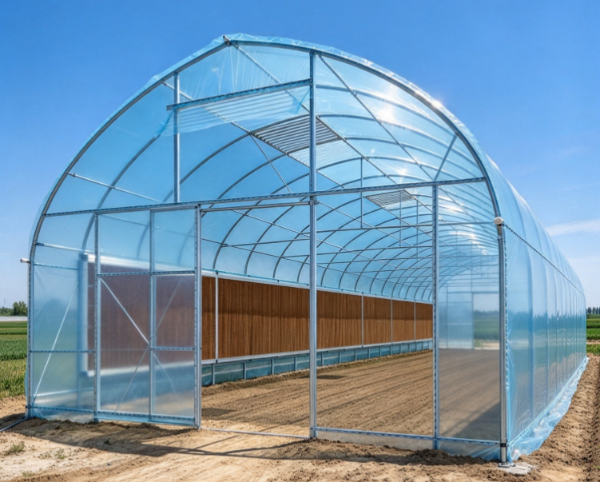
This adaptability has become an important part of greenhouse planning. Growers may have different crop arrangements, available spaces, covering choices, and working habits. A frame that can respond to these differences gives the greenhouse design more room to develop.
The idea is not simply to build a stronger structure. It is to create a structure that makes sense for the space and the way it will be used.
A pipe frame consists of connected structural sections that can form the basic outline of a greenhouse. The arrangement can be changed according to the intended design.
This gives greenhouse builders more flexibility when working with different growing spaces.
A greenhouse may need a particular roof shape. It may require different access points. The internal area may need to remain open for planting, watering, or routine work. The frame needs to accommodate these requirements without making the overall structure unnecessarily complicated.
The pipe itself is only one part of the solution. The way the pipes are arranged matters just as much.
For example, a simple greenhouse can use a straightforward frame layout. A different project may need a more organized structure with additional connections and support points. Both can use pipe-based construction while serving different purposes.
This is where adaptability becomes useful.
| Greenhouse Need | How Frame Arrangement Can Respond |
|---|---|
| Different growing spaces | The frame can follow the available area |
| Different roof shapes | Pipes can form different structural outlines |
| Different coverings | The frame can be planned around the selected covering |
| Different access needs | Openings can be considered during frame planning |
| Internal working areas | Structural sections can be arranged around usable space |
| Changing project requirements | The overall design can be adjusted before construction |
The frame therefore becomes part of the planning process rather than simply a fixed support system.
Not every greenhouse looks or works the same way.
Some are designed around a simple growing area. Others need space for different plants, working paths, storage, or internal equipment. A greenhouse used for a nursery may have different priorities from one used for vegetable production.
A pipe frame can be arranged around these differences.
The shape of the greenhouse is one important consideration. Curved structures, for example, can create a different internal environment from structures with a more traditional roof shape. The frame needs to follow the intended shape so that the covering can be installed properly.
The location of entrances also matters.
An entrance may seem like a small part of a greenhouse, but it affects how people move through the space. If workers need to carry plants, tools, or other materials, the frame needs to leave suitable access areas.
Ventilation is another consideration.
A greenhouse may include openings or ventilation features as part of its design. These features need to work with the surrounding structure. A frame planned without considering them can make later changes more difficult.
This is why frame design and greenhouse design are closely connected.
Instead of choosing a frame after all other decisions have been made, builders can consider the frame at an early stage. This allows the structural arrangement to respond to the rest of the project.
The available growing space can vary greatly from one project to another.
A greenhouse may occupy a narrow area beside another building. Another may be placed in a more open agricultural space. Some projects may need to make efficient use of a limited footprint, while others may focus on creating a larger working area.
These differences affect the frame.
The frame needs to follow the intended shape of the growing area. If the structure does not match the space, the greenhouse may become harder to organize.
Growing plans also matter.
A greenhouse for leafy vegetables may be arranged differently from one for flowers or young plants. Some growers may need open areas for regular movement. Others may divide the space into separate growing sections.
The frame does not decide how the plants will be arranged, but it creates the space in which those arrangements can take place.
This makes frame selection part of a wider design decision.
A useful approach is to consider three elements together:
When these three elements are considered together, it becomes easier to create a greenhouse that matches its intended use.
The frame and covering form two closely connected parts of a greenhouse.
The frame creates the shape. The covering follows that shape and helps create the protected growing environment.
Different coverings may have different installation requirements. Some can follow curved structures. Others may be better suited to a particular arrangement of frame sections.
This means the covering should not be treated as a separate decision.
When planning a Pipe Greenhouse Frame, builders can consider how the selected covering will be attached, supported, and maintained.
This relationship also affects future changes.
A grower may decide to replace a covering later. If the frame was designed with practical access and connection points, such changes may be easier to manage.
The same idea applies to ventilation and access.
A greenhouse is not simply a frame covered with material. It is a group of connected components that need to work together.
| Component | Relationship With the Frame |
|---|---|
| Greenhouse Covering | Follows and attaches to the structural shape |
| Doors | Need suitable openings within the structure |
| Ventilation Features | Need space within the frame arrangement |
| Internal Equipment | Requires usable space around structural sections |
| Growing Areas | Depend on the shape and available space |
| Working Paths | Need to remain practical within the structure |
Looking at these relationships early can help avoid unnecessary changes later.
Different growing applications create different demands.
A vegetable greenhouse may need clear areas for planting and harvesting. A flower-growing space may place more attention on organization and access. A nursery may require room for young plants at different stages.
Commercial and small-scale projects can also have different priorities.
A small greenhouse may focus on convenient use and straightforward construction. A larger project may require a more organized structural layout that can accommodate different working areas.
Pipe frames can be arranged around these different purposes.
The important point is not that one frame design can serve every application. Instead, the pipe frame approach allows the structure to be planned around the application.
This gives growers more room to consider how the greenhouse will actually be used.
For example, a grower can think about:
These questions help turn a basic frame into part of a practical growing environment.
Buying a greenhouse frame is easier when the project is clearly defined.
The frame should not be selected only because it looks suitable in a product image. Buyers need to understand how it will fit into the intended greenhouse.
Several practical points can guide the decision.
The purpose of the greenhouse should guide the structural design.
A frame intended for a home garden may have different requirements from one used for commercial plant production.
The physical site influences the greenhouse shape. The frame needs to fit the available area without making access or daily work unnecessarily difficult.
The frame and covering need to work together. Buyers should understand how the covering will be attached and how it follows the frame.
Doors, openings, and working areas should be considered during planning.
A greenhouse needs to be used and maintained regularly. Structural choices should support that practical work.
Growing plans may change. A greenhouse may later need different internal arrangements, a different covering, or another use.
Thinking about possible changes during the planning stage can help create a more adaptable structure.
These considerations can also help buyers communicate more clearly with greenhouse suppliers. Instead of asking for a general frame, they can describe the growing space, intended use, covering, and structural preferences.
A greenhouse can change after construction.
Plants may change. Growing methods may change. Equipment may be added. A different covering may be needed. Even the way people move through the space can change.
A rigid design may make these adjustments more difficult.
A pipe-based frame can provide room for different arrangements when the original design takes future needs into account.
This does not mean that every part of a greenhouse can be changed easily. Structural modifications still need careful planning. The important point is that adaptability can be considered before construction begins.
For greenhouse builders, this creates another way to approach design.
Instead of thinking only about the greenhouse as it looks on the day it is completed, they can consider how the structure may be used over time.
This can influence the position of entrances, the arrangement of structural sections, the connection between the frame and covering, and the space available for internal equipment.
For growers, this approach can make the greenhouse feel less like a fixed structure and more like a growing environment that can respond to changing needs.
The demand for protected growing spaces covers many different applications. There is no single layout that fits every grower, site, or crop.
This creates a need for structural options.
Pipe Greenhouse Frames can support this variety because the pipes can be arranged into different structural forms. The basic material remains familiar, while the final greenhouse can be designed around its intended use.
This flexibility can be useful during both new construction and renovation.
For a new greenhouse, the frame can be considered alongside the site, covering, growing plan, and access requirements.
For an existing greenhouse, replacement or modification work may require a frame that fits the current structure.
The frame therefore has a role beyond simply holding up the covering.
It can influence how space is organized, how components are connected, and how easily the greenhouse can respond to changing requirements.
As greenhouse projects become more varied, this relationship between frame design and growing needs gives Pipe Greenhouse Frames a practical place in the development of adaptable greenhouse structures.

 英语
英语 俄语
俄语 德语
德语 西班牙语
西班牙语 法语
法语

.jpg?imageView2/2/w/800/h/800/format/webp/q/75)
.jpg?imageView2/2/w/800/h/800/format/webp/q/75)
.jpg?imageView2/2/w/800/h/800/format/webp/q/75)
.jpg?imageView2/2/w/800/h/800/format/webp/q/75)
.jpg?imageView2/2/w/800/h/800/format/webp/q/75)
-1.jpg?imageView2/2/w/800/h/800/format/webp/q/75)
.jpg?imageView2/2/w/800/h/800/format/webp/q/75)
-1.jpg?imageView2/2/w/800/h/800/format/webp/q/75)
.jpg?imageView2/2/w/800/h/800/format/webp/q/75)
-1.jpg?imageView2/2/w/800/h/800/format/webp/q/75)
-1.jpg?imageView2/2/w/800/h/800/format/webp/q/75)