Greenhouses are now a regular part of modern farming and home gardening. A covered growing space lets plants take in natural light while staying sheltered from changing weather. They range from small backyard structures to large commercial facilities, and each serves a different planting need.
As growing methods have developed, greenhouse designs have multiplied. Some are built for seasonal vegetables. Others handle commercial crops, seedling propagation, flower growing or home gardens. Structure, covering material, ventilation and usable space all change with the intended use.
Picking a greenhouse takes more than liking how it looks. Buyers need to weigh the growing purpose, local climate, installation space, covering material, ventilation and upkeep. Knowing these factors makes it easier to match a structure to a project.
Sunshine Garden offers greenhouse products for agricultural and home gardening use, including agricultural greenhouses, polytunnel greenhouses, mini greenhouses and polycarbonate garden aluminum greenhouses. Through OEM and ODM services, the company also supports customers whose sourcing and project requirements are specific.
What Is a Greenhouse?
A greenhouse is an enclosed or partly enclosed structure for growing plants in a managed environment. It usually has a supporting frame and a transparent or translucent covering. The covering lets sunlight in and forms a barrier between the plants and the weather outside.
Sunlight drives how a greenhouse works. It passes through the covering and gives plants the light they need for photosynthesis. The structure also holds onto warmth, though the actual temperature inside depends on sunshine, outdoor weather, ventilation and design.
Compared with open-field planting, a greenhouse gives growers more control over the conditions around their plants. Vents, doors, shading systems and other equipment help manage heat, airflow and moisture.
A greenhouse won't keep ideal conditions on its own. Results depend on how it's designed, where it's installed and how it's run. One in a warm region needs a different ventilation setup from one in a cooler area.
What Are the Main Parts of a Greenhouse?
Designs vary, but most greenhouses share a few basic components that work together.
| Main Component |
Function |
Importance in Greenhouse Use |
| Frame |
Supports the overall structure |
Provides stability and holds the covering material |
| Covering Material |
Allows light to enter and separates the growing area from outdoor conditions |
Influences light transmission, insulation and weather protection |
| Doors and Entrances |
Provide access for people and equipment |
Make daily operation and plant management easier |
| Ventilation Openings |
Allow air to move in and out |
Help manage temperature and humidity |
| Base and Connections |
Connect the structure to its supporting surface |
Help keep the greenhouse properly positioned |
| Optional Accessories |
Support shading, watering, shelving and other growing activities |
Adapt the space to different planting needs |
Every component affects how the greenhouse performs. A good covering can't make up for a weak frame, and vents are useless if they stay blocked. The structure has to work as one complete system.
Main Types of Greenhouses
Greenhouses come in many shapes and sizes because projects differ. A home gardener may need a compact structure for a few plants, while a commercial grower needs a large covered area with room for organized production.
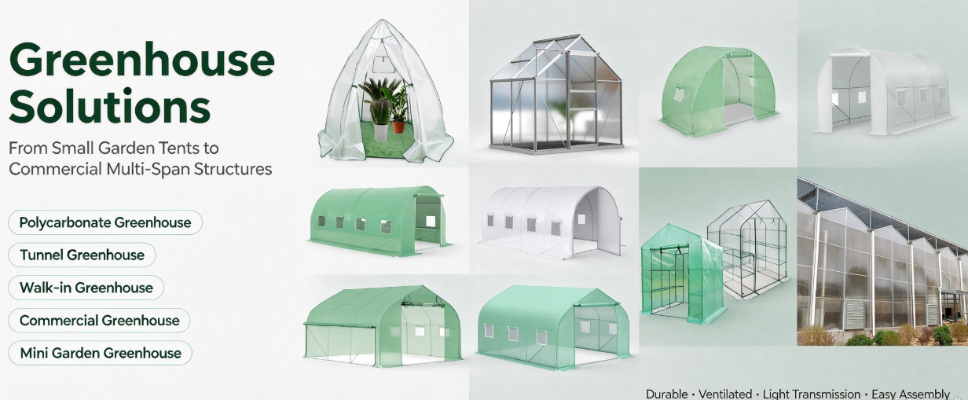
The main differences lie in structural design, covering material, installation space and intended use.
Agricultural Greenhouse
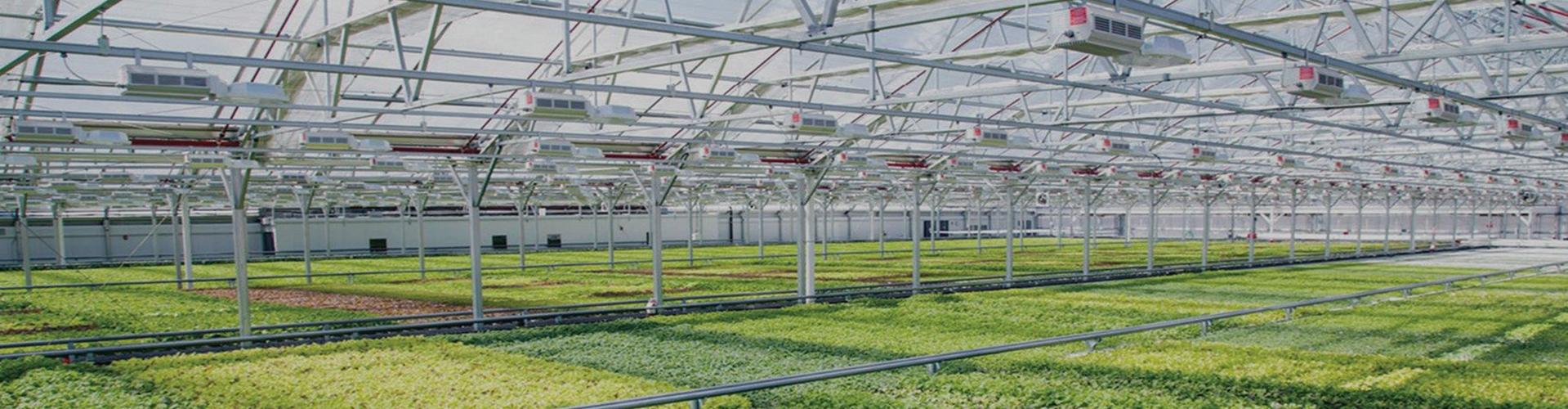
An agricultural greenhouse is built for crop production and other farming work. It gives growers a covered area where they can manage light, temperature, moisture and ventilation to suit their crops.
These structures support vegetables, flowers, seedlings and other agricultural plants. Layout depends on available land, crop arrangement, local weather and production plans.
For farm projects, buyers should consider the size of the growing area, worker access, ventilation and covering material. The structure should also fit the planting and maintenance methods used on the farm.
Polytunnel Greenhouse
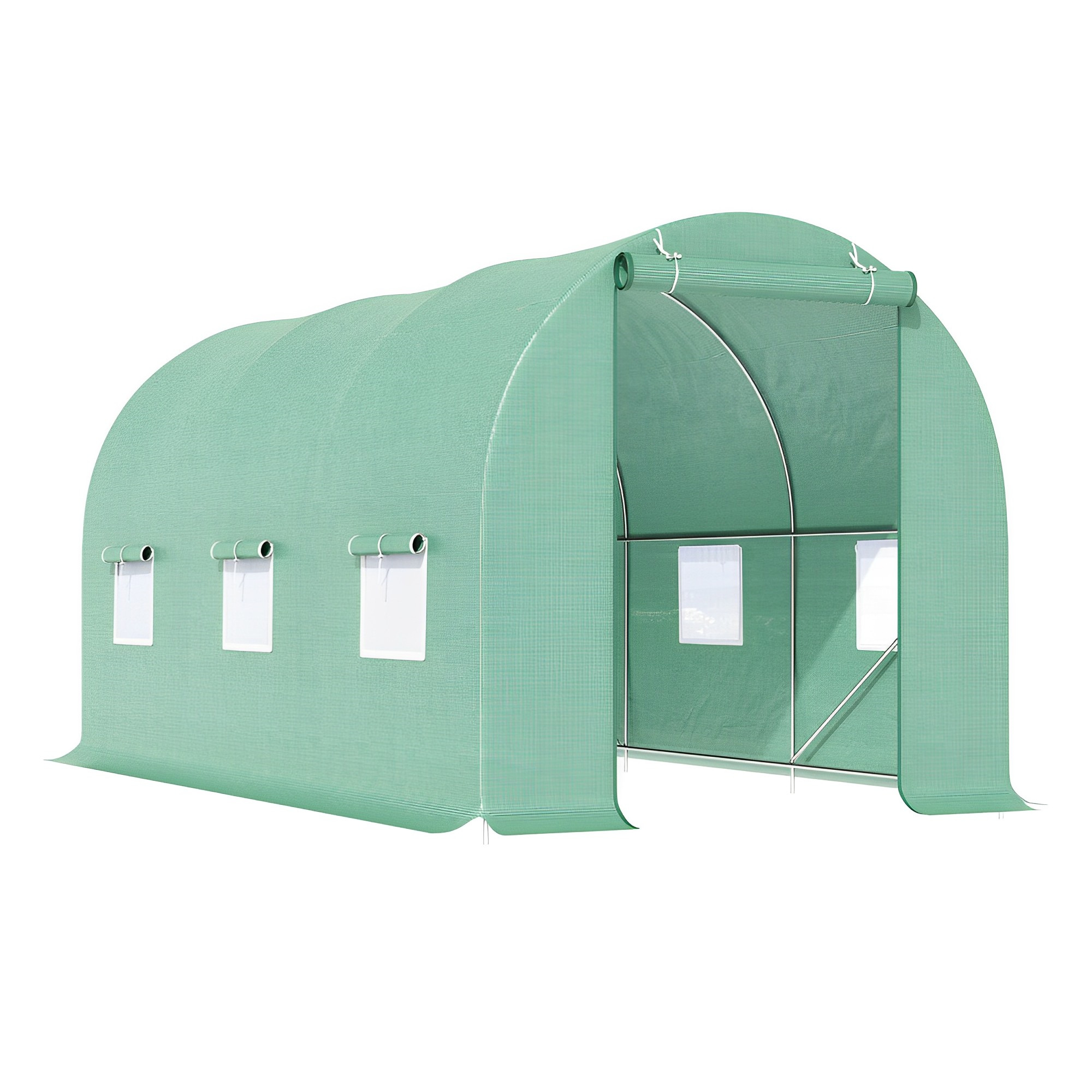
A polytunnel greenhouse usually has an arched, hoop-shaped frame covered with flexible greenhouse film. The curved design makes one continuous covered growing space, and it's widely used for vegetable production and seasonal planting.
Growers like polytunnels partly for their straightforward layout. The flexible covering stretches across the frame, and side openings or other ventilation arrangements manage the air inside.
They suit farms, nurseries and other agricultural uses. When choosing one, check frame stability, film selection, anchoring and ventilation.
Mini Greenhouse
A mini greenhouse is a compact growing structure for limited spaces. It's often used in home gardens, on patios and balconies, and in small outdoor planting areas.
Next to large agricultural structures, mini greenhouses are easier to fit into residential settings. They offer a sheltered spot for seedlings, herbs, flowers and small plants.
Key considerations include available space, access, shelf arrangement, covering material and ease of daily use. A compact structure should let users reach their plants without making watering and upkeep awkward.
Polycarbonate Garden Aluminum Greenhouse
A polycarbonate garden aluminum greenhouse pairs a supporting aluminum frame with polycarbonate panels. It's common in backyard gardens and residential planting areas.
The panels are a rigid covering, unlike the flexible film on many polytunnels. The aluminum frame holds the panels and forms the main structure.
This type suits users who want a defined garden structure for flowers, vegetables and other plants. It also blends well into landscaped outdoor spaces.
When selecting one, look at panel design, frame construction, door access, ventilation and the conditions where it will stand.
Multi-Span Greenhouse
A multi-span greenhouse links several growing sections together. Instead of separate structures, the spans share connected space and form one larger growing area.
This layout supports commercial cultivation where growers need room for planting beds, working paths, equipment and organized crop management.
Because the design is connected, overall space planning matters. Buyers should think about the land layout, drainage, ventilation, access routes and the future needs of the operation.
Glass Greenhouse
A glass greenhouse uses glass panels as its main covering. Glass lets in natural light and gives a clear view of the plants inside.
It's often associated with garden structures, horticultural facilities and some commercial projects. Its look suits applications where visibility and a permanent structure matter.
Glass projects need attention to frame support, panel installation, ventilation and maintenance. Buyers should also weigh the local climate and the demands on the structure.
Film Greenhouse and PC Sheet Greenhouse
Film greenhouses use flexible covering materials to create a protected growing area. They're commonly linked with agricultural planting and polytunnel structures.
PC sheet greenhouses use rigid polycarbonate panels instead. Their structure and appearance differ from film-covered ones, so the choice depends on the growing environment and installation needs.
Both work well for plant cultivation. The real differences are in covering material, structural arrangement, maintenance needs and intended use.
Materials Used for Greenhouse Construction
Materials affect structural support, light transmission, weather protection and upkeep. Most designs combine a frame with a covering, and each does a different job.
Common Greenhouse Covering Materials
PE Film
Polyethylene film is widely used in agricultural and polytunnel greenhouses. It's flexible and covers large structures well. Its light weight also suits curved frames.
When choosing film, consider local weather, installation method, light needs and expected maintenance. Check its condition regularly, because tears or loose sections reduce protection and make operation harder.
Polycarbonate
Polycarbonate comes in rigid greenhouse panels. It suits buyers who prefer a defined, panel-based design over a flexible film covering.
Polycarbonate garden greenhouses often pair these panels with aluminum frames. Check the panel arrangement, frame connections and ventilation design to make sure the whole structure fits its use.
Glass
Glass is the traditional greenhouse covering, known for its clear look and high light transmission. It appears in garden greenhouses and some horticultural structures.
Glass is rigid and needs proper support, so the frame and installation method need careful thought. Include maintenance and local weather in the purchasing decision.
Common Greenhouse Frame Materials
Steel
Steel frames are common in agricultural greenhouses because they give solid structural support. Their design and surface treatment should suit the installation environment.
Aluminum
Aluminum frames are typical in garden greenhouses, especially those with polycarbonate panels. They're a lightweight option that works well for organized panel-based designs.
Greenhouse Material Comparison
| Material |
Main Characteristics |
Common Applications |
Buying Considerations |
| PE Film |
Flexible and lightweight |
Polytunnel and agricultural greenhouses |
Film condition, weather exposure and replacement |
| Polycarbonate |
Rigid panel structure |
Garden and panel-based greenhouses |
Panel design, installation and ventilation |
| Glass |
Clear appearance and light transmission |
Glass garden and horticultural structures |
Frame support, handling and maintenance |
| Steel |
Structural support |
Agricultural greenhouse frames |
Surface protection and structural design |
| Aluminum |
Lightweight frame material |
Garden and polycarbonate greenhouses |
Frame connections and installation |
No single material suits every project. Let the growing environment, structure size, maintenance plan and budget guide the choice.
Key Features of a Greenhouse
A greenhouse is more than a covered frame. Its design has to support several functions that affect plant growth and daily work.
Light Transmission
Plants need light for photosynthesis, so the covering plays a big role. Different materials let light through in different ways.
Light levels and distribution inside also depend on greenhouse orientation, nearby buildings, shading and weather.
Buyers should think about the light needs of the plants they'll grow. Some crops want strong natural light, while others need shade during intense sun.
Temperature Management
A greenhouse holds warmth from the sun and creates a different temperature from the outdoors. Heat can also build up, especially on warm, sunny days.
So the structure should include suitable ventilation and, where needed, shading or other climate equipment.
Temperature management isn't only about staying warm. Preventing excess heat matters just as much.
Ventilation and Air Circulation
Ventilation brings fresh air in and lets warm, humid air out. It cuts heat buildup and keeps air moving around the plants.
Greenhouse ventilation can use roof openings, side openings, doors and mechanical equipment. The right arrangement depends on the structure, local climate and growing requirements.
Poor airflow can mean uneven temperatures, too much moisture and stagnant air. Consider ventilation when choosing a greenhouse, not after.
Humidity Management
Plants release moisture into the air, and watering adds more. If moist air can't escape, condensation forms on the covering and other surfaces.
Good ventilation helps remove excess moisture. Growers should also look at watering practices, plant spacing and drainage.
Weather Protection
A greenhouse forms a physical barrier between plants and outdoor conditions. The covering reduces direct exposure to rain, wind and other factors.
The level of protection depends on structure, material, installation and local weather. In areas with strong winds, heavy rain or other harsh conditions, pay close attention to frame stability, anchoring and installation requirements.
Space Utilization
The internal layout decides how easy a greenhouse is to use. Planting beds, shelves, paths and equipment all have to fit.
A well-planned layout makes watering, pruning, harvesting and cleaning easier. Commercial growers also need to think about how workers and equipment move through the space.
Key Greenhouse Features and Their Functions
| Core Feature |
Main Function |
Growing Benefit |
| Light Transmission |
Allows natural light to enter |
Supports photosynthesis |
| Temperature Management |
Helps manage internal heat |
Supports suitable growing conditions |
| Ventilation |
Exchanges indoor and outdoor air |
Reduces heat and moisture buildup |
| Humidity Management |
Helps control excess moisture |
Supports a healthier growing environment |
| Weather Protection |
Separates plants from outdoor exposure |
Provides a sheltered growing space |
| Space Planning |
Organizes planting and working areas |
Makes daily operations more convenient |
These features work as a group. A greenhouse with a good covering still needs proper ventilation, and a large growing area needs practical access and layout planning.
How Does a Greenhouse Support Plant Growth?
A greenhouse supports growth by creating a covered space where light, temperature, airflow and moisture can be managed more closely than in an open field.
It starts when sunlight passes through the covering. Plants use that light for photosynthesis, and the structure keeps some of the warmth from solar radiation.
As the temperature climbs, ventilation takes over. Roof vents, side openings or mechanical systems let warm air out and fresh air in, which stops excess heat from lingering.
Watering and plant activity affect humidity too. Plants release moisture, and evaporation from the growing medium adds more vapor. Ventilation carries off some of it and lowers the risk of constant condensation.
So a greenhouse works through several linked processes.
| Growing Process |
What Happens |
Management Method |
| Light Entry |
Sunlight reaches the plants |
Select suitable covering material |
| Heat Accumulation |
The covered space retains warmth |
Use suitable ventilation and shading |
| Air Exchange |
Indoor and outdoor air move through the structure |
Keep ventilation openings functional |
| Moisture Changes |
Watering and plant activity increase humidity |
Manage airflow and watering |
| Plant Development |
Plants grow under the managed environment |
Adjust conditions according to crop needs |
A greenhouse doesn't remove the need for daily care. Growers still watch plant health, water supply, temperature and humidity. Its job is to give them a structure that makes managing the environment practical.
Applications of Different Types of Greenhouses
Greenhouses serve a wide range of uses. The better design depends on plant type, growing scale and available space.
Commercial Agriculture
Commercial farms use greenhouses to set up organized growing areas for vegetables, flowers and other crops. Larger structures leave room for planting beds, irrigation equipment and working paths.
Agricultural and multi-span greenhouses are common choices for projects needing bigger covered areas. The layout should reflect the crops, working methods and local weather.
Vegetable Production
Vegetable growers often use polytunnel and film greenhouses for a covered growing environment. These structures protect crops from direct outdoor exposure and support seasonal cultivation.
Ventilation, access and row arrangement matter here. The covering should also suit the local climate and the expected growing period.
Home Gardening
Home gardeners usually want smaller structures that fit limited outdoor space. Mini greenhouses and polycarbonate garden greenhouses fit the bill.
They suit people growing herbs, flowers, seedlings and small vegetables. Easy access, manageable upkeep and space planning are the main factors.
Seedling Propagation
Seedlings often need shelter in early growth. A greenhouse helps growers organize trays and young plants while managing light, temperature and moisture.
Mini greenhouses and other compact structures work for small-scale propagation, and larger agricultural greenhouses can support nursery operations.
Horticulture and Flower Growing
Flower growers use greenhouses to create managed conditions for different varieties. Light, humidity, temperature and airflow all affect flower development.
Glass, polycarbonate and film-covered structures can all be considered, depending on the project and growing conditions.
How to Choose the Right Greenhouse?
Choosing well starts with a clear picture of the project. Evaluate the growing purpose, installation conditions and long-term use before settling on a product.
Identify the Growing Purpose
First decide what the greenhouse is for. Vegetable production, flower growing, seedling propagation and home gardening each have different requirements.
The plants matter too. Some need more light, while others need closer attention to humidity and temperature.
A clear purpose narrows the list of suitable greenhouse types.
Consider the Available Space
Measure the installation area and think about how people will get in. The structure needs room for plants, working paths and any equipment used daily.
For larger agricultural projects, also plan for future expansion and how separate growing areas will connect.
Select Suitable Covering Materials
PE film, polycarbonate and glass each serve different purposes. Compare their light transmission, flexibility, installation requirements and maintenance needs.
The material should match the structure and the local environment, as well as the expected use.
Check Ventilation Design
A greenhouse needs a practical way to exchange air. Check the position and arrangement of doors, side openings and roof vents.
In warm climates, ventilation may matter most. In cooler regions, growers may need to balance air exchange against heat retention.
Evaluate Local Weather Conditions
Wind, rain, snow, sunlight and seasonal temperature swings can all affect the choice.
Confirm that the frame, covering and anchoring suit the installation environment. Where relevant, check local building requirements.
Think About Installation and Maintenance
A greenhouse should be practical to assemble, run and maintain. Understand how the covering goes on, how parts connect and which pieces may need regular inspection or replacement.
Access to plants matters too. Doors and paths should make watering, pruning and harvesting manageable.
Consider Customization Requirements
Standard products won't fit every project. Buyers with particular space, structural or branding needs may want a customized solution.
OEM and ODM services let buyers discuss design, materials, dimensions and other project requirements with the manufacturer.
Why Choose Sunshine Garden for Greenhouse Solutions?
Choosing a greenhouse supplier takes more than comparing product photos. Buyers also need to understand the supplier's product range, manufacturing background, customization services and approach to quality management.
Sunshine Garden, operated by Taizhou Sunshine Garden Products Co., Ltd., supplies greenhouse products along with other home gardening and hydroponic growing equipment. Its greenhouse range covers agricultural cultivation, protected planting and residential garden use.
A Range of Greenhouse Products
Buyers have different needs. A distributor may want several greenhouse categories for its market, while a project purchaser may want one particular structure or covering material.
Sunshine Garden's greenhouse range includes:
- Agricultural Greenhouse
- Polytunnel Greenhouse
- Mini Greenhouse
- Polycarbonate Garden Aluminum Greenhouse
- Commercial Greenhouse
- Multi-Span Greenhouse
- Glass Greenhouse
- PC Sheet Greenhouse
- Film Greenhouse
This gives buyers several product directions to consider as they plan sourcing.
For customers comparing structures, the range is a starting point for discussing covering materials, applications and suitable designs.
OEM and ODM Customization Services
Not everyone wants an unchanged catalog product. Importers, distributors and brands often have their own market requirements, product preferences and packaging expectations.
Sunshine Garden offers OEM and ODM services and states that it can customize products to customer requirements. Buyers can discuss their sourcing needs with the company, whether they want an existing product or a solution for a specific application.
Customization talks may cover product design, structure, materials and other project requirements. Confirm the exact scope with the company before ordering.
Manufacturing and Quality Management
Product consistency matters to wholesale buyers and long-term sourcing projects.
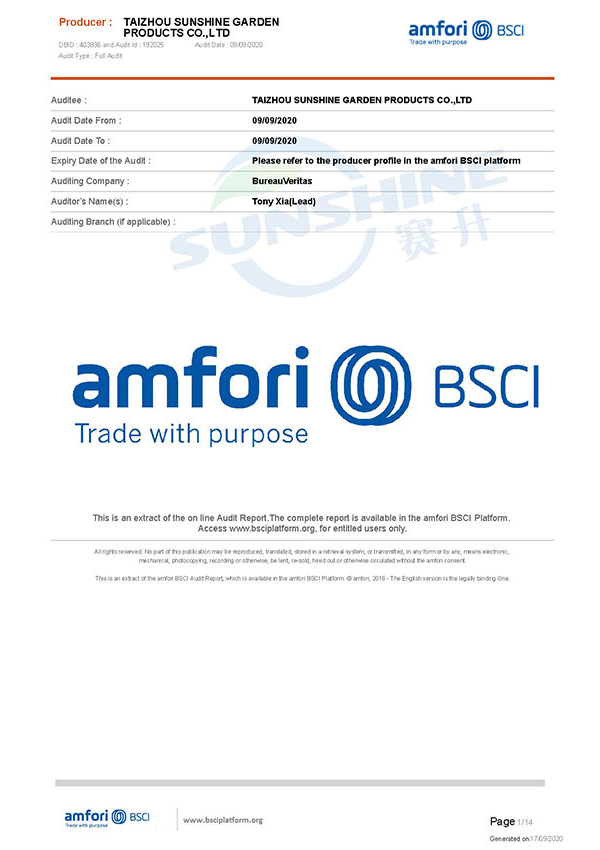
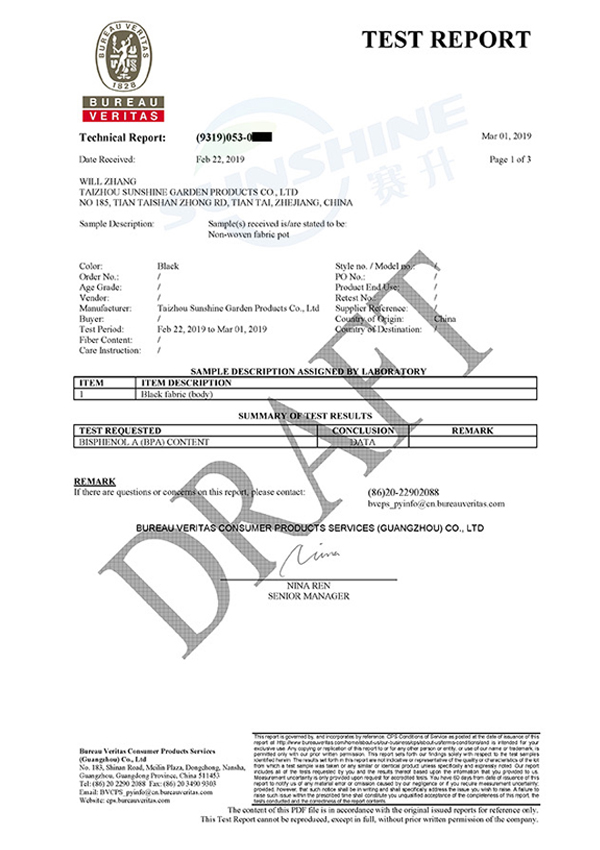
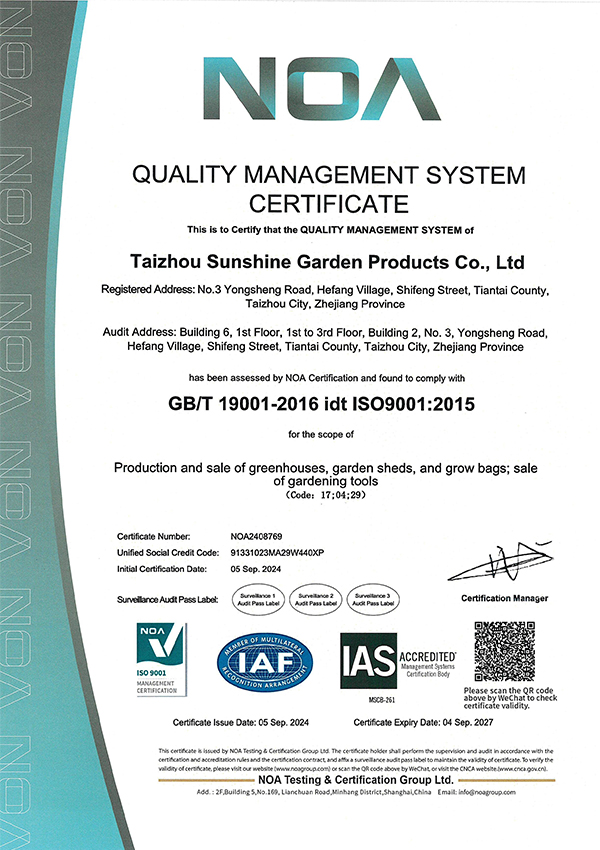
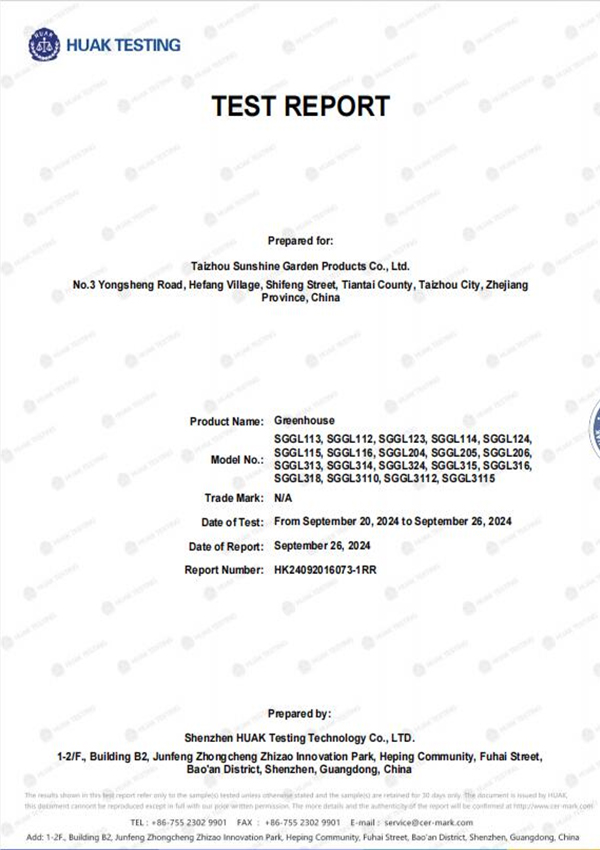
Sunshine Garden says its manufacturing operations are subject to quality assurance testing, laboratory testing and multiple inspections. The company also highlights raw material selection, production processes and professional service as part of its supply approach.
Buyers should discuss the inspection process, product requirements and quality expectations before confirming an order. Clear communication helps both sides know what to check during production and before shipment.
Support for Different Sourcing Needs
Sunshine Garden works with customers who want products from its existing catalog as well as those seeking customized solutions.
That suits several types of buyers:
- Importers: Looking for greenhouse products to add to an existing product range.
- Wholesalers: Sourcing different greenhouse types for regional distribution.
- Retailers: Seeking garden greenhouse products for residential customers.
- Private-Label Brands: Exploring OEM and ODM opportunities.
- Project Buyers: Comparing greenhouse structures for agricultural or horticultural applications.
Before starting, buyers can share their intended application, preferred greenhouse type, installation environment and customization requirements. That gives the supplier a clearer view of the project and guides product discussions.
Questions for Buyers to Ask Greenhouse Manufacturers Before Placing an Order
A clear conversation before ordering prevents misunderstandings during product selection, customization and delivery.
Buyers can prepare these questions when contacting a manufacturer.
| Question |
Why It Matters |
| What greenhouse types are available? |
Helps identify products that match the intended application |
| Which covering materials can be selected? |
Clarifies material options and their uses |
| Can the structure be customized? |
Confirms whether the product can meet project requirements |
| What information is needed for an OEM or ODM project? |
Helps prepare drawings, dimensions and product details |
| How is product quality inspected? |
Clarifies the supplier's quality management process |
| What installation information is available? |
Helps plan assembly and site preparation |
| Which components need regular maintenance? |
Supports long-term product management |
For customized projects, give as much relevant information as you can. Drawings, installation space, intended use and local weather all help the supplier understand what you need.
Frequently Asked Questions About Greenhouses
What Is the Main Purpose of a Greenhouse?
A greenhouse gives plants a covered place to grow. It lets natural light in while helping growers manage temperature, humidity and ventilation. It works for vegetables, flowers, seedlings and many other plants.
What Is the Difference Between a Polytunnel and a Polycarbonate Greenhouse?
A polytunnel usually has an arched frame covered with flexible greenhouse film. A polycarbonate greenhouse uses rigid panels, often on a metal or aluminum frame. The two differ in structure, covering material, installation and maintenance.
Which Greenhouse Is Suitable for Home Gardening?
Mini greenhouses and polycarbonate garden greenhouses are common home choices. A mini greenhouse fits limited spaces, while a polycarbonate garden greenhouse gives a more defined growing structure. The final pick depends on space, plant types and maintenance preferences.
What Materials Are Commonly Used for Greenhouse Coverings?
Common coverings are PE film, polycarbonate and glass. PE film is flexible and widely used in agricultural structures. Polycarbonate goes into rigid panel designs, and glass suits structures where clear visibility and light transmission matter.
Why Is Ventilation Important in a Greenhouse?
Ventilation moves warm, humid air out of the growing area and lets fresh air in. It supports temperature and moisture management and reduces stagnant air around plants.
Can a Greenhouse Be Customized?
Yes. Some greenhouse manufacturers offer OEM and ODM services for customers with particular requirements. Customization may cover structure, dimensions, materials and other product details. Confirm the available options with the supplier before ordering.
What Should I Consider Before Buying a Commercial Greenhouse?
Key factors include the growing purpose, installation area, local climate, covering material, ventilation, frame design, access and maintenance. Commercial buyers should also plan for future expansion and for how workers and equipment move inside.
Does Sunshine Garden Supply Different Types of Greenhouses?
Yes. Sunshine Garden's greenhouse range includes agricultural greenhouses, polytunnel greenhouses, mini greenhouses, polycarbonate garden aluminum greenhouses, commercial greenhouses, multi-span greenhouses, glass greenhouses, PC sheet greenhouses and film greenhouses.
Does Sunshine Garden Offer OEM and ODM Greenhouse Services?
Sunshine Garden states that it provides OEM and ODM services and can customize products to customer requirements. Buyers can contact the company to discuss existing catalog products or specific sourcing and application needs.

 英语
 俄语
 德语
 西班牙语
 法语