Commercial-scale growing operations face a structural challenge that hobby growers rarely encounter: the infrastructure needs to perform reliably across years of continuous use, support increasingly sophisticated climate and irrigation equipment, and withstand weather events without the kind of failure that costs an entire crop. A Steel Structure Greenhouse addresses that challenge differently from lighter aluminum or polycarbonate tunnel alternatives — not because steel is universally the right material, but because its physical properties align closely with what commercial agriculture actually demands. Understanding those properties, and how they translate into operational advantages, is what separates an informed infrastructure investment from one that creates ongoing maintenance problems or limits the farm's ability to scale.
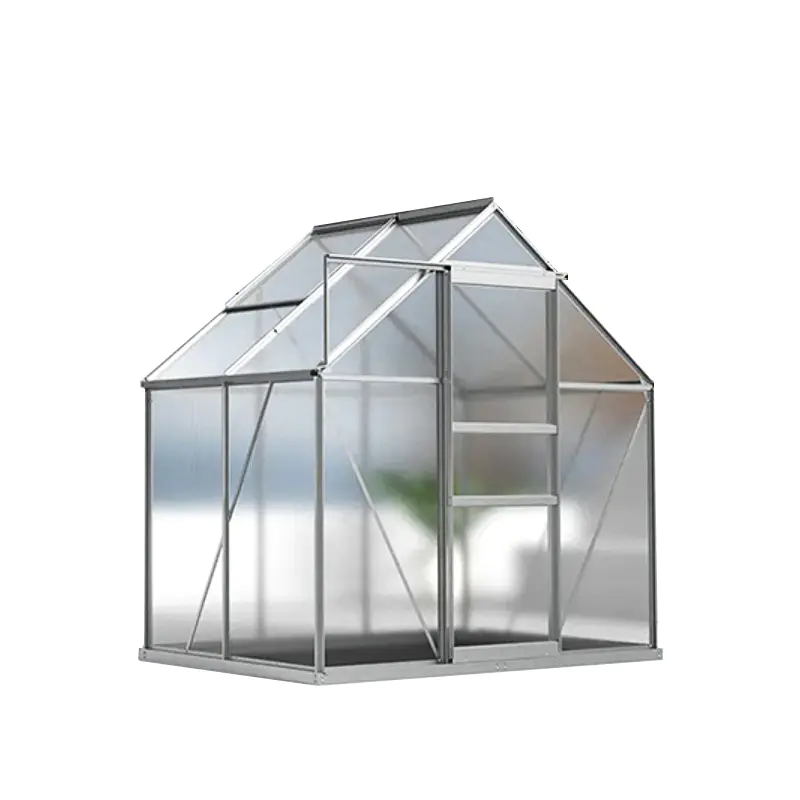
Why Structural Strength Is a Commercial Growing Requirement
LOAD
The Load Demands That Eliminate Lightweight Options
A single-season hobby greenhouse tolerates modest loads. A year-round commercial facility does not have that margin. Overhead irrigation systems, supplemental lighting rigs, trellis networks for climbing crops, shade cloth and thermal blanket systems — all of these hang from the greenhouse structure and add cumulative weight that a lightweight frame cannot support without deflecting or failing. Snow load compounds the problem in climates with significant winter precipitation. A frame that holds up through a light snow event may buckle when an unexpected heavy fall arrives. Wind load creates lateral and uplift forces that lightweight structures resist poorly, particularly on large-span greenhouses where the surface area exposed to wind is substantial. Steel carries far higher loads per unit cross-section than aluminum. A greenhouse with steel frame construction can span wider bays, support heavier hanging loads, and resist wind and snow events without the bracing compromises that lighter-frame alternatives require. For a commercial operation expecting the structure to serve for decades, that load capacity is not a luxury — it is the reason the investment holds its value over time.
Does Span Width Actually Matter for Growing Efficiency?
BAY
How Bay Width Affects Usable Floor Space and Workflow
Bay width — the distance between structural columns — determines how the interior floor space can be used. Narrow bays force growers to work around columns that interrupt growing rows, circulation paths, and equipment movement. Wide bays eliminate that interruption and allow unbroken growing space across the full floor area. Steel's structural properties allow wider spans without additional intermediate columns compared to aluminum. In a commercial flower or vegetable operation, this translates into more usable growing area per unit of covered land, better machinery access for automated transplanting or harvesting equipment, and simpler logistics for staff moving between work zones. The benefit compounds when the operation involves rolling benches, overhead monorail systems, or autonomous growing vehicles — all of which require clear, unobstructed paths. A wider-bay steel frame greenhouse accommodates these systems without structural redesign, whereas a lighter frame may require expensive modification to remove or reinforce columns after initial construction.
Long-Term Durability and Maintenance Cost
The ongoing cost of maintaining a greenhouse structure is as important as the initial capital cost — arguably more so over a twenty-year operating horizon. Steel frames used in commercial greenhouse construction are typically hot-dip galvanized, a process that bonds a zinc coating to the steel surface at a molecular level, providing corrosion protection that outlasts painted or powder-coated finishes by a considerable margin.
Hot-dip galvanized steel in a greenhouse environment — exposed to humidity, irrigation mist, and fertilizer residue — maintains its protective coating far longer than untreated steel or aluminum in similar conditions. Aluminum does not rust, but it oxidizes in ways that affect appearance and can cause fitting failures at connection points. Galvanized steel holds its structural and surface integrity with minimal intervention.
Practical maintenance for a galvanized steel greenhouse frame over its service life typically involves:
Periodic Inspection
Periodic inspection of connection points and fasteners for signs of surface corrosion.
Recoating Damage
Recoating any areas where the galvanized layer has been damaged by impact or abrasion.
Fastener Checks
Checking and tightening fasteners that may have loosened through thermal cycling.
Total Cost Comparison
Compare this to lighter structures that may require full re-covering, frame repair, or component replacement within a decade of installation, and the total cost picture shifts considerably.
Automation Compatibility: Why the Frame Is the Foundation
Commercial growing has moved rapidly toward automation. Climate control systems, automated irrigation and fertigation, sensor networks, supplemental lighting, and increasingly autonomous growing equipment all require a structure that can support their physical installation and withstand the vibration and load variation they introduce.
Mounting Rigidity for Automated Systems
A greenhouse with steel frame construction provides the mounting rigidity that automated systems need. Hanging lighting systems need attachment points that do not flex under load — flex causes luminaire movement that affects light distribution and can damage the fittings over time. Retractable shade and thermal screen systems run on tracks that must be level and straight — a frame that deflects under screen tension produces tracking errors that cause the screens to jam or wear prematurely.
Supporting Progressive Expansion
Drip irrigation and overhead spray systems carry water weight that varies as zones activate and deactivate. Automation control boxes, electrical conduit, and sensor mounting brackets add further distributed loads across the structure. A steel frame accommodates all of this without the frame stiffness degrading over time. For operations planning to add automation progressively — starting with basic climate control and expanding to full growing system integration over several years — choosing a steel structure at the outset avoids the cost of frame reinforcement when load demands increase.
Custom Size Greenhouse Design: Why Standardized Structures Fall Short
Commercial growing operations are not uniform. The land parcel may be irregular. The crop may require specific aisle widths for mechanized harvesting. The climate may demand a particular roof pitch for snow shedding. A structure that does not account for these variables produces compromises that reduce efficiency and increase operating cost.
Custom size greenhouse design allows the bay width, ridge height, roof pitch, sidewall height, ventilation placement, and gutter configuration to be specified according to the actual requirements of the growing program rather than adapted from a standard template. Custom greenhouse manufacturers who work with steel can produce this range of variations at commercial scale — the material's fabrication characteristics suit custom profiling and welding in ways that make adaptation practical.
Key dimensions that typically benefit from customization:
Bay Width
Matched to the growing row layout or equipment path requirements.
Ridge Height
Determined by crop height at maturity, plus the headroom required for overhead systems.
Sidewall Height
Affects ventilation efficiency and usable growing volume near the perimeter.
Roof Pitch
Steeper pitches shed snow more effectively in high-precipitation climates; shallower pitches reduce wind load in exposed sites.
Gutter Height
Determines the effective working height at the perimeter and affects natural ventilation airflow patterns.
Working with custom greenhouse manufacturers who can translate the growing program into structural specifications produces a facility that performs as intended rather than one that requires workarounds from the day it is commissioned.
Scalability: Planning for Growth From the Start
Commercial growing operations rarely stay at their initial scale. Market demand, crop diversification, or changes in the operation's business model may require adding covered area as the enterprise grows. An infrastructure choice made at initial construction either supports that expansion or creates barriers to it.
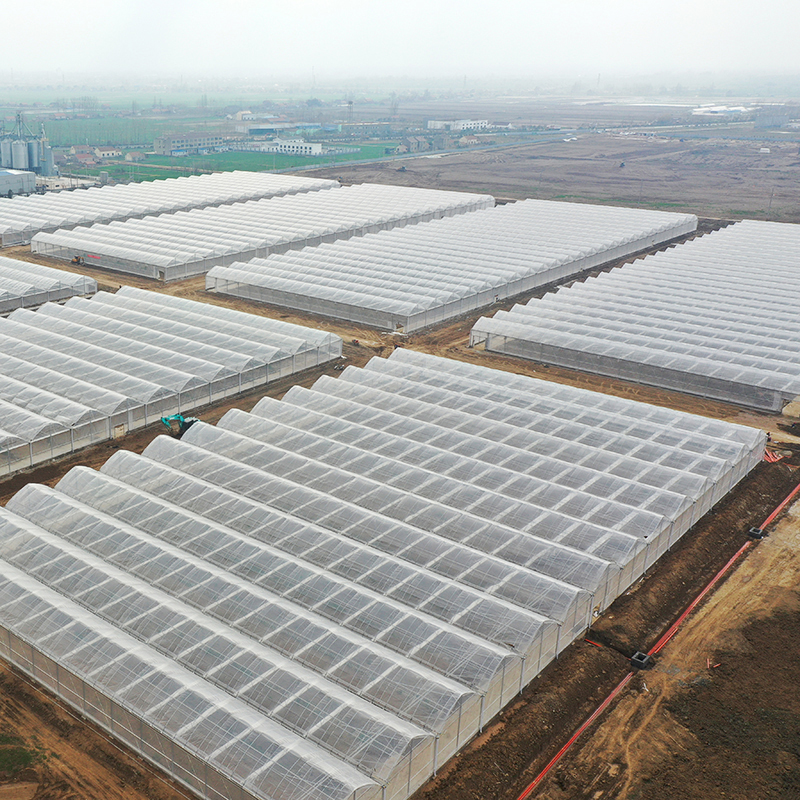
Steel frame greenhouse systems expand more straightforwardly than most alternatives. End-wall extension — adding additional bays to an existing structure by removing the end gable and continuing the frame — is a standard practice for modular steel greenhouse systems. Gutter-connected multi-span configurations allow the covered area to grow in both directions without the inefficiency of separate freestanding structures that require full perimeter cladding.
Wholesale Procurement Advantage
For operations purchasing through commercial greenhouse wholesale channels, this modularity means that the procurement and construction process for an expansion can follow the same specifications and supplier relationship as the original installation — reducing design work, procurement time, and commissioning complexity for each phase of growth.
Comparing Steel Frame to Alternative Greenhouse Structures
Different structural materials and systems suit different applications. Understanding where each fits helps clarify why steel holds advantages in commercial settings.
| Factor |
Steel Frame Greenhouse |
Aluminum Frame |
Galvanized Tube (Low-tech) |
| Structural load capacity |
High |
Moderate |
Lower |
| Span width potential |
Wide without extra columns |
Narrower |
Limited |
| Corrosion resistance |
High with galvanization |
Good (oxidation risk at joints) |
Variable |
| Automation compatibility |
Strong |
Moderate |
Limited |
| Custom sizing options |
Wide range |
Moderate range |
Limited range |
| Service life expectation |
Long |
Moderate to long |
Shorter |
| Expansion modularity |
Good |
Moderate |
Difficult |
| Initial cost |
Higher |
Moderate |
Lower |
| Long-term maintenance cost |
Lower |
Moderate |
Higher |
The Overall Picture
The picture that emerges is consistent: steel frame systems carry higher initial cost, but that cost is offset over the operating life by lower maintenance requirements, greater load capacity, and better compatibility with the automation and expansion demands that commercial operations face.
Climate Control and Ventilation in Steel Structures
How Structural Decisions Affect Growing Environment
The physical structure of a greenhouse determines more than its strength — it also shapes how effectively the internal climate can be managed. Ridge height, roof pitch, ventilation opening size and placement, and the ability to run continuous roof vents all influence how air circulation and heat management work inside the growing space. Steel frame systems support continuous ridge vents running the full length of the structure, which is one of the effective natural ventilation configurations for warm-season growing. Motorized vent systems — which open and close automatically in response to temperature sensors — can be mounted on steel frame ridge structures without the deflection concerns that affect lighter frames.
Climate Management Across Seasons
In hot climates, the ability to open a large proportion of the roof area is a key temperature management tool. In cooler climates, the same vent area is closed and the thermal envelope relies on well-fitting cladding and, in year-round operations, on a double-layer polyethylene or multi-wall polycarbonate skin supported by the steel frame. Steel's rigidity ensures that the cladding attachment is consistent and that thermal seals at frame connections do not open through frame movement.
Cladding Options Compatible With Steel Frame Systems
The steel frame does not determine the cladding material — it supports a range of options that suit different crop types, climate conditions, and budget structures.
Common Cladding Options Used With Commercial Steel Frame Greenhouses
- Single or double layer polyethylene film — widely used for vegetable production; good light transmission; replaced periodically as the film degrades
- Multi-wall polycarbonate panels — good thermal insulation; durable; suited to heated year-round operations and crops requiring consistent temperature
- Single-skin glass — used in high-value crop production where light transmission quality justifies the cost and weight
- Shade cloth side panels and roof inserts — used in tropical climates or summer-only operations where cooling is the priority
The steel frame provides the structural support that accommodates the weight and wind load of any of these cladding types. Switching cladding as the operation's needs evolve — from poly film to polycarbonate as the growing program expands, for example — is possible on a steel frame system in ways that lighter structures may not support without reinforcement.
Investment Return Over the Operating Life
A commercial greenhouse is not a short-term purchase. It is an agricultural infrastructure investment that the growing operation depends on for production continuity. Evaluating that investment on initial capital cost alone produces a misleading picture.
The relevant comparison is total cost over the expected service life — including maintenance, repair, replacement of components, production disruption from structural failures, and the cost of operating with a structure that limits the growing program rather than enabling its growth.
Long-Term Return
A well-constructed steel structure greenhouse supported by hot-dip galvanized components, properly designed for the site's climate loads and the operation's growing requirements, accumulates relatively low maintenance cost over its life compared to lighter alternatives that require more frequent repair and earlier replacement. The production value generated by a structure that supports reliable year-round growing, automation integration, and progressive expansion adds to that return on the investment side.
Choosing a Supplier Who Understands Commercial Requirements
About the Manufacturer
Infrastructure decisions of this scale benefit from working with suppliers who understand commercial growing contexts rather than those whose product range is oriented toward residential garden structures. Taizhou Sunshine Garden Products Co., Ltd. manufactures steel frame greenhouse systems and related growing structures for commercial agricultural applications, with product lines covering custom size configurations, multi-span gutter-connected designs, and commercial greenhouse wholesale supply. Their engineering and production capabilities support the range of structural specifications that commercial operations require — including custom bay widths, ridge heights, and ventilation configurations tailored to specific growing programs and site conditions. If you are planning a commercial greenhouse project, evaluating expansion options for an existing facility, or sourcing at wholesale volume for distribution or agricultural development projects, reaching out to discuss structural requirements, available configurations, and supply timelines is a practical way to begin matching the right infrastructure to your growing program.



 英语
英语 俄语
俄语 德语
德语 西班牙语
西班牙语 法语
法语

.jpg?imageView2/2/w/800/h/800/format/webp/q/75)
.jpg?imageView2/2/w/800/h/800/format/webp/q/75)
.jpg?imageView2/2/w/800/h/800/format/webp/q/75)
.jpg?imageView2/2/w/800/h/800/format/webp/q/75)
.jpg?imageView2/2/w/800/h/800/format/webp/q/75)
-1.jpg?imageView2/2/w/800/h/800/format/webp/q/75)
.jpg?imageView2/2/w/800/h/800/format/webp/q/75)
-1.jpg?imageView2/2/w/800/h/800/format/webp/q/75)
.jpg?imageView2/2/w/800/h/800/format/webp/q/75)
-1.jpg?imageView2/2/w/800/h/800/format/webp/q/75)
-1.jpg?imageView2/2/w/800/h/800/format/webp/q/75)