

Indoor farming changes the relationship between crops and their growing environment in ways a traditional field operation never had to consider. Plants are no longer dependent on an open field or natural daylight alone, sitting exposed to whatever the sky delivers that day. Growers can arrange planting areas inside buildings, greenhouses, and other controlled spaces where artificial lighting becomes part of the daily production routine, almost like another utility running alongside water and power.
A Sodium Grow Light can serve as one option within this type of environment, chosen for a specific reason rather than habit. Its role isn't simply making a room brighter for its own sake. The lighting system needs to fit the crop layout, growing method, working space, and overall farm operation running around it every day. Natural light can vary according to weather, building design, season, and location, sometimes shifting week to week in ways a grower can't control. Indoor growers therefore need to think carefully about how plants receive light when natural conditions aren't enough for the intended growing plan already mapped out on paper.

This becomes particularly relevant to year-round production that doesn't pause for winter. When growing activities continue inside a controlled space, lighting becomes part of a more predictable daily routine a grower can actually schedule around. The grower can plan the growing area around the available equipment, instead of relying entirely on outdoor conditions that shift without warning. Greenhouse cultivation presents a slightly different situation worth separating out. Natural light can remain part of the growing environment, while artificial lighting may get used to support the overall lighting plan layered on top of it. This creates a mixed environment where fixture placement and daily operation require careful thought before installation day arrives.
Vertical farming brings another challenge entirely, stacking growing space rather than spreading it out. Plants can be arranged on multiple levels, so lighting has to work within a compact structure that leaves little room for error. A fixture that suits an open greenhouse may not fit naturally into a multi-level growing system squeezed into a warehouse. These differences show why artificial lighting should be considered as part of the farm design from the earliest planning stage. The light source, fixture structure, growing layout, and working environment all need to make sense together as one coherent system.
Vertical farming uses available indoor space in a different way from traditional crop production spread across acres. Instead of spreading plants across one broad growing area, crops may be arranged across several levels stacked one above another. This can make lighting placement a lot more important than it would be in an open field.
Grow Lights Sodium can be considered for indoor growing areas where artificial light forms part of the crop environment day in and day out. The fixture needs to be positioned so that it works with the structure supporting the plants, rather than fighting against the racks and shelving already in place. Space planning becomes a daily concern in vertical farms in ways that surprise people new to the setup. Workers may need to reach different growing levels, inspect plants, move supplies, clean surfaces, and maintain equipment throughout a normal shift. Lighting fixtures should not make these activities unnecessarily difficult for someone climbing between levels with a watering can.
The physical shape of a fixture can therefore matter quite a bit in this context. A product with a suitable mounting arrangement can be a lot easier to integrate into a particular growing structure already built out. Cable placement and access should also be considered during installation, since a stray cord in a walkway becomes a hazard fast. Vertical farming also creates a need for organized lighting zones spread across the facility. Different growing areas may contain different crops or be managed according to different production routines running on separate schedules. A flexible layout can help growers organize these areas more clearly instead of treating the whole facility as one uniform block.
| Vertical Farming Concern | Lighting Design Consideration |
|---|---|
| Multiple growing levels | Fixture placement should suit each level |
| Limited working space | Equipment should leave room for daily tasks |
| Plant arrangement | Light should be planned around the crop layout |
| Maintenance access | Workers need practical access to fixtures |
| Changing crop zones | Lighting should fit possible layout changes |
| Equipment organization | Fixtures should work with the wider farm structure |
The goal isn't making every vertical farm use the same lighting arrangement copied from a competitor. Each operation has its own physical structure and production needs built up over time. A suitable Sodium Grow Light should be considered according to the actual space in front of a grower, rather than a general description of indoor farming pulled from a brochure.
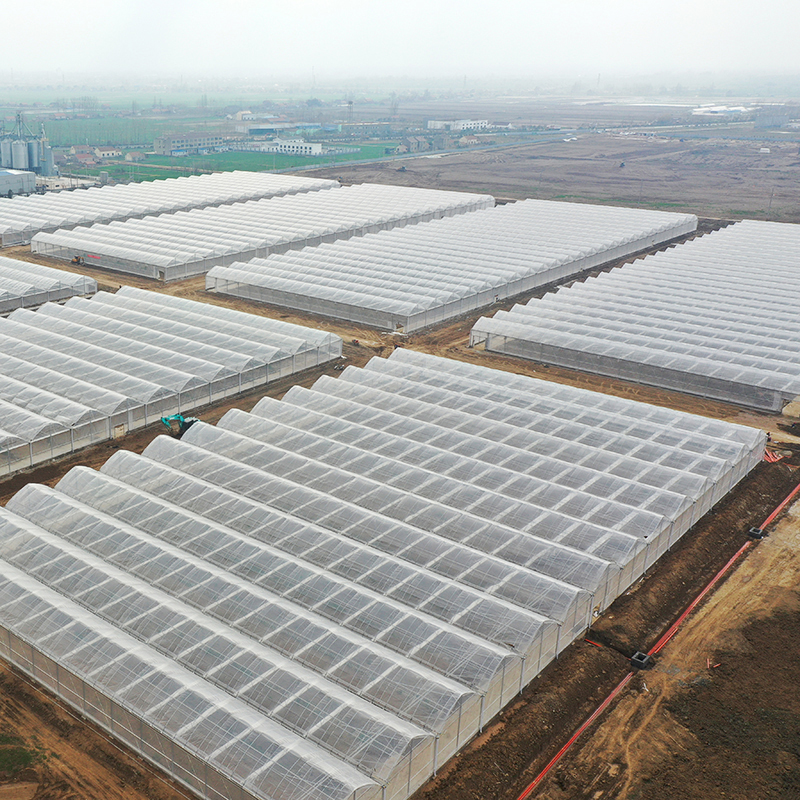
Greenhouses create a bridge between outdoor and indoor growing that a fully enclosed warehouse doesn't have to manage. Natural daylight enters the structure through the glass or plastic roofing, but growers may still use artificial lighting as part of their production plan to fill in the gaps.
This creates a different role for High Sodium Grow Lights compared to a windowless facility. The fixture doesn't necessarily need to replace natural light entirely. Instead, it can become part of an artificial lighting environment designed around the conditions already present inside the greenhouse. The structure of the greenhouse can influence fixture placement quite a bit in practice. Roof design, plant rows, working paths, support structures, and ventilation equipment may all occupy the same space a lighting fixture needs to share.
Growers also need to consider the relationship between lighting equipment and the plants as they mature over a season. As crops grow, their height and arrangement can change substantially from seedling to harvest. A lighting system that fits the initial layout should still make sense as the growing area develops week over week. Maintenance is another practical issue worth planning for early. Greenhouse environments involve regular cleaning, plant care, irrigation, and movement throughout the day. Lighting fixtures need to be accessible enough for routine inspection and care without requiring a ladder every time.
The surrounding environment can also affect product selection in ways easy to overlook. Moisture, humidity, dust, and plant material are all part of agricultural work that a fixture has to tolerate. Buyers should review the manufacturer's instructions to make sure the selected fixture is suitable for the intended location rather than assuming one product fits every greenhouse. A HPS Grow Light Fixture can therefore be evaluated as part of the complete greenhouse environment surrounding it. The fixture's physical structure, installation method, access, and relationship with other equipment all matter together, not in isolation.
This approach gives growers a much clearer way to think about artificial lighting before signing an order. The question becomes less about choosing a particular light category off a list. It becomes more about deciding how that category fits the actual growing space it will live in.
Year-round production requires growers to manage the growing environment across changing outdoor conditions that don't pause for a harvest cycle. Indoor systems can provide more control over when and where crops get cultivated, but they also create a need for carefully planned artificial environments that keep everything on schedule.
Lighting is one part of that planning process worth mapping out early. When daylight changes with the seasons, growers may need artificial lighting to maintain the intended routine within the growing area regardless of what's happening outside. A Sodium Grow Light can become part of this setup where its characteristics suit the crop and facility in question. The fixture can be included in the farm's daily lighting schedule and integrated with the physical layout of the growing area already in place.
The idea of year-round production is also connected with space management in ways that ripple through the whole operation. A growing facility may need to support different crops at different stages within the same building. This can require lighting arrangements that are easy to organize as production activities change from one batch to the next. Indoor farms may also operate in buildings that were not originally designed for agriculture at all, like a converted warehouse or old retail space. Ceiling height, available electrical arrangements, access paths, and equipment locations can affect how lighting gets installed in a space never meant for crops.
This makes planning important before purchasing anything. Growers can review the entire growing space and identify where fixtures can be placed without interfering with other activities already underway. A practical lighting plan may consider several points worth walking through together:
These points can help connect artificial lighting with actual farm operations happening on the ground. They also make it a lot easier to discuss requirements with lighting suppliers before placing an order.
A grow light is not just a lamp screwed into a socket somewhere overhead. The fixture surrounding it affects how the product gets installed, maintained, and integrated into the growing environment it's meant to serve.
A HPS Grow Light Fixture can include several physical elements that influence its use day to day. The housing, mounting structure, cable arrangement, access points, and overall shape can all affect how the product fits inside a farm already built around other equipment. This becomes particularly important in crowded growing spaces where every inch matters. Workers need room to move between crops and equipment without ducking under low-hanging fixtures constantly. A fixture that occupies unnecessary space may make the growing area a lot harder to manage than it needs to be.
Heat is another practical consideration worth taking seriously. Artificial lighting equipment can affect the environment around it in ways a grower needs to plan for, not just the plants underneath. Growers need to follow product instructions and consider how the fixture fits into the overall growing space it's placed within. Maintenance access should also be considered during installation, not tacked on afterward as an afterthought. Workers may need to clean equipment or inspect fixtures as part of normal farm routines that repeat weekly. A design that allows practical access can make these tasks a lot easier to organize into a regular schedule.
Fixture placement can also affect the visual layout of a growing facility in ways that matter for workflow. In vertical farms, fixtures may need to fit between different planting levels stacked tightly. In greenhouses, they may need to work around support structures and access paths already crisscrossing the space. This is why Grow Lights Sodium should be evaluated as a complete product category, rather than by the light source alone sitting inside the housing. The fixture needs to make sense within the physical and operational environment surrounding it.
Indoor farms may grow many types of plants under the same roof, from compact herbs to sprawling vine crops. Their size, structure, growing cycle, and arrangement can vary considerably from one row to the next. These differences can affect how artificial lighting gets planned across the facility.
Leafy crops may occupy a relatively compact growing area that stays low and dense. Other plants can become taller or spread across a larger space as they mature toward harvest. The lighting system should be considered alongside these physical differences, not applied uniformly regardless of what's growing underneath. Plant spacing is another factor worth accounting for early. Closely arranged crops create a different lighting environment from plants placed farther apart with room to spread. The fixture layout needs to reflect the way the growing area is actually organized on the ground.
A Sodium Grow Light should therefore be selected according to the intended crop application rather than a generic assumption. Growers should avoid assuming that one lighting arrangement will suit every plant or growing method they might run through the same facility. Crop rotation can also influence the decision in facilities that switch things up regularly. If a facility regularly changes what it grows from season to season, the lighting system may need enough flexibility to work with different layouts without a full rebuild each time.
The growing stage matters as well, sometimes more than the crop type itself. Young plants and mature plants can occupy different spaces and have different physical forms as they develop. Lighting placement may need to account for these changes as a batch moves from seedling tray to full-grown plant. This doesn't mean that every crop requires a completely separate lighting system built from scratch. It means that buyers should explain the intended application when discussing products with suppliers, rather than leaving it vague.
Clear communication can make product selection a lot more practical in the end. Instead of asking which light is suitable for indoor farming in general, a grower can describe the crop, growing structure, room layout, and intended production process in specific terms.
Purchasing decisions should begin with the actual growing environment a fixture will live in, not a spec sheet reviewed in isolation. A product that appears suitable in a catalog may not fit the physical structure or daily workflow of a particular farm once it actually arrives on site.
For High Sodium Grow Lights, buyers can examine several areas before making a decision that's hard to reverse later. These include fixture structure, mounting method, maintenance access, installation requirements, operating instructions, and suitability for the intended growing location it will occupy. The product should also be considered in relation to the farm's crop arrangement already mapped out. A lighting system for a vertical growing structure may need a genuinely different physical arrangement from one used across an open greenhouse with more headroom.
Buyers should also pay attention to responsible product descriptions when reviewing supplier claims. Lighting manufacturers and distributors should avoid claims that guarantee crop results or suggest that a particular fixture will produce a specific harvest outcome in every situation, since growing conditions vary too much for that. A clear product description can instead explain what the fixture is designed for and where it can be used realistically. This gives buyers useful information without turning ordinary product features into unsupported promises that fall apart in practice.
| Buyer Area | Practical Question |
|---|---|
| Growing method | Is the product intended for indoor, vertical, or greenhouse use? |
| Crop arrangement | How are the plants positioned? |
| Installation | Where can the fixtures be mounted? |
| Maintenance | Can workers access the equipment conveniently? |
| Environment | Is the fixture suitable for the intended growing conditions? |
| Workflow | Will the equipment interfere with daily farm activities? |
| Product guidance | Are installation and care instructions clear? |
| Future changes | Can the lighting arrangement adapt to a changing crop layout? |
Wholesale buyers may also need to consider product variety when placing a bulk order for multiple clients. Different customers may operate different growing systems under one roof or across several sites, so a lighting supplier may need several fixture designs for different applications rather than a single catalog entry. This application-based approach can help make product sourcing more organized on both sides of the transaction. It gives manufacturers clearer information and helps buyers compare products according to real working conditions instead of marketing copy.
Modern farming spaces are becoming more varied than a single greenhouse model could ever cover. Greenhouses, indoor farms, vertical systems, and mixed growing environments each create genuinely different requirements for artificial lighting depending on the layout.
This is encouraging lighting manufacturers to look beyond the light source itself as the only variable worth optimizing. Fixture shape, installation, maintenance, and compatibility with growing structures are becoming important parts of product development that show up in design meetings now. For HPS Grow Light Fixture development, this can mean greater attention to how the fixture fits different working environments a customer might actually operate in. A product used in a greenhouse may have different physical priorities from one installed within a multi-level indoor farm stacked three or four rows high.
The same principle applies to High Sodium Grow Lights sold across different market segments. Product design needs to consider the people who install, operate, clean, and maintain the equipment day after day, not just the plants receiving the light. Indoor farming also encourages more organized use of growing space across an entire facility. As growers make better use of vertical areas and controlled environments squeezed into existing buildings, lighting equipment needs to fit naturally into these layouts rather than forcing a redesign around it.
This creates opportunities for product manufacturers to develop different fixture structures for different applications rather than a one-size-fits-all catalog. Instead of treating indoor farming as one broad market lumped together, suppliers can consider vertical growing, greenhouse cultivation, crop rooms, and other growing environments separately, each with its own product line. Growers can benefit from the same application-focused approach when shopping for equipment. A lighting decision becomes a lot easier to evaluate when the crop, facility, layout, and daily workflow are clearly defined from the start.
As artificial lighting becomes a regular part of controlled farming environments spreading across the industry, the conversation is moving beyond the question of whether crops need additional light at all. More attention is being placed on how lighting equipment fits the space, how workers interact with it during a normal shift, and how the fixture supports an organized growing routine that holds up over a full production cycle.

 英语
英语 俄语
俄语 德语
德语 西班牙语
西班牙语 法语
法语

.jpg?imageView2/2/w/800/h/800/format/webp/q/75)
.jpg?imageView2/2/w/800/h/800/format/webp/q/75)
.jpg?imageView2/2/w/800/h/800/format/webp/q/75)
.jpg?imageView2/2/w/800/h/800/format/webp/q/75)
.jpg?imageView2/2/w/800/h/800/format/webp/q/75)
-1.jpg?imageView2/2/w/800/h/800/format/webp/q/75)
.jpg?imageView2/2/w/800/h/800/format/webp/q/75)
-1.jpg?imageView2/2/w/800/h/800/format/webp/q/75)
.jpg?imageView2/2/w/800/h/800/format/webp/q/75)
-1.jpg?imageView2/2/w/800/h/800/format/webp/q/75)
-1.jpg?imageView2/2/w/800/h/800/format/webp/q/75)