Greenhouse projects that stall at the installation stage almost always share the same root cause: the planning looked complete on paper, but the sequence of decisions in the field revealed gaps that nobody had anticipated. Steel Structure Greenhouses are not difficult to install when the process is well-planned — but that planning needs to account for site preparation, foundation type, structural assembly sequence, covering material installation, and environmental system integration before a single component goes into the ground. Buyers who approach a Steel Structure Greenhouse project without that sequence clearly defined end up with delays, rework, and in some cases structural issues that require corrective work after the fact.
Understanding What a Steel Structure Greenhouse Actually Involves
The Structural System Behind the Frame
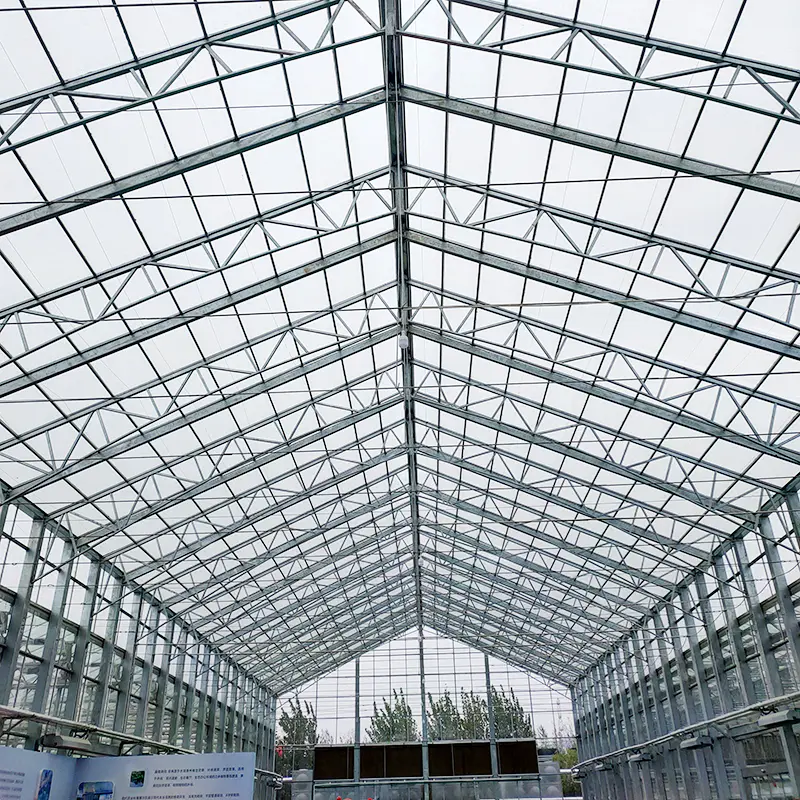
A Steel Structure Greenhouse uses galvanized steel or painted steel sections as the primary load-bearing framework. The frame carries the weight of the covering material — whether polycarbonate panels, glass, polyethylene film, or shade cloth — as well as wind loads, snow loads where applicable, and the weight of any internal systems like irrigation rails or hanging fixtures.
What distinguishes steel frame construction from lighter alternatives:
- Steel spans can cover wide, column-free growing areas that aluminum profiles cannot match at equivalent cost
- Structural integrity under dynamic loads — particularly wind — is stronger in welded or bolted steel than in clip-assembled aluminum
- Heavier steel sections resist deformation under point loads from equipment, hail, and ice accumulation better than thinner-walled alternatives
- The material accepts both galvanizing and powder coating, providing corrosion protection options suited to different climatic conditions
For commercial greenhouse operations, agricultural producers, and wholesale greenhouse buyers sourcing large-span structures, steel is often the practical frame material rather than simply a preference.
Site Assessment Before Installation Begins
Why Ground Conditions Determine the Foundation Approach
The installation sequence for a Steel Structure Greenhouse starts with the site, not the frame. A site that looks suitable for construction may have soil conditions that affect foundation type, drainage characteristics that create future problems, or orientation issues that compromise growing performance.
Site assessment steps before any foundation work:
- Orientation verification: The greenhouse should be oriented to maximize light capture for the crops being grown, taking into account the sun path at the specific latitude and the surrounding obstructions like trees or buildings that create shadow
- Drainage evaluation: Standing water near the greenhouse perimeter creates foundation stability problems over time and promotes disease conditions inside — surface grading and subsurface drainage need to be addressed before foundation work begins
- Soil bearing capacity: Heavy steel structures with snow loads or wind exposure require foundations that are sized for the actual soil conditions, not assumed conditions — soft clay or fill soil requires different foundation treatment than well-consolidated subsoil
- Utility location: Electrical supply for climate systems, water supply for irrigation, and drainage outlets all need to be planned relative to the greenhouse footprint before the foundation limits access to the ground
Foundation Types and When Each Applies
Which Foundation Approach Fits a Steel Frame Structure?
Steel frame greenhouses can be installed on several foundation types, and the appropriate choice depends on the span, the load, the climate, and the site conditions.
- Ground anchor posts: Steel posts are driven or cast into the ground at each column position without a continuous perimeter foundation. This approach works well on sites with adequate bearing capacity, where frost penetration is not severe enough to cause post heave, and where the structure size and loading do not require the lateral stiffness of a perimeter wall.
- Continuous perimeter footing: A concrete perimeter foundation running the full length of each sidewall provides a stable base that resists lateral spreading under wind and snow loads. This is the standard approach for larger commercial greenhouses where span and load create significant lateral forces, and for sites with variable soil conditions where point anchors would have inconsistent bearing capacity.
- Concrete piers at column positions: Individual concrete piers at each column location provide bearing capacity where continuous footings would be excessive. This is a common approach for medium-span greenhouses on sites with adequate subsurface conditions.
- Concrete slab foundation: A full concrete floor slab serves as both the growing floor and the structural foundation in some commercial operations, particularly where hard floor paths between growing benches are part of the facility design. This approach adds cost but delivers a controlled, level, and drainable growing environment.
Structural Assembly: The Sequence That Matters
How Steel Frame Components Go Together
Steel greenhouse frames are typically shipped as prefabricated components — base rails, columns, rafters, ridge elements, and bracing sections — that assemble on site. The assembly sequence affects both the structural integrity of the completed frame and the safety of the installation process.
A standard assembly sequence for a single-span steel frame greenhouse:
- Install base rail or anchor sill along the perimeter: This establishes the dimensional reference for the entire structure. Accuracy here propagates through every subsequent step — a base rail that is not level or not square creates alignment problems at the columns and roof.
- Set and plumb the endwall columns: Endwall columns establish the height and vertical alignment that determines whether the roof structure will assemble cleanly. Each column should be plumbed in both directions and temporarily braced before proceeding.
- Install the end-wall rafter and ridge connector: The endwall is structurally critical because it carries the end loads from the roof. Completing the endwall frame before adding intermediate bays provides a stable anchor for the progressive assembly.
- Add intermediate bay columns and rafters: Working from one endwall toward the other, each bay is assembled sequentially. Columns are erected, rafters are lifted into position, and purlins are installed to connect rafters at the appropriate spacing.
- Install bracing: Longitudinal bracing between column bases, and diagonal bracing in the roof plane, stabilizes the completed frame against racking under lateral load. Bracing is installed as each section is completed, not deferred until the whole frame is up.
- Check and adjust alignment before covering: Once the steel frame is complete, verify that the ridge is straight, the base rail is level, and column spacing is consistent along the full length. Adjustments are far easier before covering materials are attached.
Covering Material Installation
How the Covering Attaches to a Steel Frame
The method of attaching covering material to a steel greenhouse frame depends on the covering type being used. Steel frame greenhouses are used with polyethylene film, twin-wall polycarbonate panels, glass, and shade cloth — each with different attachment systems.
Polyethylene film on steel frames
Film is typically attached using a locking channel system — a steel or aluminum extrusion fixed to the frame that accepts a flexible locking insert. The film is stretched across the frame and the locking insert is pressed into the channel, clamping the film. This system allows film to be replaced without structural modification and provides tension across the full covering area.
Polycarbonate panels on steel frames
Twin-wall polycarbonate panels are typically attached using an H-profile connecting section between panels and a U-profile capping at the edges. For steel frames, the polycarbonate system is normally fixed to intermediate purlins that span between the main structural elements. Panel expansion under temperature variation needs to be accommodated in the joint design — polycarbonate expands significantly across temperature ranges, and a joint system that does not allow for this movement will crack panels or pull connections.
Glass on steel frames
Glass greenhouse glazing on steel frames uses glazing bars fixed to the purlins, with glass sheets seated in rubber or silicone gaskets and held by capping sections. Proper drainage of condensation away from the glazing joints is important — standing water in glazing channels accelerates corrosion in steel components and promotes biological growth at joint lines.
Ventilation and Climate System Integration
Why Ventilation Design Affects the Installation Sequence
Ventilation is not an afterthought in steel greenhouse installation — it is a system that needs to be designed into the structure before construction begins, because many ventilation options require penetrations through the covering, specific framing details, or structural provisions that cannot be retrofitted easily.
Common ventilation configurations in steel frame greenhouses:
- Ridge vents: Continuous or segmented openings at the roof peak that allow hot air to escape by natural convection. Ridge vents require structural framing on either side of the opening and a covering detail that prevents rain entry while allowing air movement.
- Side wall vents: Roll-up sides on polyethylene film greenhouses, or hinged or sliding panels on polycarbonate and glass structures, provide ventilation at growing height. The framing detail for side wall vents needs to be built into the column and base rail design.
- Mechanical fan and pad systems: Evaporative cooling using fans and wet pads requires fan wall penetrations through the endwall covering, structural provision for fan weight, and water supply and drainage for the pad system. All of these need to be planned before the endwall is completed.
Custom Size Greenhouse: Planning Before Specification
What Changes When a Project Requires Non-Standard Dimensions
A standard-catalog greenhouse may not fit every site or growing requirement. Custom Size Greenhouses start from a different design process — the dimensional requirements of the growing operation, the site constraints, and the structural demands of the location determine the frame specification rather than adapting an existing product to a new application.
Key planning inputs for a custom greenhouse project:
- Bay spacing: The distance between structural bays determines the span of purlins and covering panels — longer bay spacing reduces column count but increases the structural demand on intermediate elements
- Eave height: Taller eave heights improve air circulation and allow the use of larger growing equipment, but increase wind load on the structure — the frame specification needs to account for the actual eave height, not a standard default
- Covering material span limits: Polycarbonate, glass, and polyethylene film each have span limits between support points — the purlin spacing needs to be set within these limits for the specific covering weight and wind exposure
Comparing Greenhouse Structure Types for Different Applications
Understanding where steel frame construction fits relative to other structural options helps buyers make informed decisions for their specific project scale and application.
| Structure Type |
Span Capability |
Wind/Snow Load Resistance |
Covering Options |
Typical Application |
| Steel Structure Greenhouse |
Wide spans |
High |
All covering types |
Commercial, large-scale agriculture |
| Greenhouse with Steel Frame (light section) |
Medium spans |
Moderate to high |
Film, polycarbonate |
Small commercial, hobby |
| Aluminum profile greenhouse |
Narrower spans |
Moderate |
Glass, polycarbonate |
Retail, residential, small commercial |
| Small aluminum greenhouse |
Limited spans |
Lower |
Polycarbonate, glass |
Home garden, hobby |
| Tunnel/hoop structure |
Wide spans |
Lower — shape-dependent |
Film |
Budget commercial, seasonal use |
What to Verify Before Accepting a Greenhouse Delivery
Inspection Steps That Prevent Installation Problems
Receiving a steel greenhouse kit without a thorough delivery inspection creates problems that become apparent only during assembly — missing components, incorrect lengths, surface damage that compromises corrosion protection, or mismatched connection hardware.
Pre-installation inspection points:
- Count components against the packing list and identify any missing items before the delivery vehicle leaves
- Check cut ends on steel sections for burrs or deformation that will affect assembly fit
- Inspect galvanized or painted surfaces for damage that exposes bare steel — treat any bare areas before installation, not after the frame is assembled
- Verify that connection hardware — bolts, nuts, plates, and anchors — matches the structural drawing specifications
- Confirm that custom-dimensioned components match the design dimensions, particularly for Custom Size Greenhouse projects where components are not interchangeable with standard catalog sizes
Installing a Steel Structure Greenhouse is a systematic process that rewards careful pre-planning and a clear understanding of the sequence in which components depend on each other. Sites that are properly assessed before foundation work begins, frames assembled in the correct sequence, covering systems that accommodate movement and drainage, and ventilation designs integrated into the structural framework rather than added afterward — these are the elements that determine whether a greenhouse installation proceeds smoothly or generates the kind of corrective work that delays productive use. For project developers, agricultural buyers, and commercial greenhouse operators working through specification and sourcing decisions, the quality of the manufactured components and the reliability of the supply relationship behind them affect the installation experience as much as the site and sequence planning does. Taizhou Sunshine Garden Products Co., Ltd. manufactures Steel Structure Greenhouses and Greenhouse with Steel Frame configurations across standard and custom size specifications, supplying commercial greenhouse wholesale buyers and individual project customers with structures suited to a range of agricultural, horticultural, and commercial growing applications. For project inquiries, custom size specifications, or wholesale sourcing discussions, reaching out to their team with project scope and site parameters is the practical next step.



 英语
英语 俄语
俄语 德语
德语 西班牙语
西班牙语 法语
法语

.jpg?imageView2/2/w/800/h/800/format/webp/q/75)
.jpg?imageView2/2/w/800/h/800/format/webp/q/75)
.jpg?imageView2/2/w/800/h/800/format/webp/q/75)
.jpg?imageView2/2/w/800/h/800/format/webp/q/75)
.jpg?imageView2/2/w/800/h/800/format/webp/q/75)
-1.jpg?imageView2/2/w/800/h/800/format/webp/q/75)
.jpg?imageView2/2/w/800/h/800/format/webp/q/75)
-1.jpg?imageView2/2/w/800/h/800/format/webp/q/75)
.jpg?imageView2/2/w/800/h/800/format/webp/q/75)
-1.jpg?imageView2/2/w/800/h/800/format/webp/q/75)
-1.jpg?imageView2/2/w/800/h/800/format/webp/q/75)