

You're planning a growing operation — maybe expanding an existing farm, building a new commercial facility, or setting up a year-round production system — and the question of structure keeps coming up. Wood frames warp. Basic hoop houses don't hold up in rough weather. And you need something that will last, perform consistently, and support the kind of growing environment that a serious crop program demands. A Steel Structure Greenhouse is the answer a growing number of agricultural and commercial growers have landed on — not because it's trendy, but because the underlying engineering makes sense for the scale and demands of modern food and flower production. Understanding what it is, how it's built, and what it can actually do helps cut through the noise.
At its core, a Steel Structure Greenhouse is an agricultural growing facility built around a framework of steel — typically hot-dip galvanized steel sections, tubular columns, and arched or straight-ridge roof elements that distribute load across the structure. The steel skeleton is then clad in covering materials suited to the growing application: polycarbonate panels, tempered glass, polyethylene film, or double-layer inflated film, depending on climate conditions, crop type, and budget.
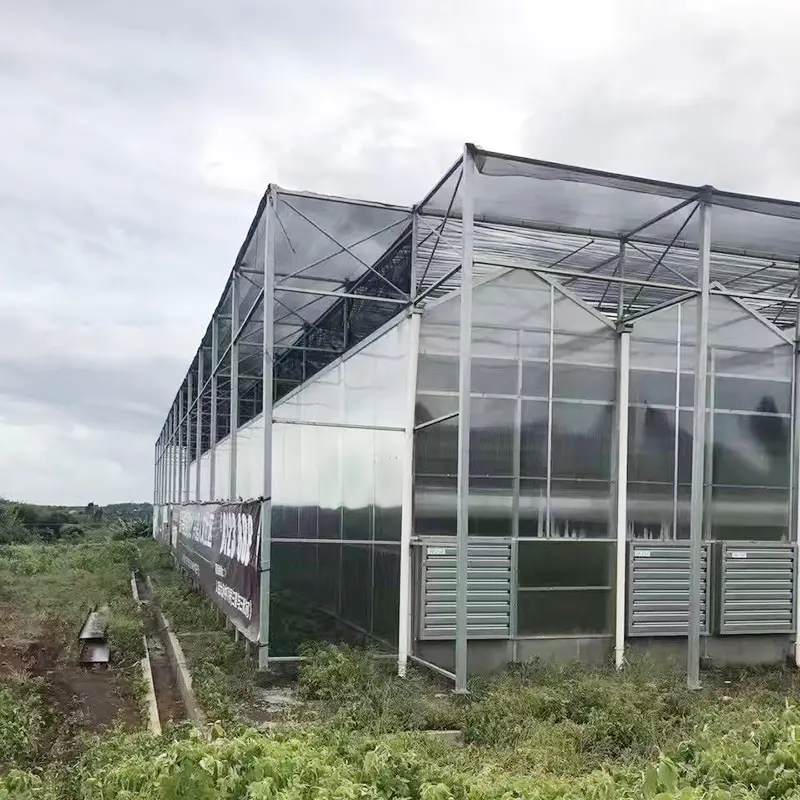
What separates it from simpler greenhouse types isn't just the material. It's the engineering logic behind the frame design — load calculations, connection detailing, foundation anchoring — that allows the structure to stand up to wind, snow, and the general stresses of long-term agricultural use. A greenhouse built around a steel frame isn't merely sturdier than a light aluminum or bamboo alternative. It's a different category of structure, capable of supporting integrated systems, spanning wider internal spaces, and being designed to a specification that matches a specific site and growing program.
The structural system of a steel greenhouse typically consists of several interconnected components, each serving a defined function.
Galvanization is the standard surface treatment for the steel components. A hot-dip galvanized coating protects against corrosion in the humid, chemically active environment inside a working greenhouse — where fertilizer mist, irrigation water, and CO2 enrichment systems create conditions that quickly degrade untreated metal.
The category covers a range of configurations, each suited to different production systems and site conditions.
| Type | Structure Description | Typical Applications |
|---|---|---|
| Single-span arched greenhouse | Single bay with curved roof profile | Small farms, trial plots, nurseries |
| Multi-span Venlo greenhouse | Glass or polycarbonate, modular gutter-connected bays | Commercial vegetable and flower production |
| Sawtooth greenhouse | Angled roof sections for passive ventilation | Tropical climates, high-humidity crops |
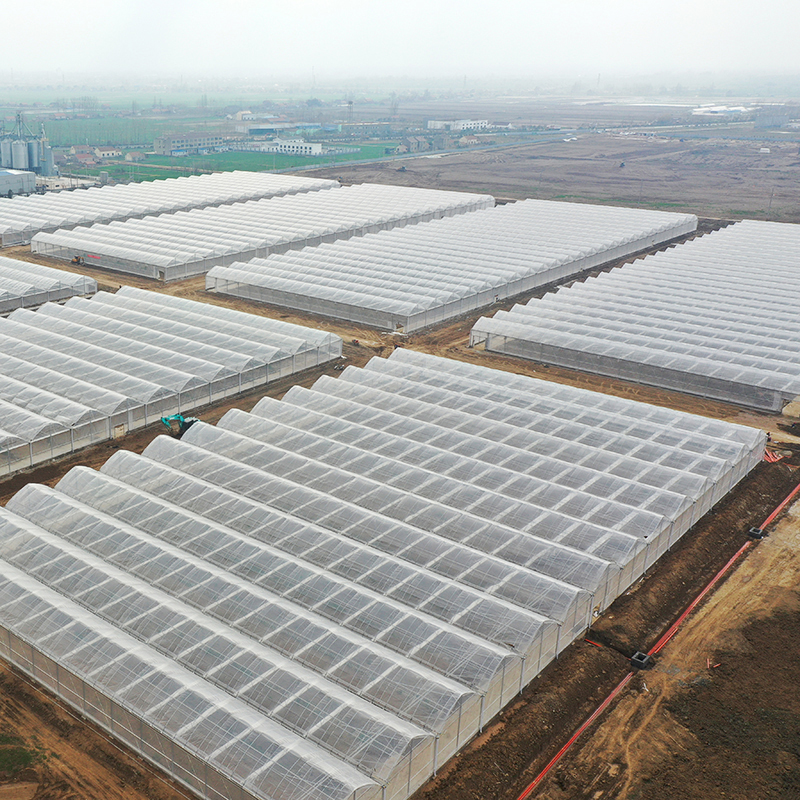
| Tunnel greenhouse with steel frame | Arched steel frame with polyethylene film cladding | Seasonal production, lower-cost commercial growing |
| Gothic arch greenhouse | Pointed arch profile for snow shedding | High-snowfall regions |
| Chinese solar greenhouse | Steel-reinforced passive solar design | Cold-climate winter growing without heating |
The range matters because different crops, climates, and operating models call for different structural approaches. A lettuce grower in a temperate climate running hydroponic systems has different needs from a flower producer in a tropical region or a vegetable farmer dealing with heavy winter snowfall. The structure should match the operational reality, not just the general category.
There are real reasons why steel has become the standard for commercial greenhouse construction at scale — and understanding them helps clarify when a steel-framed structure makes sense versus when a lighter option might be sufficient.
Span capability: Steel allows for wider column spacing and longer unobstructed spans than aluminum or wood. In a commercial growing environment, wider spans mean fewer internal columns, which translates directly into more usable growing area and easier movement of equipment.
Load-bearing capacity: A steel frame can support heavier cladding materials (glass, thick polycarbonate), suspended growing systems (gutter-to-gutter hydroponics, overhead irrigation), and the weight of environmental equipment (fans, cooling pads, shade screens, supplemental lighting). Lighter frames set limits on what can be integrated.
Structural longevity: With proper galvanization and maintenance, a steel greenhouse frame has a working life measured in decades rather than years. That lifespan changes the investment calculation considerably — particularly for commercial operators who need to amortize construction cost over a long production horizon.
Resistance to environmental stress: Steel frames are engineered to specific wind and snow load tolerances. In regions where storms, heavy snowfall, or persistent wind are operational realities, a frame that bends under pressure creates crop loss, equipment damage, and production interruption. Steel-framed structures, properly specified, don't.
Compatibility with automation: Commercial growing is increasingly automated — irrigation, climate control, fertigation, supplemental lighting, shade screens. These systems have weight, they require attachment points, and they generate dynamic loads during operation. A steel structure accommodates the full range of modern growing system integration in ways that lighter frames cannot.
Standard greenhouse dimensions exist for a reason — they simplify manufacturing, reduce costs, and reflect common site and crop configurations. But they don't always fit. And when they don't, forcing a standard size onto a non-standard site or production model creates compromises that show up in growing performance.
A custom size greenhouse addresses this by matching the structure to the actual site dimensions, orientation requirements, and production system rather than the other way around.
When custom sizing makes clear sense:
Custom size greenhouse projects involve more upfront engineering — site survey, load analysis, foundation design — but the result is a structure that performs as intended across its full working life rather than one that's been compromised to fit a standard template.
The structural properties of a steel greenhouse frame make it well suited to a wide range of crops, particularly those grown at commercial scale with intensive production systems.
Vegetables: Tomatoes, cucumbers, peppers, lettuce, and leafy greens are among the crops commonly grown in steel-framed commercial greenhouses. Many of these are grown on vertical trellis or gutter-to-gutter hydroponic systems that place significant structural demands on the overhead frame.
Cut flowers and ornamentals: Roses, chrysanthemums, gerberas, and other cut flower crops are typically grown in large-scale gutter-connected facilities where climate control, shade management, and irrigation uniformity are tightly managed. Steel structures support the mechanical systems required for this level of environmental control.
Seedling and nursery production: Propagation operations require stable humidity and temperature environments across large areas. Steel-framed multi-span designs are common in commercial nursery settings where scale and consistency are both priorities.
Hydroponic and soilless systems: NFT (Nutrient Film Technique), Dutch bucket, and vertical tower systems all involve suspended infrastructure and recirculating water systems that require secure, load-capable overhead and floor-level attachment points.
Medicinal and specialty crops: Cannabis, herbs, and other high-value specialty crops grown under controlled conditions typically justify the investment in a fully engineered growing environment — where structural quality directly affects environmental consistency and, in turn, crop quality.
The structure of a greenhouse is the platform on which everything else runs. In a modern commercial facility, that "everything else" includes systems that are mechanically complex, sensitive to environmental variation, and in many cases, expensive to install and operate.
Systems commonly integrated into steel greenhouse structures:
The more integrated the growing system, the more important it is that the structural design and the growing system specification happen in coordination rather than sequentially. Retrofitting load-bearing attachments into a completed structure is expensive and sometimes structurally impractical.
For buyers approaching commercial greenhouse wholesale procurement — whether for a single large project or multiple facility rollouts — the process is different from buying equipment or materials in the conventional sense.
A steel greenhouse is a site-specific, engineer-designed system. Procurement involves more information exchange than a standard equipment order, and the quality of that exchange shapes the outcome.
Key stages in commercial procurement:
Working with experienced custom greenhouse manufacturers who can manage the full process — from site analysis through installation — reduces the coordination burden and the risk of misalignment between design and execution.
The honest answer is: it depends on the scale, the crop, the climate, and the time horizon.
For a seasonal low-volume growing operation in a mild climate, a lighter structure may perform adequately at lower initial cost. The calculation changes when the crop is high-value, the growing season is year-round, the climate is demanding, or the production system is mechanized. In those contexts, the structural quality of the greenhouse becomes a direct determinant of operational reliability — and operational reliability determines returns.
Steel-framed structures carry higher upfront costs than basic alternatives. That gap narrows considerably when evaluated over a full asset lifecycle, factoring in the cost of structural repair or replacement for less durable options. Greenhouse with steel frame construction doesn't depreciate as fast, doesn't require the same frequency of structural intervention, and doesn't limit the integration of automation systems the way lighter structures do.
The businesses that tend to regret their greenhouse investment decisions are usually the ones who compromised on structural quality to reduce initial cost — and then spent years managing the downstream consequences.
Whether you're planning a commercial vegetable facility, a year-round flower production operation, or a large-scale propagation center, the structural system you build on shapes every operational decision that follows. A Steel Structure Greenhouse is not a one-size-fits-all solution, but it is a durable, scalable, and highly adaptable platform for serious growing operations. If your project involves specific site conditions, custom span requirements, or integrated production systems, working with suppliers who can handle both the engineering and the manufacturing is the practical path forward. Taizhou Sunshine Garden Products Co., Ltd. produces commercial-grade steel greenhouse structures and supports buyers through the full process — from site-based design to installation. Bringing your project specifications to that conversation is a straightforward way to understand what's feasible and what a purpose-built structure for your operation would actually involve.

 英语
英语 俄语
俄语 德语
德语 西班牙语
西班牙语 法语
法语

.jpg?imageView2/2/w/800/h/800/format/webp/q/75)
.jpg?imageView2/2/w/800/h/800/format/webp/q/75)
.jpg?imageView2/2/w/800/h/800/format/webp/q/75)
.jpg?imageView2/2/w/800/h/800/format/webp/q/75)
.jpg?imageView2/2/w/800/h/800/format/webp/q/75)
-1.jpg?imageView2/2/w/800/h/800/format/webp/q/75)
.jpg?imageView2/2/w/800/h/800/format/webp/q/75)
-1.jpg?imageView2/2/w/800/h/800/format/webp/q/75)
.jpg?imageView2/2/w/800/h/800/format/webp/q/75)
-1.jpg?imageView2/2/w/800/h/800/format/webp/q/75)
-1.jpg?imageView2/2/w/800/h/800/format/webp/q/75)