A firewood rack holds logs in an organized, easy-to-reach stack. It lifts the wood off the ground, keeps the pile steady and lets air move around every log. You'll see them in gardens, backyards and on patios. You'll also see them next to fireplaces and outdoor fire pits.Designs cover both indoor and outdoor use. Size, material, support structure and cover vary with how much wood you keep and where the rack goes.
What Is a Firewood Rack?
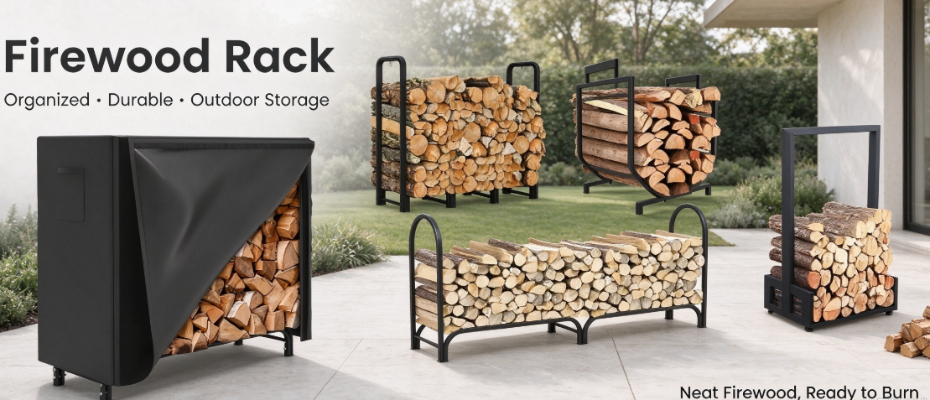
A firewood rack is a storage structure that holds and organizes firewood. Logs sit above the ground, the stack stays stable and air can circulate around the wood.
A pile on the ground has no structure. A rack gives the logs a defined place. The open build makes adding and taking out wood easy, and it limits contact with soil and standing water.
Racks come in many sizes. Some are plain metal frames. Others add covers, several storage levels or decorative touches.
Main Functions of Firewood Racks
A rack does more than hold logs. Its structure helps with daily storage and keeps the wood in decent condition.
- Organized storage: Logs stay in one spot, and different sizes are easier to arrange.
- Ground clearance: Raising the wood reduces contact with soil, standing water and damp surfaces.
- Air circulation: Open sides let air move around the logs and help them dry.
- Stable stacking: Side supports and a solid base stop the stack from spreading or toppling.
- Convenient access: Adding, removing and carrying logs takes less effort.
Common Types of Firewood Racks
Different designs meet different storage needs.
- Freestanding rack: A common design with a base and upright supports. It sits in a backyard, garden or other outdoor area.
- Covered rack: A roof or cover shields the wood from rain and snow while leaving room for ventilation.
- Indoor rack: A compact holder that keeps a small supply of logs near a fireplace or wood-burning stove.
- Wall-mounted rack: Wall brackets hold the wood above the floor, which suits places with little floor space.
- Multi-tier rack: Several levels let you separate logs by size or type and make better use of the space.
Materials Used in Firewood Racks
Material affects load capacity, weather resistance, looks and upkeep.
- Steel: A rigid frame for stacked logs, used both indoors and outdoors.
- Powder-coated steel: The coating protects against moisture and everyday wear. Scratches and chipped areas may still need attention.
- Galvanized steel: The zinc coating reduces corrosion, so it suits outdoor spots.
- Wrought iron: Often found in decorative indoor log holders. The solid build and traditional look suit fireplace areas.
- Wood: Can be made in many sizes and layouts. Outdoor versions need sound construction and protection from moisture and decay.
Main Features of Firewood Racks
A good rack carries the weight of the logs and keeps the storage area tidy.
- Raised base: Lifting the wood off the ground cuts contact with soil, standing water and damp surfaces.
- Open structure: Gaps between supports let air reach the logs and help them dry.
- Stable frame: The base, side supports and connecting parts hold the stack in place.
- Weather protection: Some outdoor racks have a top cover or roof to limit rain and snow exposure.
- Easy access: An open front or side opening makes it simple to add, remove and arrange logs.
- Flexible capacity: Lengths, heights and depths range from small household supplies to large seasonal stacks.
Common Applications of Firewood Racks
Racks work in many home and outdoor settings.
| Application |
Typical Use |
| Backyard Storage |
Organizing firewood for household use |
| Garden Storage |
Keeping logs in a designated outdoor area |
| Fireplace Areas |
Holding a small supply of logs for indoor use |
| Outdoor Fire Pits |
Storing firewood near an outdoor gathering space |
| Patio Storage |
Keeping firewood accessible in a covered outdoor area |
| Wood-Burning Stove Areas |
Organizing logs for regular stove use |
How to Choose a Suitable Firewood Rack?
The right rack depends on how much wood you store, the space you have, the log size and the surroundings.
- Storage capacity: Estimate your firewood volume. A small rack suits occasional use, while a longer one handles seasonal supplies.
- Rack dimensions: Compare length, height and depth with your log size and the installation area.
- Material and finish: Pick a material and surface treatment that suit your local weather.
- Load support: Review the frame, connecting parts and stated load capacity to make sure the rack can carry your stack.
- Cover design: For outdoor use, choose a cover that protects the top of the pile without blocking airflow.
- Installation location: Pick a firm, level, well-drained spot with room for access and air circulation.
Firewood Rack Installation and Maintenance
Correct placement and regular checks keep a rack stable and useful.
Installation considerations
- Set the rack on a firm, level surface to prevent shifting or uneven loading.
- Keep the bottom support above soil or wet ground.
- Assemble the frame per the instructions and tighten all connecting parts.
- Leave space around the rack for ventilation and access.
- Place outdoor racks away from spots where rainwater or roof runoff collects.
Maintenance tips
- Check screws, bolts, joints and supports for looseness or damage.
- Inspect metal surfaces for scratches, rust or coating wear.
- Clear leaves, dirt and debris from the base and surrounding area.
- Examine covers and roof panels for tears, loose fasteners or pooled water.
- Restack the logs when needed to keep the pile stable and orderly.
FAQs About Firewood Racks
Why should firewood be stored on a rack?
A rack keeps logs off the ground, organizes the stack and lets air circulate. That limits contact with ground moisture and helps the wood dry.
Should a firewood rack have a cover?
A cover helps shield outdoor firewood from rain and snow. The design should protect the top and leave the sides open enough for airflow.
Can a firewood rack be used indoors?
Yes. Compact racks are commonly placed near fireplaces or wood-burning stoves for short-term storage. Keep the rack stable and follow the appliance's required safety clearances.
What material is suitable for an outdoor firewood rack?
Steel, galvanized steel and powder-coated steel are common. Choose based on your local environment, expected load, surface protection and upkeep needs.
How should firewood be stacked on a rack?
Put larger, heavier logs at the bottom for a solid base. Stack the rest evenly, avoid going too high and leave gaps so air can move through the pile.
Where should a firewood rack be placed?
Choose a firm, well-drained spot with good airflow. Avoid pressing it against buildings or putting it in damp, stuffy corners. Keep stored wood away from fireplaces and other heat sources.

 英语
 俄语
 德语
 西班牙语
 法语