英语
 俄语
 德语
 西班牙语
 法语


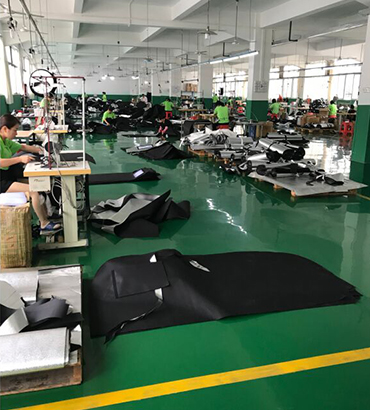
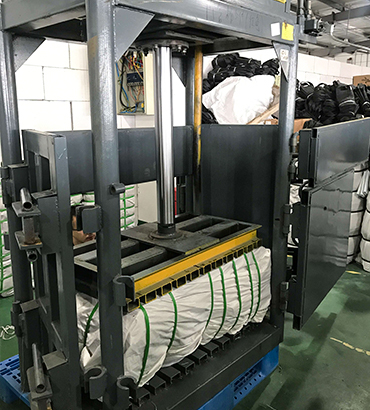
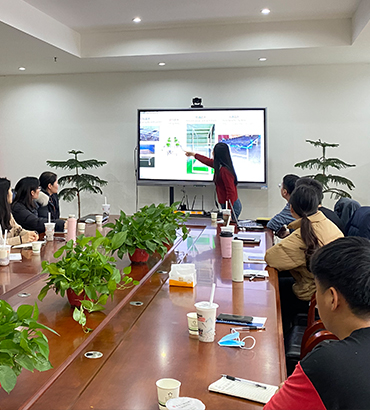
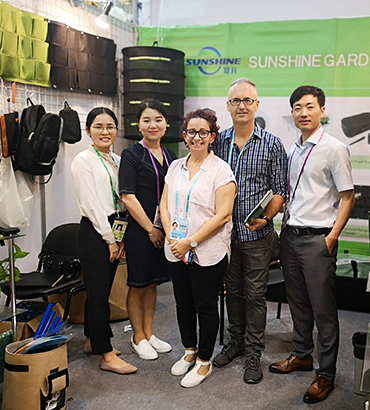
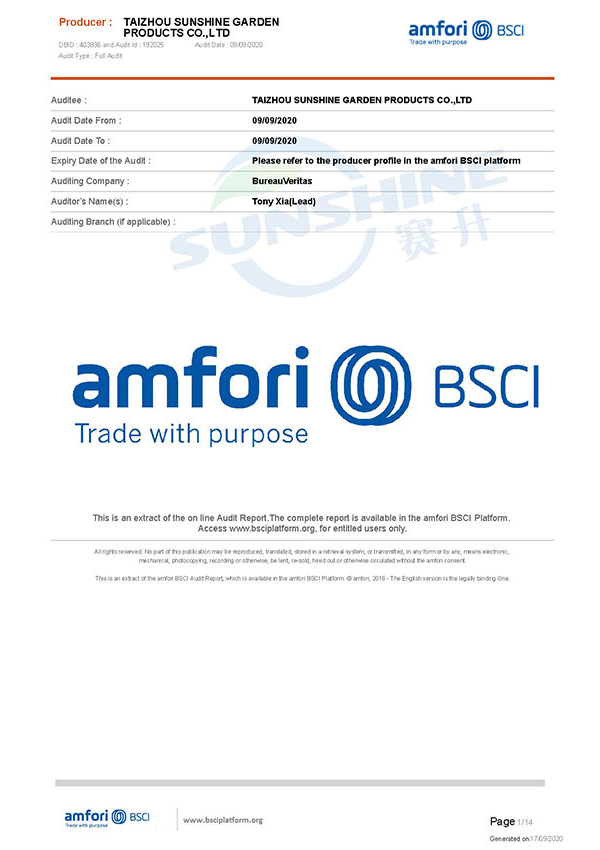
 Innovation Team
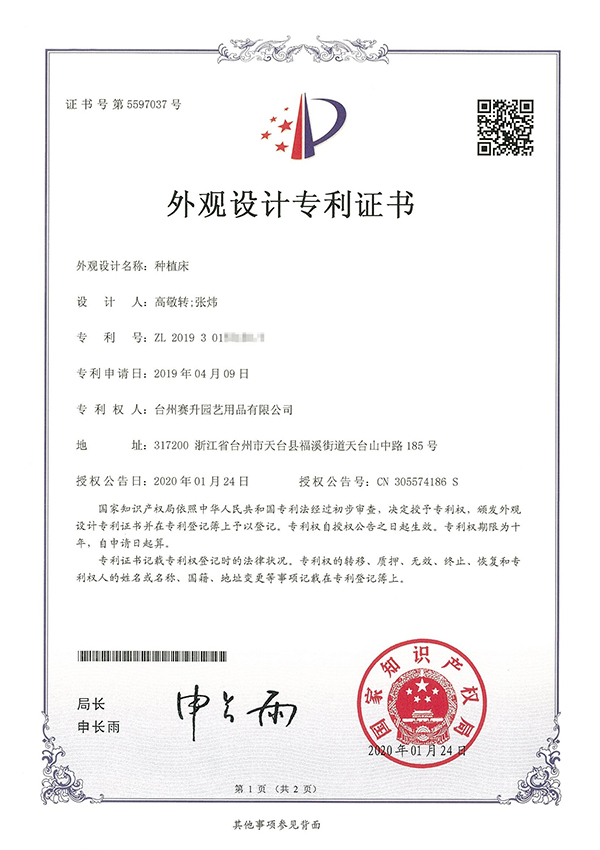
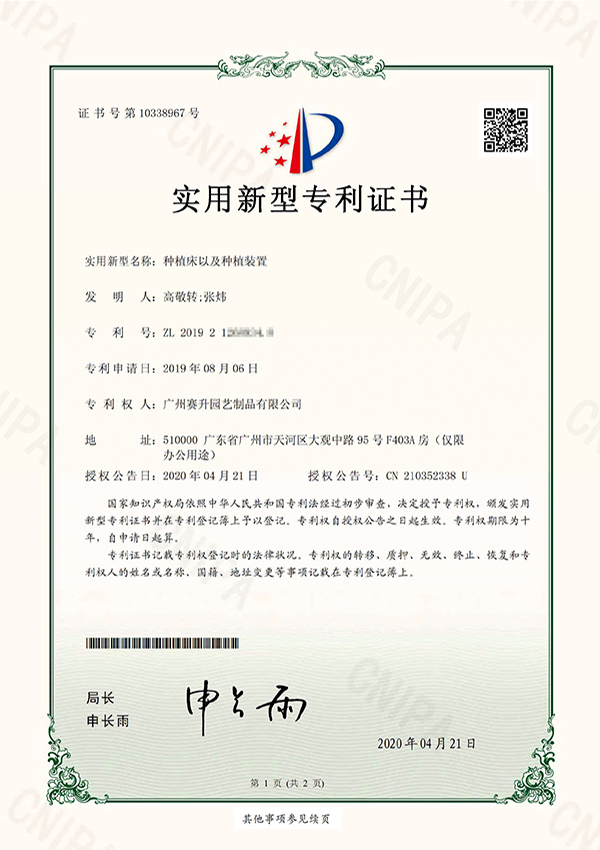
 Patented Technology
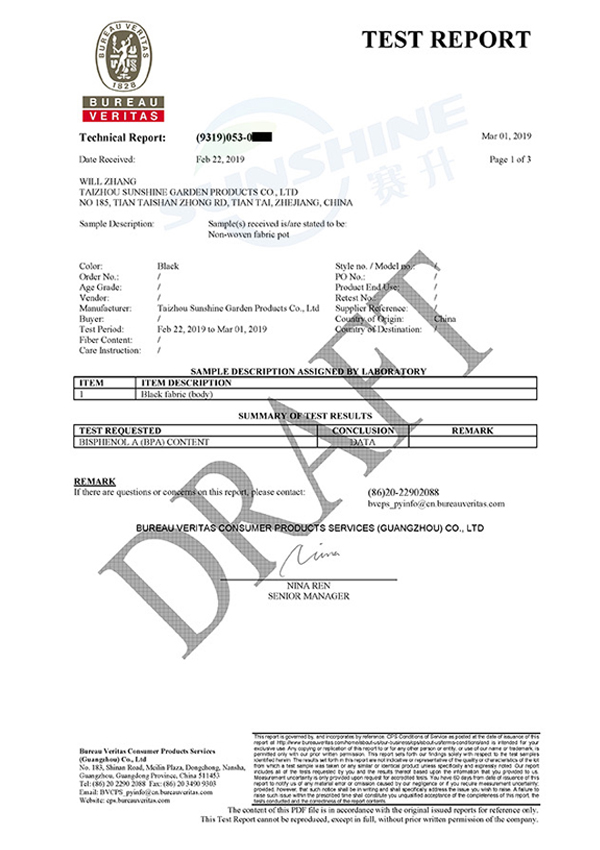
 Quality Assurance
 Efficient Response
Polytunnel greenhouses are the sturdiest, most durable and accomplished greenhouses. Made with a heavy duty PE synthetic cover in classic green with extra-long sides and powder coated



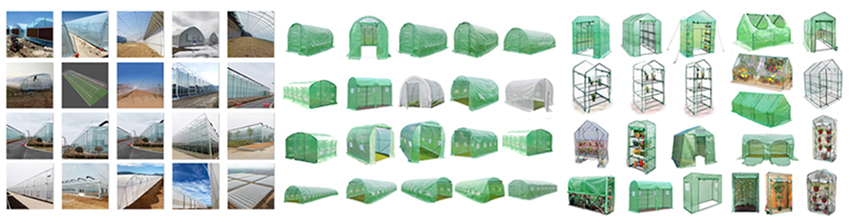
Polytunnel greenhouses are the sturdiest, most durable and accomplished greenhouses. Made with a heavy duty PE synthetic cover in classic green with extra-long sides and powder coated
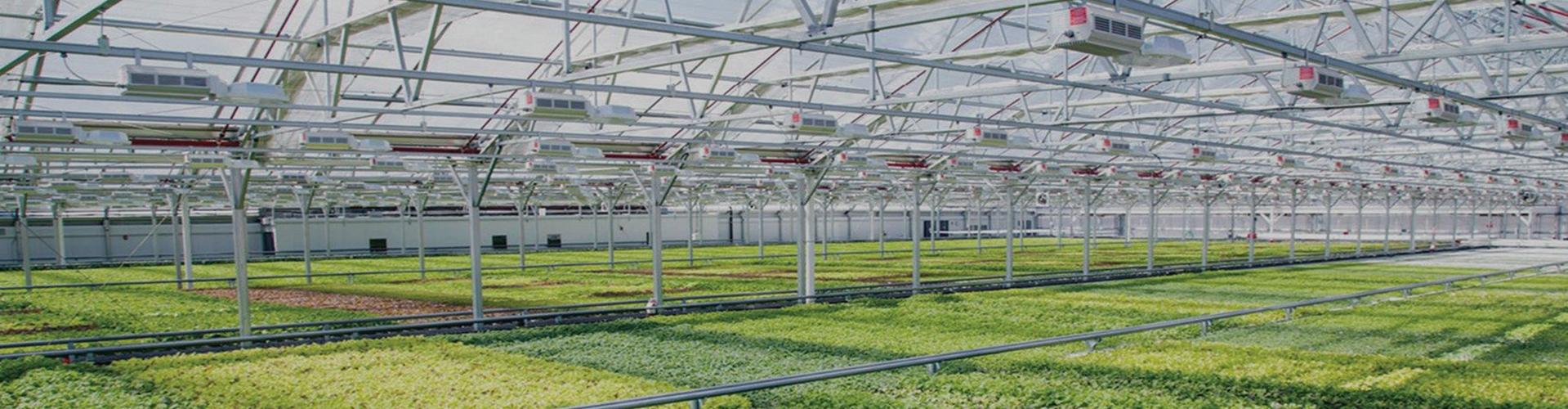
Sunshine Garden is able to address a multitude of your applications with our expert advice and solid, dependable greenhouses. Size and height can be designed based on the land characteristics. Covering material: poly carbonate greenhouse, glass greenhouse, film greenhouse, etc.
Let us help you find the right greenhouse to maximize your productivity, and your success in the business.
FAQ
Q: Where is your factory? Can I pay a visit?
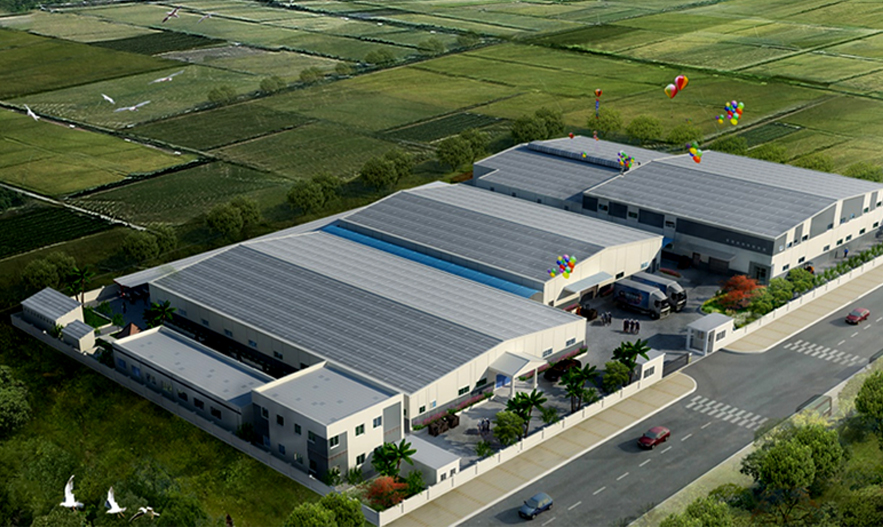
Sunshine Garden's factory located in No 1, West Sanmaoxi Rd, Shifeng Street, Tiantai, Zhejiang, China. Warmly welcome to visit!

Offers everything you need to build complete gardening and hydroponic systems.
 Indoor growing gives people greater control over the environment around their plants. A closed growing space brings its own challenges, though. Warm air collects near the top of a tent, moisture lingers around leaves and fresh air doesn't always reach every corner. These conditions affect plant health and make the space harder to manage.
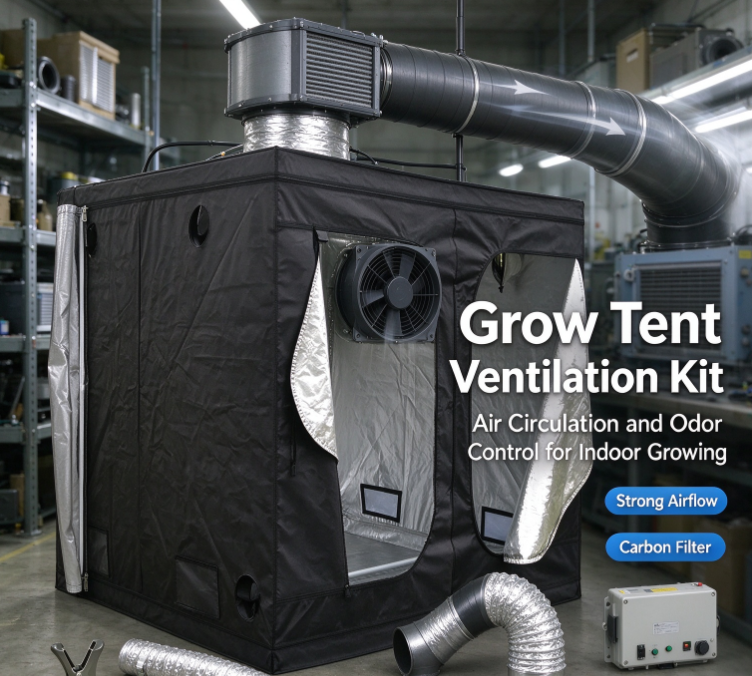
A grow tent ventilation kit tackles these issues by moving air through the growing space. Depending on the design, the kit includes an exhaust fan, ducting, a carbon filter, mounting accessories and other components. Each part has a job: moving air, removing stale air or managing odors.
Good airflow isn't about making air move faster. It's about creating a steady exchange between the inside of the tent and its surroundings while keeping air circulating around the plants. Knowing how a ventilation kit works helps growers choose suitable equipment, arrange components properly and catch problems before they hit daily growing conditions.
1. Why Is Airflow Important Inside a Grow Tent?
Airflow shapes the environment around plants throughout the growing process. In an enclosed tent, air turns stagnant when it barely moves or exchanges with the outside. Warmth and moisture build up, and some areas get less fresh air than others.
Moving air evens out these differences. It carries heat away from areas where it gathers and helps moisture disperse. Air moving around leaves also stops a still layer of humid air from sitting close to their surfaces for long periods.
Without suitable ventilation, different parts of the same tent develop different conditions. Plants near a light source get more heat than those farther away. Dense foliage blocks movement between leaves, while corners and spaces behind equipment get little circulation.
These differences make environmental management harder. Adjusting a fan or moving a plant improves one area and leaves another largely untouched.
A grow tent ventilation kit offers a coordinated way to manage these conditions. The exhaust system moves air out of the tent, while internal circulation distributes air within it. When the two work together, the growing space is easier to manage.
Airflow matters for another reason: indoor growing equipment generates heat. Lighting, electrical devices and other gear warm the surrounding air. Ventilation carries some of that heat away instead of leaving it trapped inside the enclosure.
The goal isn't a strong, constant blast of air across every plant. Excessive direct airflow keeps leaves in constant motion and increases moisture loss. A suitable arrangement supports gentle circulation and regular air exchange without stressing the plants.
2. How Does a Grow Tent Ventilation Kit Move Air?
A ventilation kit improves airflow by creating a path for air to enter, move through and leave the growing space. The exact arrangement depends on the tent, the equipment and the surrounding room.
Most systems rely on several components that perform different but related functions.
Exhaust fan: Moving stale air out
The exhaust fan removes air from the tent. As it draws air through the outlet, the air pressure inside the enclosure changes. Replacement air then enters through an intake opening or another suitable gap.
This creates a continuing exchange between the growing space and its surroundings. Warm air and moisture leave instead of staying trapped.
The exhaust outlet's location affects how air travels through the tent. Warm air often rises, so an upper exhaust position helps remove accumulated heat. The arrangement should still reflect the position of the light, the plants and other equipment.
A poorly matched fan won't deliver the expected airflow. Restrictions from filters, long duct runs, tight bends or blocked openings cut the amount of air that moves through the setup.
Ducting: Providing a route for air
Ducting connects the fan to the air outlet and, when included, the filter. It sends air along a planned route instead of letting it escape randomly around the equipment.
A clear, fairly direct duct route reduces needless resistance. Sharp bends, crushed sections and loose connections interfere with airflow. Ducting that's too long or full of turns makes the system work harder.
Secure connections matter too. Gaps between components let air escape before it reaches the intended outlet. That lowers ventilation efficiency and makes odor management less predictable when a filter is part of the setup.
Intake openings: Allowing replacement air to enter
Removing air is only half of ventilation. The tent also needs a way for replacement air to come in.
Some setups use passive intake openings, while others add an intake fan. The right arrangement depends on the tent structure, the exhaust system and the conditions of the surrounding room.
If the intake opening is blocked or too restrictive, the exhaust fan struggles to move air as intended. The tent fabric gets sucked inward, and the actual air exchange falls below expectations.
When the intake and exhaust paths are arranged sensibly, air moves through the enclosure with fewer obstacles. The ventilation system then keeps a more consistent flow.
3. How Do Exhaust Fans and Circulation Fans Work Together?
Exhaust fans and circulation fans both move air, but they serve different purposes. Knowing the difference explains why one fan alone doesn't solve every airflow problem.
An exhaust fan removes air from the tent and encourages replacement air to enter. Its main role is air exchange. A circulation fan moves air within the enclosure. It reduces stagnant pockets and spreads air around plants and equipment.
A tent can have effective exhaust ventilation and still contain areas where air barely moves. That happens when plants are crowded, equipment blocks the path or the internal fan points the wrong way.
Internal circulation fixes these dead spots. Position a fan so it moves air across the growing space. Pointing all its force at a single plant misses the point. Air then travels around foliage, passes through open areas and mixes with air from other parts of the tent.
Placement matters. A fan aimed straight at nearby leaves creates strong movement in one spot and leaves the opposite side of the tent still. Adjusting the angle spreads the airflow more evenly.
Height affects reach too. Air moving near the floor doesn't circulate well through dense foliage higher up. A fan mounted too high does little for lower areas.
Growers should watch how plants respond after moving a fan. Leaves should sway gently, not get pushed constantly in one direction. If some sections stay still, change the fan's angle or location.
The two systems work best when their roles complement each other. One removes air from the enclosure, the other distributes it. Don't confuse the two functions, and don't assume more fans automatically mean better airflow.
4. How Can Ventilation Help Manage Heat and Humidity?
Heat and humidity are closely tied to air movement. When ventilation is limited, warmth from lights and equipment collects inside the tent. Moisture from plants and damp growing materials stays in the enclosure too.
A grow tent ventilation kit helps by replacing some of the air inside the tent with air from the surrounding room. If the incoming air is cooler, ventilation helps remove heat. If it holds less moisture, air exchange also helps cut excess humidity.
Ventilation doesn't guarantee a cooler or drier tent, though. The effect depends on the condition of the incoming air, the heat produced inside the enclosure and how the system is installed.
Drawing warm air from a poorly ventilated room, for example, gives limited cooling. If the surrounding air is already humid, replacing indoor air won't reduce moisture as much as expected.
So look at the room around the tent as well as the tent itself. Ventilation equipment moves air. It doesn't control every environmental condition by itself.
Air circulation also helps moisture disperse around leaves and within dense growth. When air sits still, humid pockets form in areas with little movement. Gentle circulation reduces these local differences and supports a more even environment.
Excess moisture deserves attention because persistently damp conditions encourage mold and other plant health problems. Ventilation helps manage the surrounding environment, but it doesn't replace proper watering, plant spacing or regular inspection.
When heat or humidity stays hard to manage, examine the entire setup. Likely causes include restricted intake openings, an obstructed exhaust route, a badly positioned fan, excessive heat from equipment or unfavorable conditions in the room.
Changing fan speed without finding the cause brings only temporary relief. A better approach is to check how air enters, travels through and leaves the enclosure.
5. How Does a Carbon Filter Affect Airflow?
A carbon filter is common in ventilation kits when odor control matters. Its filtering material captures certain odor-causing compounds as air passes through.
The filter usually connects to the exhaust system. Air is drawn through the filter before it travels through the ducting and leaves the growing area. This puts odor treatment and air exchange in the same airflow path.
A filter also adds resistance to the system. Air has to pass through the filtering material, so the fan moves less air than it would through an open outlet.
That means choosing a ventilation kit takes more than looking at the fan. The fan, filter and ducting have to work together as a complete system. A fan that looks suitable alone may underperform once the other components are installed.
Filter condition affects airflow as well. Over time, dust and other particles collect on the filter or its protective surfaces. Depending on the design, that buildup restricts movement and raises the effort needed to draw air through the system.
Regular inspection reveals blockage or wear. Follow the component manufacturer's cleaning and replacement instructions. Not every filter is maintained the same way.
Installation details count too. Loose connections let untreated air bypass the filter. An awkward duct arrangement adds resistance, and an unsuitable connection makes maintenance difficult.
Treat the carbon filter as part of the overall ventilation design. It isn't an accessory you add without thinking about its effect on the system. Proper matching balances odor management against the need to move air through the tent.
6. What Installation Choices Can Improve Airflow?
How a grow tent ventilation kit is installed influences its performance as much as the individual components. Even suitable equipment struggles when the airflow path is obstructed or poorly arranged.
Several practical details deserve attention during installation.
Keep the air path clear. Don't crush ducting behind equipment or bend it sharply without a reason. A direct route helps air move with less resistance. Where bends are necessary, arrange them to avoid tight turns.
Secure connections between components. The fan, filter and ducting should fit together properly. Loose joints cause air leakage, noise or inconsistent odor control. Secure mounting also reduces unwanted movement during operation.
Provide a suitable intake route. Replacement air needs room to enter. Curtains, stored items, tent walls and other obstructions shouldn't block intake openings. If you use an intake fan, position it to support the overall airflow pattern. It shouldn't compete with the exhaust arrangement.
Position fans with the growing layout in mind. Plants, shelves, containers and lighting all affect how air travels. A fan that works well in an empty tent performs differently once foliage fills the space. Adjust fan positions as plants develop.
Allow access for inspection. Ventilation components need occasional cleaning and checking. A fan or filter in a cramped spot is hard to maintain. Accessible equipment is easier to inspect when airflow drops or odd noises start.
Consider noise and vibration. A fan mounted against a loose frame or unstable surface transmits vibration through the tent structure. Proper support reduces noise and keeps the equipment secure.
After installation, check the system while it runs. Look for obstructed ducts, loose connections, unusual fan movement and areas where air seems to sit still. Small adjustments often improve circulation without extra equipment.
7. What Common Problems Can Reduce Airflow?
Reduced airflow doesn't always mean the fan has failed. Often the cause is a restriction, a layout issue or a change in the growing environment.
Blocked ducting is a common culprit. A bent or compressed section restricts the air path, especially when the duct runs behind a tent or through a narrow space. Checking the entire route reveals problems you can't see from the fan opening.
A dirty filter is another cause. Dust and other particles accumulate during normal use and cut the amount of air passing through the filtering material. Inspection and proper maintenance restore normal operation when buildup is the cause.
Check the fan's condition too. Loose fittings, damaged components or dust around moving parts hurt performance. If the fan makes unfamiliar sounds or shows damage, inspect it according to the manufacturer's guidance.
Plant growth creates new restrictions. As foliage thickens, spaces that once let air move freely get crowded. A ventilation arrangement that worked early in the growth cycle needs repositioning as plants develop.
The surrounding room also influences the result. If doors, windows or room ventilation change, the air available to the tent changes as well. An exhaust fan can't keep the same environmental effect under every surrounding condition.
A simple troubleshooting process helps pinpoint the source:
Check whether the fan is operating normally.
Inspect the filter and ducting for visible blockage.
Confirm that intake openings are unobstructed.
Look for loose connections or damaged components.
Observe whether internal circulation reaches different parts of the tent.
Consider whether recent changes in plant growth or room conditions affected airflow.
Change one thing at a time and watch the result. Adjusting several components at once makes the cause harder to find.
If airflow stays weak after basic checks, the system may not suit the combined resistance of its components or the needs of the enclosure. Reviewing the full setup shows whether a different arrangement or a replacement component is necessary.
8. How Should You Choose a Grow Tent Ventilation Kit?
Choosing a grow tent ventilation kit starts with understanding the growing space and the conditions the system must manage. The kit should fit the enclosure, work with its intended airflow route and accommodate any extra equipment used for odor control.
Tent size is one consideration, but not the only one. The amount of equipment inside the tent, plant density, surrounding room conditions and the arrangement of intake and exhaust openings all influence ventilation needs.
The type of kit matters too. Some packages focus on exhaust ventilation, while others include circulation fans, filters, ducting and mounting accessories. Check exactly what's included. Don't assume every kit provides the same components.
Compatibility matters most when a filter is included. The fan must suit moving air through the complete system, not just through an open duct. Consider connection sizes, mounting options, duct routing and maintenance access before installation.
Noise can sway the decision when the tent sits in a bedroom, shared room or other occupied space. Fan design, mounting, vibration and duct arrangement all affect the sound during operation. Reviewing these factors avoids needless disturbance.
Ease of maintenance is another practical point. Filters need inspection or replacement, ducts collect dust and fans need periodic checks. A kit with accessible components makes routine care less of a chore.
Buyers should also ask whether the setup will change. A tent that starts with a few plants gets more crowded as growth continues. Equipment positions shift, and the need for internal circulation shifts with them. A flexible arrangement makes these adjustments easier.
Clear product information helps when comparing options. Descriptions should explain the included components, intended application, connection compatibility, maintenance requirements and installation considerations. These details let buyers judge whether a kit suits their growing environment without leaning on vague performance claims.
A suitable grow tent ventilation kit supports a clear airflow path, consistent air exchange and practical day-to-day management. When its components match the enclosure and are installed with care, airflow problems are easier to identify, changing conditions are easier to handle and the growing space suffers less from stagnant air.
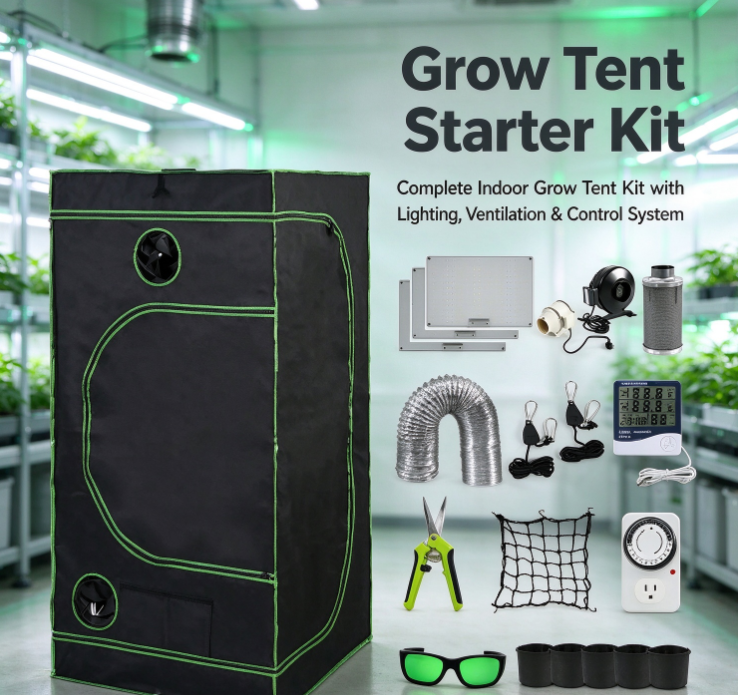 Indoor gardening doesn't always need a spare room, a big greenhouse or a dedicated growing area. People in apartments, compact homes or places with little outdoor access can still grow plants all year with a small indoor setup. A grow tent starter kit bundles several pieces of equipment into one system, so users can organize a growing space without building a separate room.
Limited space changes the planning, though. The tent has to fit the area, but it also needs room for ventilation, lighting, plant care and routine upkeep. A setup that looks compact in a product listing can feel crowded once every piece of equipment is installed.
Whether a kit suits a small space depends on the plants, the room layout, the equipment included and how much upkeep the user is ready to do. Knowing these factors helps beginners choose sensibly instead of looking only at the tent's outer dimensions.
1. What Makes a Grow Tent Starter Kit Suitable for Small Spaces?
A starter kit usually pairs a tent with selected equipment for indoor growing. Depending on the package, you might get grow lights, ventilation gear, circulation fans and other accessories. Buying them together simplifies planning, because you can see how the main parts fit into one setup.
For small homes, the big plus is organization. A tent marks out a defined area for plants, so equipment doesn't spread across the room. Reflective inner walls send light back toward the plants, and the enclosed structure makes light exposure and airflow easier to manage.
A tent also separates the plants from nearby household activity. That helps when the space does double duty, like a spare corner of a home office or part of a utility room.
Even so, a tent doesn't turn every space into a good garden. The area around it needs power, enough clearance for installation and a reasonable way to move air. Users also need to reach the plants without shifting furniture each time.
The kit should match what you plan to grow. A package whose equipment is awkward to arrange in a small room causes more trouble than it solves. A simple setup with compatible parts is often easier to manage than one loaded with accessories you don't need.
Before buying, picture the whole arrangement, not just the tent. Where will it stand? Where will the cables run? How will ventilation work? How will you reach the plants for watering and inspection?
2. How Much Space Does a Grow Tent Starter Kit Really Need?
The space a tent needs goes beyond its footprint on the floor. The equipment around it needs room to work. Ducts, electrical connections, access openings and nearby walls all shape the final layout.
Height counts too. A tent may fit on the floor and still leave too little room above for lights, hanging accessories or safe installation. Think about plant height as they grow as well. A layout that suits young plants can become hard to manage later.
Access is easy to forget. Push the tent into a narrow corner and you may have to move the whole setup just to reach the back. Watering, pruning, cleaning and health checks all become a chore.
A simple planning table helps compare possible locations.
Space consideration
What to check
Floor area
Whether the tent fits without blocking walkways
Vertical clearance
Whether the tent and installed equipment fit comfortably
Access
Whether doors or openings can be used without obstruction
Ventilation
Whether air can move through the planned arrangement
Power access
Whether cables can be connected and managed safely
Maintenance
Whether plants and equipment remain easy to reach
Measure the full setup, including gear that sits outside the tent. Leave enough room to open the tent and do routine tasks.
A small room can look fine until these details come up. Planning the layout first prevents awkward installation and makes the area easier to use later.
3. Which Plants Are Appropriate for a Compact Grow Tent?
Plant choice has a direct effect on how well a tent works in a small space. Some plants stay compact. Others spread outward, grow tall or build up heavy foliage. The room you have should guide what you grow.
Herbs and small leafy plants are common picks for compact indoor gardens. Many fit a modest growing area and sit in containers that are easy to move. Small ornamental plants can work too.
Larger plants need more room for leaves, roots and containers. They may need stronger support or a different arrangement of lights and airflow. Pack several big plants into a small tent and the foliage crowds together, which makes inspection and care harder.
Mature size matters more than size at purchase. A young plant can look small enough, then outgrow the space as it develops. Check the expected growth habit and spacing needs before you choose.
Containers affect the layout as well. Wide pots eat floor area, and tall ones make it harder to arrange plants at different heights. Trays and movable containers help with organization, but they shouldn't block airflow or access to the lower part of the tent.
A good approach is to start with a few plants and watch how they use the space. Beginners then learn about watering, light placement and plant growth without managing a crowded setup from day one.
4. Does a Small Grow Tent Need Special Lighting and Ventilation?
Lighting and ventilation matter in any indoor growing setup. In a compact tent, placement matters even more, because the equipment and the plants share a tight area.
Grow lights give plants the light they need. Which one suits you depends on the plant species, the growth stage, the distance from the foliage and the design of the growing area. The wrong light gives too little illumination or adds unwanted heat.
Think about how the light is mounted. Hanging equipment uses vertical space, so the tent needs clearance for installation and adjustment. As plants grow, their distance from the light changes. A setup that is easy to adjust makes ongoing care simpler.
Ventilation does a different job. Plants release moisture into the air and equipment adds heat. Without proper air exchange, temperature and humidity get harder to control. Circulation inside the tent also reduces stagnant pockets around the foliage.
Small spaces make ventilation planning trickier. The tent may sit neatly beside a wall, yet furniture or curtains can limit airflow. Exhaust air also needs somewhere to go. Pushing air out of the tent doesn't remove the need to think about conditions in the room itself.
A starter kit may include ventilation parts, so check how they are meant to be installed. A fan in the box doesn't mean the whole arrangement will suit every room or plant type.
Noise deserves a look. Fans and other equipment can be noticeable in a bedroom, study or shared living area. If you're sensitive to sound, read the equipment descriptions and operating requirements before you pick a spot.
5. How Can Growers Manage Heat, Humidity, and Airflow in Limited Space?
A compact tent creates a defined environment, but conditions can shift fast when plants, lights and ventilation run together. Treat heat and moisture as part of the whole room arrangement.
Temperature climbs when lights give off heat or when the room itself gets warm. How much depends on the equipment, the tent's construction, the room and the amount of air moving through the growing area.
Humidity rises as plants release moisture. If the air can't leave the tent effectively, damp conditions linger around leaves and surfaces. Some plant health problems like that environment, especially when foliage is crowded and air barely moves.
Good airflow takes more than dropping a fan into the tent. Air needs a route through the growing area, and the exhaust setup has to suit the room. Don't block air inlets, and keep curtains and stored items away from the equipment.
A small room affects performance too. If warm air from the tent stays in the room, the surrounding temperature goes up. That makes it harder for the ventilation system to hold suitable conditions inside.
Regular observation catches changes early. Check whether leaves look stressed, whether moisture collects on surfaces and whether the tent feels unusually warm or damp. Monitoring tools give you extra information.
Base any adjustment on the plants' needs and the equipment instructions. Turning up the fan or moving a light without finding the cause may fix nothing. A balanced setup depends on how the tent, plants, equipment and room work together.
6. Is a Grow Tent Starter Kit Easy to Set Up in an Apartment?
A starter kit can work well for apartment gardening, but installation has to respect the limits of a shared home. You may need to work around furniture, household routines, building rules and noise restrictions.
Assembly goes more smoothly if you prepare the spot before the kit arrives. The floor should suit the tent, and the area should let you put up the frame and fabric without blocking doors or walkways. Make sure you can still reach the finished setup for cleaning and plant care.
Electrical safety needs particular care. Indoor gardening puts lights, fans and other powered gear near containers of water. Arrange cables to avoid trip hazards and keep them away from water where you can. Follow the manufacturer's instructions and local safety requirements for connections.
Water is another concern. Watering leaves spills around containers, and drainage is tough in a carpeted room. A suitable tray or other protection helps, as long as it fits the containers and doesn't get in the plants' way.
Think about other people too. Fan noise, warm exhaust air and odors from plants or growing materials can be noticeable outside the tent. How much depends on the equipment and the plants.
Building or rental rules may limit equipment, alterations or activities in the property. Check the requirements before installation, especially if the setup involves changes to windows, walls or ventilation openings.
A compact kit is easier to live with when it fits the household routine. You should be able to inspect plants, clean up and maintain equipment without disrupting daily life.
7. What Should Buyers Check Before Choosing a Grow Tent Starter Kit?
Starter kits differ in what they contain. Some focus on the tent and basic lighting. Others add ventilation gear, timers, filters or accessories for managing the environment. Compare what is actually in the box, not just the name on the listing.
Compatibility is vital in a small space. Parts must work together and fit the planned layout. Equipment that needs extra room, separate supports or heavy modification is hard to accommodate.
Look at the tent's construction, access points, openings for cables and ventilation, and how the frame goes together. These details affect installation and daily use. A tent that is hard to open or inspect gets annoying once regular plant care begins.
The plants you intend to grow should guide the equipment choice. A kit designed for one kind of indoor growing may not suit another. Before buying, confirm that the included light and ventilation fit your plant selection and expected growth.
Check what is missing, too. Some kits need separate containers, growing medium, monitoring tools or other supplies. Knowing this ahead of time lets you plan the full setup instead of finding gaps during installation.
This checklist supports a practical comparison:
Does the tent fit the available floor area and vertical clearance?
Can the doors and access openings be used comfortably?
Are the included lighting and ventilation components suitable for the intended plants?
Can the equipment be installed and maintained without blocking walkways?
Are operating noise and power requirements appropriate for the room?
Are the instructions clear enough for a beginner to follow?
What additional items will be needed before planting begins?
Product descriptions and seller guidance can answer many of these questions. When something important is unclear, ask for clarification before you decide.
8. How Can a Small Grow Tent Stay Organized as Plants Grow?
A compact setup needs regular attention, because the space changes as plants develop. Leaves spread toward their neighbors, containers get harder to reach and equipment needs adjusting. Good organization keeps these shifts from becoming daily obstacles.
Give each plant enough room for its expected growth. Crowding cuts airflow and makes it harder to inspect leaves, stems and the growing medium. Moving containers helps, but keep the arrangement stable and don't block ventilation openings.
Where you keep tools and supplies matters. Watering equipment, pruning tools and other essentials close by make routine care easier. Storing extra items inside the tent, however, cuts growing space and can block airflow. Keep anything you don't need in the enclosure somewhere else.
Check cables and ducts now and then. Adjusting equipment can move wires into walkways, and nearby objects can block ventilation paths. Keeping these areas clear makes operation safer and maintenance simpler.
Cleaning belongs to organization too. Deal with fallen leaves, spilled growing medium and standing water as your setup requires. Regular cleaning keeps the growing area manageable and helps you spot leaks, damaged parts or other changes.
Be ready to rearrange when plants outgrow their first positions. A compact tent works better when the number and size of plants stay right for the space. Adding more containers just because there's room at the start leads to crowding later.
For people with limited indoor space, a grow tent starter kit offers a structured way to organize plant growing. How practical it is depends on matching the tent and equipment to the room, choosing plants with suitable growth habits and leaving enough space for ventilation and regular care.
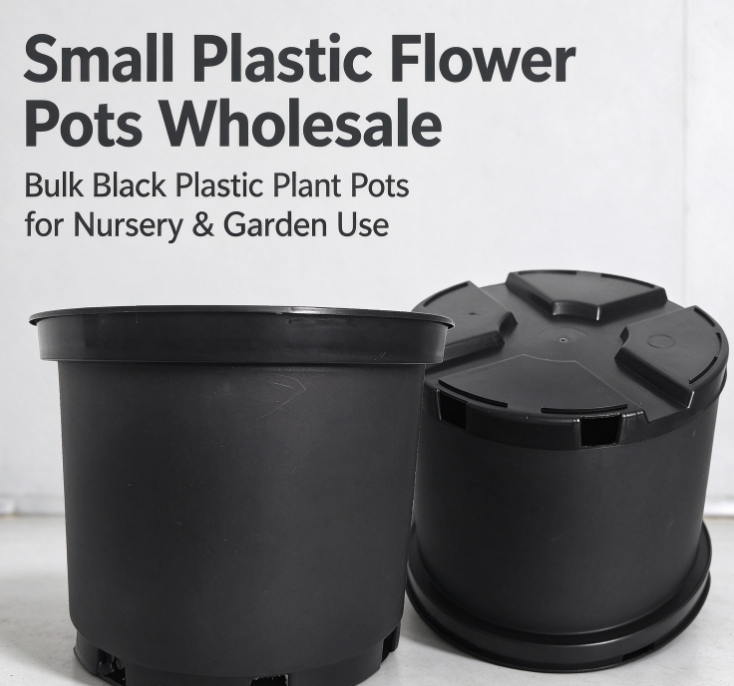 Small plastic flower pots quietly carry a lot of weight in modern plant production. They're everywhere — greenhouses, commercial nurseries, garden centers, propagation facilities — doing the unglamorous work of growing seedlings, rooting cuttings, raising young plants, and getting stock ready for sale. Their compact size also helps growers keep plants organized by species, growth stage, and care needs without things turning into chaos.
Inside a greenhouse, space and growing conditions need careful management. Different plants want different amounts of water, light, room for their roots to spread. Small plastic flower pots let growers handle individual plants on their own terms, rather than tossing every seedling into one shared growing bed where nothing gets individual attention. That makes routine care and moving plants around a lot more manageable day to day.
Plant nurseries lean on these pots for similar reasons. Young plants typically start life in small containers before graduating to larger pots or heading into the ground. A suitable container supports those early growth stages while letting nursery staff keep an eye on each plant's progress.
Small plastic flower pots might look like the simplest piece of equipment in the whole operation, but their design actually shapes daily nursery work more than people realize. Pot shape, drainage, material, handling features — all of it determines how well a pot fits into a working growing system. Understanding these roles helps growers, nursery operators, and Small Plastic Flower Pots Wholesale buyers pick containers that genuinely match what their production actually needs.
Why Are Small Plastic Flower Pots Common in Greenhouses?
Greenhouses offer a controlled environment, sure, but managing a sea of individual plants inside one still takes real planning. Small plastic flower pots help growers arrange seedlings and young plants in a way that stays clear and organized rather than becoming a tangled mess.
Each pot carves out a separate growing space. That matters a lot when different plant varieties need different care routines running side by side. A grower can shift a pot to another bench, adjust where it's sitting, or pull it for a closer look without disturbing anything nearby. Individual containers also make identifying plants and tracking their progress a lot more straightforward.
Small pots earn their keep especially during early growth stages. Seeds and young seedlings usually have fairly limited root systems at that point. A large container just ends up holding more growing medium than the plant actually needs yet. A smaller pot gives a manageable space while letting the grower keep tabs on moisture and root development closely.
Greenhouse staff also benefit from how easy plastic containers are to handle generally. Most small plastic pots are lightweight and line up neatly in rows or sit in trays without fuss. That makes efficient use of benches and growing tables a lot easier to pull off. When plants need moving for watering, inspection, or shifts in light exposure, the containers handle fine individually or in groups.
Their role doesn't stop at seedling production either. Small pots turn up for herbs, compact ornamental plants, young vegetable plants, and other crops that get sold while still sitting in their containers.
The right pot really comes down to the plant and the growing process at hand. Growers need to weigh root development, water management, container stability, and how plants will actually get handled throughout production.
How Do Nurseries Use Small Plastic Pots to Grow Seedlings?
Seedling production is probably the biggest use case for small plastic flower pots in plant nurseries. Most plants start as seeds in some protected growing area before moving on to larger containers or outdoor planting spots.
A small pot gives the seedling and its growing medium a defined space to work within. That makes managing individual plants and watching their condition a lot easier for nursery staff. If a seedling's growing slowly, showing stress, or just needs different care, staff can check it out without disturbing an entire growing bed in the process.
Separate containers also cut down the risk of root systems tangling together. Seedlings growing shoulder-to-shoulder in shared soil often end up with roots that are genuinely hard to separate later. Individual pots keep clearer boundaries between plants, which makes later handling a lot less of a hassle.
Nurseries often group small pots into trays to keep production organized. Trays hold containers together and make moving batches of seedlings between growing areas much simpler. They also help staff maintain a consistent layout through watering and inspection rounds.
The pot has to actually suit the seedling's growth stage, though. Too small, and it restricts root development as the plant grows. Too much growing medium in there, and the pot can stay wet longer than it should under certain conditions. Either situation ends up affecting plant care down the line.
Nursery operators should also think through how long seedlings will actually sit in their original containers. Plants headed for a quick transfer might need a different container setup than ones staying in pots for an extended stretch.
Matching pot size and design to what the seedling actually needs lets nurseries build a growing process that's easier to manage and adjust as plants develop over time.
How Are Small Plastic Flower Pots Used for Propagation?
Plant propagation means producing new plants from seeds, cuttings, or other plant parts. Small plastic flower pots suit this work well because they give young plants separate spaces while growers track root formation and early growth closely.
Cuttings typically go into a suitable growing medium while they work on developing roots. During that stretch, the cutting can be genuinely sensitive to changes in moisture and handling. A small container lets the grower manage each cutting on its own without disturbing the others nearby. It also makes checking whether the plant's established a healthy root system a lot simpler.
Different plants bring different propagation needs to the table. Some cuttings want a loose growing medium with good air movement around the roots. Others need careful moisture management so the cutting doesn't dry out. The pot itself doesn't decide the outcome, but its drainage and shape genuinely shape how easily growers manage these conditions.
Small pots also pay off when propagating plants in batches. Nursery staff can label containers, group similar varieties, and separate plants by how far along they are. If some cuttings root more slowly than others, the grower just keeps them in the propagation area a bit longer without throwing off the rest of the batch.
For plants started from seed, small containers support early development right after germination. Once seedlings build up stronger roots and leaves, they move on to larger pots or get prepped for planting out.
Reusable plastic pots can suit propagation setups built around repeated growing cycles. That said, containers need proper inspection and cleaning between uses. Old growing medium, plant debris, disease-causing organisms can all linger in used pots if they're not handled correctly.
The real value small plastic pots bring to propagation is the control they hand growers over individual plants. They help growers track progress, manage growing conditions, and move young plants along once they're ready for the next stage.
What Pot Features Matter for Greenhouse and Nursery Use?
Not every small plastic flower pot gets designed for the same growing conditions. Some are built for short-term seedling production; others serve ornamental plants that'll sit in containers for a lot longer. A handful of features shape how a pot actually performs in a greenhouse or nursery setting.
Drainage holes let excess water escape the container. Their design needs to suit the growing medium, watering method, and the plant's moisture needs specifically. Poor drainage leaves the root area sitting too wet; drainage that's too fast demands more frequent watering to compensate.
Pot shape shapes how the growing medium sits and how roots actually develop within the available space. A pot needs enough room for the plant's current growth stage without turning routine handling into a chore.
Material flexibility affects how easily staff can pull a plant free when it's ready for transplanting. Some containers squeeze gently to release the root ball; others hold a more rigid shape throughout.
Rim and base design shapes stability and handling quite a bit. A pot needs to sit securely on benches or in trays. A well-designed rim also makes lifting and moving containers easier during the daily grind.
Labeling space matters when nurseries are juggling many varieties at once. A clear spot for a label helps staff identify plant type, growing batch, or where it's headed next.
These features really deserve consideration together, not in isolation. A pot with great drainage might still be a poor fit if it tips over easily in a crowded tray. A flexible container helps with transplanting, sure, but it still needs enough strength to survive normal handling without falling apart.
Pot Feature
Role in Greenhouses and Nurseries
What Growers Should Consider
Drainage holes
Allow excess water to escape
Growing medium, watering routine, and plant needs
Pot shape
Provides space for root growth
Plant type and growth stage
Material flexibility
Helps with plant removal and transplanting
Handling needs and container durability
Stable base
Supports safe placement on benches and trays
Tray design and movement between growing areas
Labeling area
Helps identify varieties and growing batches
Label size and record-keeping practices
Stackable design
Helps organize unused containers
Storage space and ease of separation
What combination actually works depends on the nursery's own workflow. Growers should pick containers based on how plants actually get grown, moved, and prepped for wherever they're headed next.
How Do Small Plastic Pots Help Manage Water and Root Growth?
Water management sits right at the center of greenhouse and nursery production. Young plants need enough moisture, sure, but their roots also need access to air at the same time. Small plastic flower pots give you a contained growing space that makes observing and managing these conditions a lot more practical.
The growing medium plays a huge role here. Some mixtures hold water for a long stretch; others drain fast. The pot's drainage design works alongside the growing medium to shape how moisture actually moves through the root area.
A small container really helps when plants need close monitoring. Staff can check the surface of the growing medium, feel the weight of a pot, watch for signs of moisture stress. These checks let them adjust watering based on the plant's actual condition rather than running one blanket routine across every crop in the house.
Small pots can dry out fast, though, under warm, bright, or windy conditions. Plants in small containers often need more frequent attention, especially once they've built up a lot of foliage or roots. Greenhouse operators need to account for this shift as plants grow and their needs change.
Root development shapes container choice too. A healthy root system needs room to actually expand within the growing medium. Leave a plant in a too-small pot for too long, and roots get crowded fast. That makes watering trickier and can slow further growth right down.
Go too far the other way, and moving a small seedling into an unnecessarily large pot can make moisture management harder instead of easier. The unused growing medium can stay wet longer than the plant's root system can actually use, depending on conditions.
Growers really should inspect the root system and overall growth before deciding when to move a plant along. A pot good for the early seedling stage might not cut it anymore as the plant develops further. Choosing containers that fit each stage keeps the growing process a lot more manageable overall.
How Are Small Plastic Flower Pots Used in Plant Handling and Sales?
Small plastic flower pots matter a lot too once plants start moving from production areas toward garden centers, retail displays, or customers directly. The container needs to support the plant while keeping handling, identification, and transport genuinely practical.
Inside a nursery, plants often get grouped by variety, size, or intended use. Small pots let staff organize these groups across benches and in trays easily. That helps locate specific plants fast during order prep and cuts down on handling roots directly, which nobody really wants to do more than necessary.
Before plants leave the nursery, staff often check leaves, stems, growing medium, root condition. Individual pots make pulling a plant from a group for inspection — and returning it to the right spot afterward — a lot simpler.
Plastic pots also support display arrangements well. Their light weight makes moving plants around a retail area or reshuffling the layout a lot easier as stock changes. For businesses selling young herbs, flowers, starter plants, small containers offer a practical format for showing off living plants.
Transport brings its own set of considerations. Pots can tip if they're not sitting securely in trays or boxes. Growing medium spills if the container's overfilled or handled roughly. Tall or leafy plants can turn unstable too, even when the pot underneath is perfectly sturdy.
Packaging and tray compatibility matter here, then. A pot needs to fit whatever handling system the nursery or distributor's actually using. Secure placement protects plants as they move between production, storage, and sales areas.
Labeling is another feature worth having. Plant names, care instructions, other identifying details can get attached to the pot or slotted into a suitable holder. Clear labeling cuts down confusion fast when different varieties look nearly identical during early growth stages.
For wholesale buyers, it pays to think through the plant's full journey rather than fixating on how the container looks sitting on a shelf. A suitable pot should mesh with the nursery's growing methods, storage arrangements, order prep process, and delivery needs — all together, not as separate boxes to check.
How Should Nurseries Choose Small Plastic Flower Pots for Different Plants?
Picking small plastic flower pots starts with genuinely understanding the plants and how they'll actually get produced. A container that suits vegetable seedlings might be completely wrong for a slow-growing ornamental or a cutting that needs tight moisture control.
Identify the plant's growth stage. Seedlings and freshly rooted cuttings generally need different container setups than plants that have already built out larger root systems. The pot should offer enough growing space for however long it'll sit there before transplanting or sale.
Consider the growing environment. Greenhouses, outdoor nursery areas, shaded propagation spaces all run different moisture and temperature conditions. These differences shape how fast growing medium dries out and how often staff need to water.
Match the pot to the growing medium. The container and medium work as a pair. A mixture that holds moisture well might need a different drainage setup than one that drains freely. Growers should look at the complete growing setup rather than picking a pot in isolation from everything else.
Review daily handling needs. Pots get lifted individually, carried in trays, moved on carts, packed for delivery — whatever the nursery's usual routine looks like. Shape and stability need to fit that workflow specifically.
Consider reuse and cleaning. Some nurseries run containers through just one growing cycle; others clean and reuse suitable pots repeatedly. What works depends on the container's condition, the crop, sanitation practices, and how the nursery actually operates day to day.
Check storage and supply requirements. Wholesale buyers often need pots that fit existing trays and storage setups already in place. Consistent container dimensions simplify handling a lot, but the design still has to suit the plants actually being grown.
The choice also hinges on what comes next in production. Plants headed for garden-bed transplanting often need containers that release the root ball easily. Plants sold straight to customers need pots that stay stable and look presentable through display and transport.
Weighing plant needs, growing conditions, and handling requirements together lets greenhouse operators and nursery buyers land on small plastic flower pots that genuinely fit how their operation actually runs.
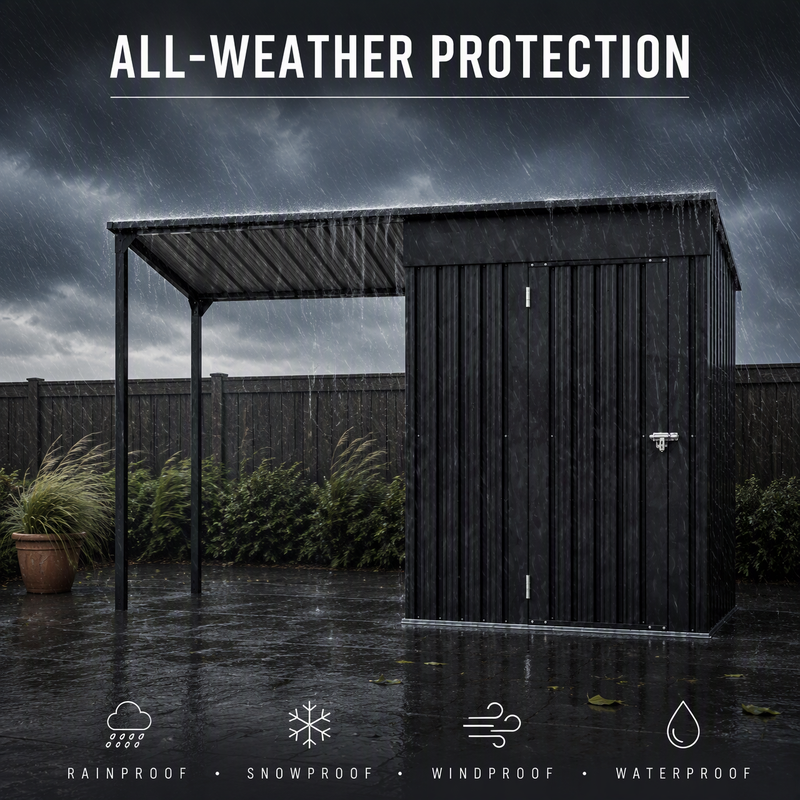 Key Factors Determining Lifespan
Galvanizing Process and Steel Quality: This is very critical factor. High-quality hot-dip galvanized steel, due to the protective zinc layer, can provide maintenance-free corrosion protection for 50 years or even 75 years in general atmospheric environments. In contrast, low-priced thin steel sheets may begin to rust and perforate within a few years.
Manufacturer Warranty and Actual Performance: Warranties directly reflect manufacturer confidence. Common brands in the market typically offer 10 to 20 years anti-corrosion or anti-perforation warranties. Some high-end brands have cases where sheds remain in good condition after 15 years of use.
Usage Environment: In coastal areas (high salt mist) or heavily polluted industrial environments, corrosion rates will accelerate, and lifespan will be correspondingly reduced. Adequate drainage (such as preventing roof water accumulation) and avoiding scratches can extend service life.
Practical Advice
When purchasing, do not only focus on the "steel" material itself. Be sure to check the specific galvanizing level and warranty period. A product that clearly states "hot-dip galvanized" and comes with a 15-year or even 20-year anti-corrosion warranty will be far more durable than an ordinary painted steel shed.

Polytunnel greenhouses are the sturdiest, most durable and accomplished greenhouses. Made with a hea...

Polytunnel greenhouses are the sturdiest, most durable and accomplished greenhouses. Made with a hea...

The 20'x10' Polytunnel Greenhouse is just a really practical hoop house built to stretch out your gr...

Polytunnel greenhouses are the sturdiest, most durable and accomplished greenhouses. Made with a hea...

Polytunnel greenhouses are the sturdiest, most durable and accomplished greenhouses. Made with a hea...
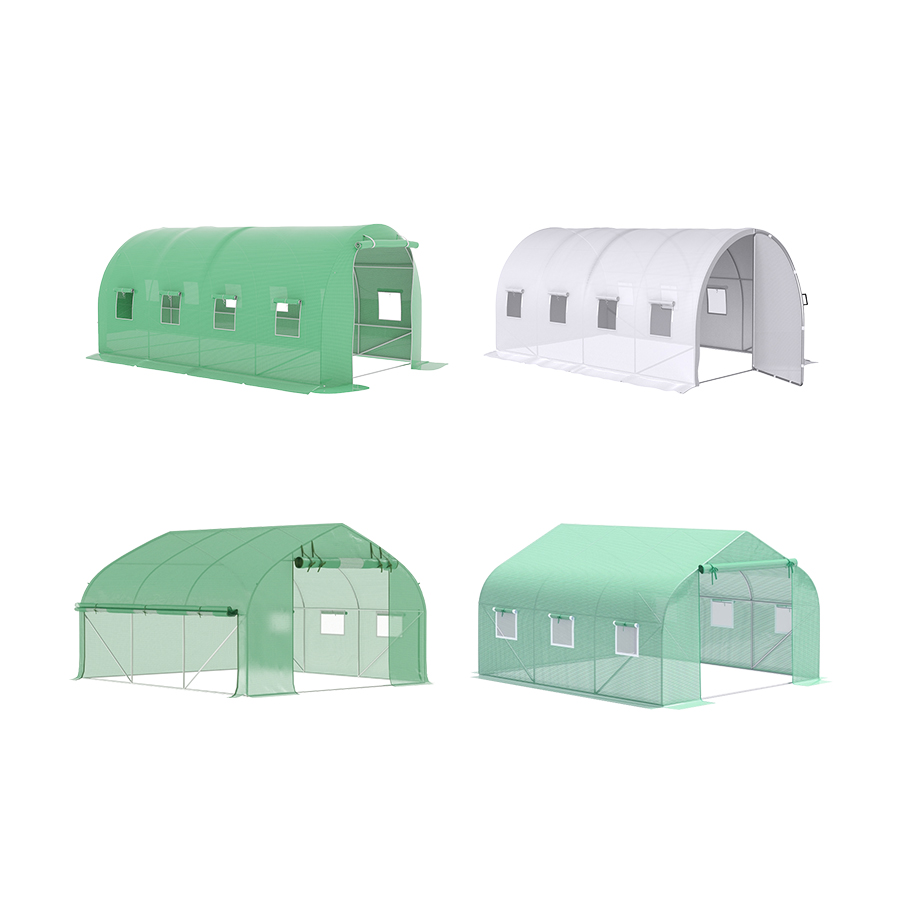
The Polytunnel Greenhouse is just a super practical protected cultivation structure built to give yo...
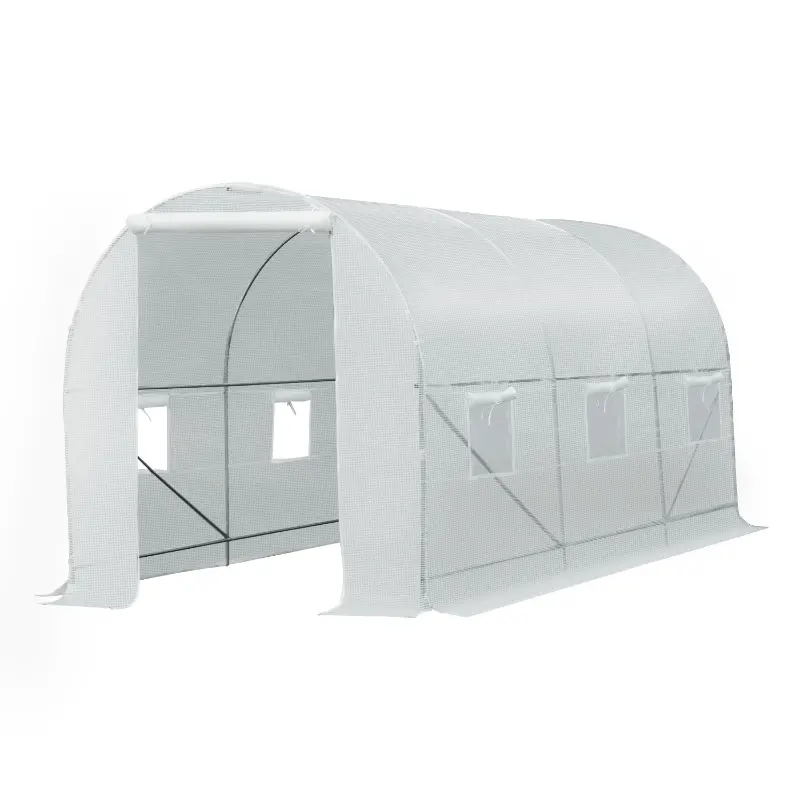
Size: Custom Color: Green, WhiteCover Material: PE, PVCFrame Material: Steel Tube
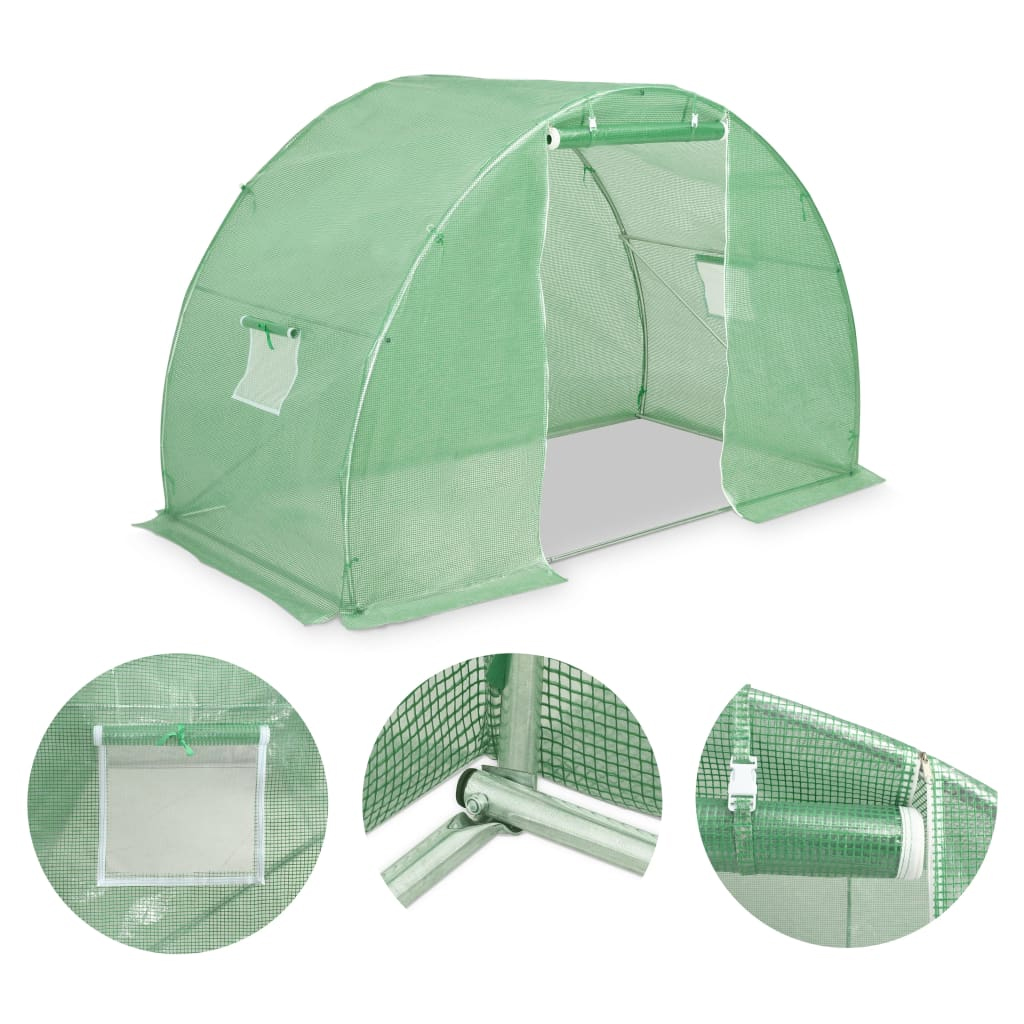
The Tunnel Greenhouse Small Greenhouses For Sale is just a super practical, compact hoop house built...