|
Size |
Large, 4*12ft |
|
Material |
PE |
|
Type |
Single-Span Agricultural Greenhouses, Multi-Span Agricultural Greenhouses |
|
Cover Material |
Film |
|
Layer |
Single |
|
Model Number |
Rolling Benches |
|
Place of Origin |
Tianjin, China |
|
Brand Name |
Sunshine Garden |
|
Product name |
Ebb And Flow rolling Bench |
|
Covering |
PEP Film(PE+EVA+PE Film) |
|
Usage |
Flower Vegetable Growing |
|
Length |
Customizable Size |
|
Application |
Plant Growth |
|
Width |
Multiple |
|
Function |
Multi-purpose |
|
Frame material |
Steel |
Offers everything you need to build complete gardening and hydroponic systems.
Greenhouse projects that stall at the installation stage almost always share the same root cause: the planning looked complete on paper, but the sequence of decisions in the field revealed gaps that nobody had anticipated. Steel Structure Greenhouses are not difficult to install when the process is well-planned — but that planning needs to account for site preparation, foundation type, structural assembly sequence, covering material installation, and environmental system integration before a single component goes into the ground. Buyers who approach a Steel Structure Greenhouse project without that sequence clearly defined end up with delays, rework, and in some cases structural issues that require corrective work after the fact.
Understanding What a Steel Structure Greenhouse Actually Involves
The Structural System Behind the Frame
A Steel Structure Greenhouse uses galvanized steel or painted steel sections as the primary load-bearing framework. The frame carries the weight of the covering material — whether polycarbonate panels, glass, polyethylene film, or shade cloth — as well as wind loads, snow loads where applicable, and the weight of any internal systems like irrigation rails or hanging fixtures.
What distinguishes steel frame construction from lighter alternatives:
Steel spans can cover wide, column-free growing areas that aluminum profiles cannot match at equivalent cost
Structural integrity under dynamic loads — particularly wind — is stronger in welded or bolted steel than in clip-assembled aluminum
Heavier steel sections resist deformation under point loads from equipment, hail, and ice accumulation better than thinner-walled alternatives
The material accepts both galvanizing and powder coating, providing corrosion protection options suited to different climatic conditions
For commercial greenhouse operations, agricultural producers, and wholesale greenhouse buyers sourcing large-span structures, steel is often the practical frame material rather than simply a preference.
Site Assessment Before Installation Begins
Why Ground Conditions Determine the Foundation Approach
The installation sequence for a Steel Structure Greenhouse starts with the site, not the frame. A site that looks suitable for construction may have soil conditions that affect foundation type, drainage characteristics that create future problems, or orientation issues that compromise growing performance.
Site assessment steps before any foundation work:
Orientation verification: The greenhouse should be oriented to maximize light capture for the crops being grown, taking into account the sun path at the specific latitude and the surrounding obstructions like trees or buildings that create shadow
Drainage evaluation: Standing water near the greenhouse perimeter creates foundation stability problems over time and promotes disease conditions inside — surface grading and subsurface drainage need to be addressed before foundation work begins
Soil bearing capacity: Heavy steel structures with snow loads or wind exposure require foundations that are sized for the actual soil conditions, not assumed conditions — soft clay or fill soil requires different foundation treatment than well-consolidated subsoil
Utility location: Electrical supply for climate systems, water supply for irrigation, and drainage outlets all need to be planned relative to the greenhouse footprint before the foundation limits access to the ground
Foundation Types and When Each Applies
Which Foundation Approach Fits a Steel Frame Structure?
Steel frame greenhouses can be installed on several foundation types, and the appropriate choice depends on the span, the load, the climate, and the site conditions.
Ground anchor posts: Steel posts are driven or cast into the ground at each column position without a continuous perimeter foundation. This approach works well on sites with adequate bearing capacity, where frost penetration is not severe enough to cause post heave, and where the structure size and loading do not require the lateral stiffness of a perimeter wall.
Continuous perimeter footing: A concrete perimeter foundation running the full length of each sidewall provides a stable base that resists lateral spreading under wind and snow loads. This is the standard approach for larger commercial greenhouses where span and load create significant lateral forces, and for sites with variable soil conditions where point anchors would have inconsistent bearing capacity.
Concrete piers at column positions: Individual concrete piers at each column location provide bearing capacity where continuous footings would be excessive. This is a common approach for medium-span greenhouses on sites with adequate subsurface conditions.
Concrete slab foundation: A full concrete floor slab serves as both the growing floor and the structural foundation in some commercial operations, particularly where hard floor paths between growing benches are part of the facility design. This approach adds cost but delivers a controlled, level, and drainable growing environment.
Structural Assembly: The Sequence That Matters
How Steel Frame Components Go Together
Steel greenhouse frames are typically shipped as prefabricated components — base rails, columns, rafters, ridge elements, and bracing sections — that assemble on site. The assembly sequence affects both the structural integrity of the completed frame and the safety of the installation process.
A standard assembly sequence for a single-span steel frame greenhouse:
Install base rail or anchor sill along the perimeter: This establishes the dimensional reference for the entire structure. Accuracy here propagates through every subsequent step — a base rail that is not level or not square creates alignment problems at the columns and roof.
Set and plumb the endwall columns: Endwall columns establish the height and vertical alignment that determines whether the roof structure will assemble cleanly. Each column should be plumbed in both directions and temporarily braced before proceeding.
Install the end-wall rafter and ridge connector: The endwall is structurally critical because it carries the end loads from the roof. Completing the endwall frame before adding intermediate bays provides a stable anchor for the progressive assembly.
Add intermediate bay columns and rafters: Working from one endwall toward the other, each bay is assembled sequentially. Columns are erected, rafters are lifted into position, and purlins are installed to connect rafters at the appropriate spacing.
Install bracing: Longitudinal bracing between column bases, and diagonal bracing in the roof plane, stabilizes the completed frame against racking under lateral load. Bracing is installed as each section is completed, not deferred until the whole frame is up.
Check and adjust alignment before covering: Once the steel frame is complete, verify that the ridge is straight, the base rail is level, and column spacing is consistent along the full length. Adjustments are far easier before covering materials are attached.
Covering Material Installation
How the Covering Attaches to a Steel Frame
The method of attaching covering material to a steel greenhouse frame depends on the covering type being used. Steel frame greenhouses are used with polyethylene film, twin-wall polycarbonate panels, glass, and shade cloth — each with different attachment systems.
Polyethylene film on steel frames
Film is typically attached using a locking channel system — a steel or aluminum extrusion fixed to the frame that accepts a flexible locking insert. The film is stretched across the frame and the locking insert is pressed into the channel, clamping the film. This system allows film to be replaced without structural modification and provides tension across the full covering area.
Polycarbonate panels on steel frames
Twin-wall polycarbonate panels are typically attached using an H-profile connecting section between panels and a U-profile capping at the edges. For steel frames, the polycarbonate system is normally fixed to intermediate purlins that span between the main structural elements. Panel expansion under temperature variation needs to be accommodated in the joint design — polycarbonate expands significantly across temperature ranges, and a joint system that does not allow for this movement will crack panels or pull connections.
Glass on steel frames
Glass greenhouse glazing on steel frames uses glazing bars fixed to the purlins, with glass sheets seated in rubber or silicone gaskets and held by capping sections. Proper drainage of condensation away from the glazing joints is important — standing water in glazing channels accelerates corrosion in steel components and promotes biological growth at joint lines.
Ventilation and Climate System Integration
Why Ventilation Design Affects the Installation Sequence
Ventilation is not an afterthought in steel greenhouse installation — it is a system that needs to be designed into the structure before construction begins, because many ventilation options require penetrations through the covering, specific framing details, or structural provisions that cannot be retrofitted easily.
Common ventilation configurations in steel frame greenhouses:
Ridge vents: Continuous or segmented openings at the roof peak that allow hot air to escape by natural convection. Ridge vents require structural framing on either side of the opening and a covering detail that prevents rain entry while allowing air movement.
Side wall vents: Roll-up sides on polyethylene film greenhouses, or hinged or sliding panels on polycarbonate and glass structures, provide ventilation at growing height. The framing detail for side wall vents needs to be built into the column and base rail design.
Mechanical fan and pad systems: Evaporative cooling using fans and wet pads requires fan wall penetrations through the endwall covering, structural provision for fan weight, and water supply and drainage for the pad system. All of these need to be planned before the endwall is completed.
Custom Size Greenhouse: Planning Before Specification
What Changes When a Project Requires Non-Standard Dimensions
A standard-catalog greenhouse may not fit every site or growing requirement. Custom Size Greenhouses start from a different design process — the dimensional requirements of the growing operation, the site constraints, and the structural demands of the location determine the frame specification rather than adapting an existing product to a new application.
Key planning inputs for a custom greenhouse project:
Bay spacing: The distance between structural bays determines the span of purlins and covering panels — longer bay spacing reduces column count but increases the structural demand on intermediate elements
Eave height: Taller eave heights improve air circulation and allow the use of larger growing equipment, but increase wind load on the structure — the frame specification needs to account for the actual eave height, not a standard default
Covering material span limits: Polycarbonate, glass, and polyethylene film each have span limits between support points — the purlin spacing needs to be set within these limits for the specific covering weight and wind exposure
Comparing Greenhouse Structure Types for Different Applications
Understanding where steel frame construction fits relative to other structural options helps buyers make informed decisions for their specific project scale and application.
Structure Type
Span Capability
Wind/Snow Load Resistance
Covering Options
Typical Application
Steel Structure Greenhouse
Wide spans
High
All covering types
Commercial, large-scale agriculture
Greenhouse with Steel Frame (light section)
Medium spans
Moderate to high
Film, polycarbonate
Small commercial, hobby
Aluminum profile greenhouse
Narrower spans
Moderate
Glass, polycarbonate
Retail, residential, small commercial
Small aluminum greenhouse
Limited spans
Lower
Polycarbonate, glass
Home garden, hobby
Tunnel/hoop structure
Wide spans
Lower — shape-dependent
Film
Budget commercial, seasonal use
What to Verify Before Accepting a Greenhouse Delivery
Inspection Steps That Prevent Installation Problems
Receiving a steel greenhouse kit without a thorough delivery inspection creates problems that become apparent only during assembly — missing components, incorrect lengths, surface damage that compromises corrosion protection, or mismatched connection hardware.
Pre-installation inspection points:
Count components against the packing list and identify any missing items before the delivery vehicle leaves
Check cut ends on steel sections for burrs or deformation that will affect assembly fit
Inspect galvanized or painted surfaces for damage that exposes bare steel — treat any bare areas before installation, not after the frame is assembled
Verify that connection hardware — bolts, nuts, plates, and anchors — matches the structural drawing specifications
Confirm that custom-dimensioned components match the design dimensions, particularly for Custom Size Greenhouse projects where components are not interchangeable with standard catalog sizes
Installing a Steel Structure Greenhouse is a systematic process that rewards careful pre-planning and a clear understanding of the sequence in which components depend on each other. Sites that are properly assessed before foundation work begins, frames assembled in the correct sequence, covering systems that accommodate movement and drainage, and ventilation designs integrated into the structural framework rather than added afterward — these are the elements that determine whether a greenhouse installation proceeds smoothly or generates the kind of corrective work that delays productive use. For project developers, agricultural buyers, and commercial greenhouse operators working through specification and sourcing decisions, the quality of the manufactured components and the reliability of the supply relationship behind them affect the installation experience as much as the site and sequence planning does. Taizhou Sunshine Garden Products Co., Ltd. manufactures Steel Structure Greenhouses and Greenhouse with Steel Frame configurations across standard and custom size specifications, supplying commercial greenhouse wholesale buyers and individual project customers with structures suited to a range of agricultural, horticultural, and commercial growing applications. For project inquiries, custom size specifications, or wholesale sourcing discussions, reaching out to their team with project scope and site parameters is the practical next step.
A quote that landed far higher than expected. A second supplier offering a number so much lower it raises more questions than it answers. A budget that keeps shifting because nobody can pin down exactly where the money in a Steel Structure Greenhouse is actually going. These frustrations come up constantly for anyone planning an agricultural or commercial growing project, and understanding what genuinely drives cost in this type of structure is the only way to compare offers with any real confidence rather than guessing which quote is fair. Greenhouse pricing rarely boils down to a single number tied neatly to square footage. It depends on frame material, structural design, overall size, glazing choice, and the specific functions the space needs to support day to day. Pulling these factors apart one at a time gives a far clearer sense of where a budget should realistically land, and which trade-offs are worth weighing before committing to any particular manufacturer.
What Actually Determines Greenhouse Cost?
Frame Material Sets the Foundation for Everything Else
The structural frame is usually the single largest cost driver in any greenhouse build. A Greenhouse with Steel Frame construction tends to carry a different cost profile than aluminum alternatives, largely because the two materials behave so differently under load, weather exposure, and long-term upkeep.
Is Steel Always More Expensive Than Aluminum?
Not really, and the answer shifts depending on scale and intended use. Steel framing tends to offer solid load-bearing capacity at a reasonable material cost, which is part of why it shows up so often in larger commercial projects where structural strength across wide spans matters more than shaving down frame weight.
Steel Frame vs Aluminium Frame: Where the Cost Differences Come From
Structural Strength Affects How Much Material Is Needed
Steel's load-bearing strength often means fewer support points are needed across a given span, which can offset some of the per-unit material cost compared to lighter alternatives. A large aluminium greenhouse, on the other hand, may need extra reinforcement points to reach comparable stability, especially in regions dealing with heavy snow or strong wind.
Corrosion Resistance and What It Means for Maintenance Spending
Aluminum has inherent corrosion resistance; steel, on the other hand, does not unless coated or treated. This changes long-term cost in a way that is easy to overlook. A Steel Structure Greenhouse might cost less to put up initially but demand more attention to rust prevention over its working life, while a small aluminum greenhouse usually needs less ongoing maintenance even though it often arrives with a higher initial material price.
A Side-by-Side Comparison of Frame Material Factors
Cost Factor
Steel Frame
Aluminum Frame
Initial Material Cost
Generally lower
Generally higher
Load-Bearing Capacity per Unit
Higher
Lower; often requires reinforcement
Corrosion Resistance
Requires coating or protective treatment
Naturally corrosion-resistant
Long-Term Maintenance Needs
Higher, due to rust risk
Lower, due to material stability
Suitability for Large Spans
Excellent structural strength
Moderate; depends on design
Weight per Structural Unit
Heavier
Lighter
How Size and Custom Configuration Change the Budget
Custom Size Greenhouse Projects Rarely Scale in a Straight Line
A lot of buyers assume cost scales evenly with floor area, but a custom size greenhouse hardly ever works that way in practice. Bigger structures tend to bring in additional engineering work, things like wind load calculations and reinforced foundation points, that push cost beyond what a simple square footage multiplication would ever suggest.
Why Small Structures Carry Their Own Cost Considerations
A small greenhouse walk in design, or something closer to a small tall greenhouse layout, might seem like it should cost proportionally less than a full commercial structure. But fixed costs, door systems, ventilation components, foundation work, do not shrink at the same pace as floor area shrinks. Those fixed elements end up making up a much larger share of total cost on smaller builds than people expect going in.
Key Questions to Ask When Sizing a Project
Before locking in dimensions, working through a few questions can be useful:
What is the actual growing or operational capacity needed, rather than a rough size preference picked out of habit
Whether the site carries any height restrictions that might push the design toward a small tall greenhouse layout instead of a wider footprint
How future expansion plans might affect the foundation and frame choices being made right now
Whether a smart mini greenhouse setup could realistically cover near-term needs at a lower cost than jumping straight to a full commercial build
Glazing and Covering Materials: A Hidden Cost Variable
Does Glazing Choice Really Affect the Budget This Much?
It happens often, and to a degree that exceeds what many buyers foresee when starting out. Glazing material shapes light transmission, insulation performance, and durability all at once, and each of those carries its own cost implications depending on climate and the crop or use case driving the project.
Comparing Common Glazing Options
Polycarbonate panels tend to deliver decent insulation at a moderate cost, fitting a fairly wide range of climates without much fuss
Glass glazing, frequently seen in a small conservatory greenhouse, offers strong light transmission but comes with a steeper material and installation bill
Polyethylene film keeps upfront cost low, though it usually needs replacing more often over time, which shifts some of the savings into ongoing expense
Matching glazing choice to actual climate conditions and real intended use keeps buyers from overspending on features that never really get used as intended.
Commercial Scale Projects: What Changes at Volume
How Does Commercial Greenhouse Wholesale Pricing Work?
Buyers purchasing at commercial scale typically land on a different pricing structure than someone ordering a single unit. Commercial greenhouse wholesale arrangements often rely on standardized components spread across multiple units, which trims per-unit engineering and design cost compared to building everything fully custom, one structure at a time.
What Should Commercial Buyers Prioritize?
For larger projects, cost efficiency tends to come down to a handful of practical moves:
Standardizing frame dimensions across multiple units wherever site conditions allow it
Ordering components in volume to take advantage of manufacturing efficiencies that smaller orders simply cannot access
Working with custom greenhouse manufacturers who already have experience scaling designs without losing structural consistency along the way
Planning logistics and shipping early, since transport often ends up being a meaningful chunk of total project cost once structures get large
Functional Add-Ons That Influence Total Project Cost
Ventilation and Climate Control Systems
Functional systems tend to add cost to greenhouse projects beyond the basic frame and covering. Ventilation, whether through passive vents or active fan systems, affects both upfront spending and ongoing energy use, and the right call here depends heavily on local climate and how sensitive the crop actually is.
Does Every Project Need Smart Climate Features?
Not really. A smart mini greenhouse setup with automated monitoring and control can genuinely pay off for buyers managing sensitive crops or remote sites where checking in regularly is not practical. But for simpler growing needs, manual ventilation and basic climate management often deliver comparable results at a noticeably lower cost. Matching automation level to actual operational demands keeps buyers from paying for complexity that just sits there unused.
Foundation and Installation: Costs That Are Easy to Underestimate
Why Foundation Work Often Catches Unprepared Buyers Off Guard
Site preparation and foundation work are frequently underestimated when buyers begin budgeting for a steel structure greenhouse. Soil conditions, drainage, and local building codes all factor into foundation cost, and skipping a proper site assessment tends to cause structural problems that cost more to fix later than they would have to prevent early on.
Steps to Avoid Foundation-Related Cost Surprises
A practical way to sidestep foundation surprises includes:
Running a soil and drainage assessment before finalizing any structural plans
Confirming local building code requirements that apply to the intended greenhouse size and use
Budgeting separately for foundation work instead of folding it quietly into general construction estimates
Talking through site conditions directly with the manufacturer before locking in frame design, since foundation needs can shift frame engineering choices in ways that are hard to undo later
Comparing Manufacturers: What Separates Reliable Quotes From Risky Ones
Why Do Quotes From Different Manufacturers Vary So Widely?
Wide pricing gaps between custom greenhouse manufacturers usually trace back to differences in material grade, how much structural engineering actually went into the design, and what is or is not included in the quoted number. A lower quote might exclude foundation work, shipping, or installation support that a higher quote bundles in, which makes a direct side-by-side comparison pretty misleading without asking more questions.
Questions Worth Asking Before Comparing Final Numbers
What steel or aluminum grade is specified, and does it actually meet the structural demands of the intended location
Is foundation design and site assessment built into the price, or treated as a separate line item
What warranty terms apply to the frame structure and the glazing materials
Does the quote cover shipping and installation, or just the manufactured components on their own
Getting straight answers to these questions before comparing prices keeps buyers from mistaking an incomplete quote for a genuinely cheaper option.
Working through frame material, sizing strategy, glazing choice, functional add-ons, and foundation requirements before settling on a final budget gives buyers a far more realistic sense of what a Steel Structure Greenhouse actually costs to build and keep running over time, rather than leaning on a single quoted number that may or may not reflect the full scope of the project. Weighing steel against aluminum, comparing custom sizing against standardized commercial options, and pushing custom greenhouse manufacturers for detailed answers all add up to a budget that holds up once construction actually begins. Taizhou Sunshine Garden Products Co., Ltd. works with buyers through each of these considerations, from frame material selection through custom sizing and commercial scale planning, helping turn project requirements into a structure that fits both functional needs and the realities of the budget. Reaching out to talk through specific site conditions and growing requirements is a reasonable next step for buyers ready to move from cost research into an actual project plan.
Why Retailers Should Stock Plastic Sheds for the Small-Backyard Market
As a wholesale buyer, you need products that move quickly, generate fewer returns, and leave customers satisfied for years. Here is the retail reality:
Wood sheds are difficult to ship (pre-built or heavy flat-packs) and have high freight costs.
Wood sheds have high return rates due to missing parts, warped lumber, or assembly difficulty.
Wood sheds generate complaints about rot, termites, and maintenance within 3 years.
Plastic sheds solve all of these problems. And when you source from our factory, you eliminate the "cheap plastic" stigma entirely.
Our Factory Advantage – The Plastic Shed That Competes with Wood (and Wins)
We don't build cheap tote-boxes. We build architectural-grade plastic sheds designed specifically for small spaces where quality matters.
Here is why our small plastic sheds are the top choice for bulk wholesale buyers serving the residential market:
1. Wood-Grain RealismOur patented textured panel molding replicates cedar and pine grain with stunning realism. From 10 feet away, it looks like a custom-built wooden shed. Up close, customers appreciate that it will never splinter, peel, or rot.
2. Compact Footprint, Maximized InteriorOur small cabin features a thin-walled structure (2.2 inches thick), providing the homeowner with a large amount of usable indoor space. A 5x3 footprint delivers 14.5 sq ft of actual storage—not 12 sq ft like bulky wooden frames.
3. Built-in Modular Shelving SystemWe solved the "customization" problem. Our interior walls feature pre-molded T-slots for universal shelving brackets and hooks. No drilling required. Customers can arrange shelves, tool racks, and pegboards exactly like they would in a wooden workshop—without cracking a single panel.
4. The "HOA-Friendly" Color PaletteOur small sheds come in neutral, earth-tone colors: warm gray, sand beige, and cedar brown. These colors comply with 90% of HOA architectural guidelines without requiring special approvals.
5. 5-Minute Foundation PrepUnlike wood sheds that require poured concrete, our small sheds install on any flat surface: patio stones, compacted gravel, or even existing concrete slabs. We include a pre-cut ground anchor kit that secures the shed without permanent alterations—ideal for renters and small lots.
6. Tool-Free Assembly for End-UsersOur snap-lock panel system requires no screws on external walls (except the door hinge). Homeowners assemble a 5x3 shed in under 90 minutes. Fewer assembly frustrations = fewer customer service calls for you.
Choosing a greenhouse frame material is one of those decisions that seems simple until you're actually sitting with the numbers, the site plan, and the pressure of a project timeline. Steel or aluminum — the question follows every serious greenhouse project at some point, and the answer shapes everything that comes after it: structural performance over decades, maintenance budgets, how well the building handles a bad winter, how efficiently it uses internal space. For farms, growing operations, and commercial facilities making real capital commitments, the wrong choice doesn't just cost money upfront — it costs money every season afterward. A Steel Structure Greenhouse and an aluminum greenhouse both work, both have genuine strengths, and both have conditions where they underperform. The comparison only becomes useful when it's anchored to specific project requirements rather than abstract material properties. That framing matters. This isn't about finding a universally correct answer. It's about understanding which material fits a particular scale, climate, and investment logic — and being honest about what each one asks of the people managing it over time.
What Defines a Steel Structure Greenhouse?
The Core Characteristics of Steel Frame Construction
A steel frame greenhouse uses hot-dip galvanized or structurally treated steel as its primary load-bearing system. The galvanization process — immersing steel in molten zinc — creates a protective coating that slows corrosion significantly, making the material viable for outdoor agricultural environments where moisture, humidity, and temperature cycling are constant variables.
Steel's defining quality in this context is load capacity. Wide-span designs, multi-span connected configurations, heavy covering materials, tall ridge heights — all of these become structurally practical with steel in ways that aluminum struggles to match at comparable cost. That matters directly in Commercial Greenhouse Wholesale contexts where large footprints and efficient interior layouts drive productivity metrics.
Key structural features of steel frame greenhouses:
High load-bearing capacity for accumulated snow, wind pressure, and internal equipment
Wide span potential without internal support columns interrupting growing space
Suited to multi-span connected structures covering large agricultural areas
Compatible with heavier covering materials including thick polycarbonate panels and glass
Structural stability in high-wind regions and areas with meaningful snow accumulation
How Galvanization Quality Shapes Long-Term Performance
Here's something that doesn't always get discussed clearly: the durability of a Greenhouse with Steel Frame isn't just about the steel — it's about the quality of the corrosion protection applied to it. Hot-dip galvanizing produces a thicker, more uniform zinc coating than spray treatments or painted finishes. The zinc acts sacrificially, corroding before the underlying steel does. That protective mechanism works for years in properly treated material.
The problem is that galvanization quality varies considerably between suppliers. Poor coating is one of the more common causes of premature failure in steel greenhouses — and by the time the deterioration becomes visible, it's often already structural rather than cosmetic. When evaluating manufacturers, the galvanization specification deserves as much attention as the structural drawings. Well-treated steel in a properly maintained growing environment can remain sound for decades. Poorly treated steel in a humid greenhouse atmosphere can show serious corrosion within a few seasons.
What Defines an Aluminum Greenhouse?
Aluminum's Natural Advantages as a Frame Material
Aluminum greenhouses use extruded aluminum profiles as the structural system. The material's corrosion resistance isn't something applied to it — it's inherent. Aluminum forms a stable oxide layer naturally when exposed to air, and that layer protects the metal beneath without galvanizing, painting, or periodic retreatment.
That natural stability makes aluminum particularly attractive for humid environments, coastal locations, or interior spaces where condensation is persistent and unavoidable. It genuinely doesn't rust in the way that unprotected or inadequately protected steel does. For operations where maintenance resources are limited or where the site conditions are persistently wet, this matters practically.
Other characteristics that define aluminum frame construction:
Lightweight, reducing foundation requirements and simplifying the installation process
No corrosion treatment required throughout the structure's life
Clean, precisely extruded profiles that suit retail-facing or decorative applications
Well-suited to small and medium-span structures
Generally faster to assemble due to lighter and more manageable components
Where Aluminum Reaches Its Structural Limits
The trade-off for aluminum's lightness is load capacity — and that limit shows up clearly when projects scale up or when environmental conditions get demanding. Aluminum profiles that handle typical covering materials and moderate loads become less practical as span widths increase or as snow and wind loads grow. Large commercial greenhouses in regions with serious winters, or structures requiring wide internal clearances for machinery movement, typically exceed what aluminum can provide economically.
Material cost is the other side of this. Aluminum costs more per unit weight than steel. In a small greenhouse project, that difference is manageable. Scaled to a large Commercial Greenhouse Wholesale project, the cost gap becomes a significant line item in the investment calculation — one that's hard to justify when steel would perform better structurally for less money at that scale.
Side-by-Side Comparison: The Key Decision Factors
Factor
Steel Structure Greenhouse
Aluminum Greenhouse
Load capacity
High — suitable for heavy loads and wide spans
Moderate — suited to lighter loads and smaller spans
Corrosion resistance
Depends on galvanization quality
Naturally resistant — no treatment needed
Material cost
Lower per unit weight
Higher per unit weight
Maintenance requirement
Periodic inspection of galvanized coating
Minimal — inherently stable
Span capability
Wide multi-span configurations
Better suited to single-span, moderate widths
Weight
Heavier — stronger foundation typically needed
Lightweight — simpler foundation requirements
Suitability for large commercial projects
Strong fit
Less practical at very large scale
Climate suitability
Well-suited with quality galvanization
Well-suited especially in humid or coastal areas
Custom Size Greenhouse compatibility
Highly flexible for large custom configurations
Flexible for smaller custom configurations
Aesthetic appeal
Industrial, functional
Clean, polished appearance
Structural Strength: Does It Actually Matter for Your Project?
When Load Capacity Becomes the Deciding Factor
In mild climates with low wind speeds and minimal snow, both steel and aluminum perform reliably across a reasonable range of greenhouse sizes. The structural advantage of steel becomes genuinely significant — not just theoretically — when any of the following conditions apply:
Regions where snow accumulates heavily on greenhouse roofs and stays there
Coastal or exposed locations with sustained high wind that puts continuous lateral pressure on the structure
Multi-span connected greenhouse systems where loads accumulate across the entire configuration
Structures intended to house automated irrigation systems, overhead transport rails, or heavy climate control equipment
Long ridge heights or wide span configurations where deflection under load over time is a concern
In these situations, choosing aluminum isn't just a structural compromise — it becomes a risk factor for the investment. A greenhouse that deforms or fails under demanding weather conditions creates production losses and emergency repair costs that quickly exceed any material saving from the original construction decision. The initial cost comparison looks different when you factor in what happens when the cheaper option doesn't hold.
Smaller Operations Where Aluminum Holds Its Ground
For single-span hobby greenhouses, retail garden centers, research facilities with controlled environments, or educational horticultural spaces, the structural demands are genuinely lower. Aluminum performs reliably in these settings, and the natural corrosion resistance reduces ongoing maintenance in ways that have real operational value.
The weight advantage also applies in specific situations that often get overlooked — rooftop greenhouse installations where structural loading on the building below is a constraint, or remote sites where heavy construction equipment can't easily access the location. In those contexts, aluminum's lighter components aren't just a handling convenience; they're a meaningful construction advantage.
Climate and Environment: Matching the Material to the Location
How Regional Climate Shapes the Material Decision
A greenhouse is a long-term investment. Its structural material needs to perform across the full range of conditions a location experiences — not just averages, but the periodic events that stress the structure. Climate consideration isn't an abstract planning exercise; it directly shapes which material will perform as expected over the operational life of the building.
Climate implications by region type:
High-humidity tropical or subtropical regions: Aluminum's natural corrosion resistance is a meaningful advantage. Persistent moisture accelerates corrosion on any metal, and aluminum handles this environment without ongoing intervention or retreatment.
Temperate climates with moderate snow and wind: Both materials perform well with appropriate design and quality galvanization for steel. The comparison shifts primarily to scale, budget, and internal layout requirements.
Cold climates with significant snow accumulation: Steel's load capacity advantage becomes directly relevant. Roof loads under heavy snow require structural systems that won't deform under sustained weight across an entire winter season.
Coastal environments with salt air exposure: Both materials can perform in coastal conditions, but require appropriate specification — marine-grade galvanization for steel, and quality aluminum profiles with attention to connection detailing.
Arid or semi-arid regions: Corrosion is less of a concern in dry conditions, so the comparison shifts to structural requirements, cost efficiency, and thermal behavior of the covering system.
Does Temperature Cycling Affect Frame Material Performance?
Thermal expansion and contraction from seasonal and daily temperature cycling affects all metal frame systems. Aluminum expands and contracts more than steel across the same temperature range. In large structures, this movement needs to be accommodated deliberately in the design — expansion joints, flexible connections, and appropriate fixing details prevent stress from accumulating in ways that eventually damage either the structure or the covering material attached to it.
For small to medium greenhouses, thermal movement is manageable within standard design approaches. In large Custom Size Greenhouse configurations — particularly long continuous structures — the manufacturer and designer need to address this behavior explicitly rather than treating it as a secondary concern. Buyers evaluating large-scale projects should ask how the manufacturer handles thermal movement in their standard design details.
Commercial Scale: Where Steel Frame Greenhouses Hold a Clear Advantage
Why Large Commercial Projects Lean Toward Steel
Commercial Greenhouse Wholesale projects — covering substantial growing areas for vegetable production, floriculture, or large-scale horticultural operations — have requirements that consistently favor steel frame construction. The economics work differently at this scale, and so do the structural demands.
Several practical factors converge at commercial scale:
Wide-span designs that maximize internal growing space per unit of covered area are structurally practical in steel at a cost that aluminum cannot match
Multi-span connected greenhouse systems require a structural framework capable of handling the accumulated loads across the entire configuration — loads that grow with every additional span
Integration of automated systems — overhead irrigation, climate control, internal transport systems, motorized ventilation — adds equipment load that steel accommodates without the structural compromises aluminum would require at the same span
Long operational life expectations on large capital investments favor a structural system that can be maintained, repaired, and modified over decades rather than replaced at intervals
For farms planning to scale growing capacity, or for greenhouse contractors building facilities for agricultural clients operating at volume, these practical advantages consistently make steel the structural default. The higher upfront investment in steel versus aluminum at large scale is typically recovered through better structural performance, lower long-term maintenance burden, and the ability to build efficiently at the scale the operation actually needs to function.
Multi-Span Configuration and Internal Space Efficiency
One of the practical advantages of steel frame construction at commercial scale is the ability to design wide, column-free interior spaces. Internal columns interrupt growing rows, complicate machinery movement, and reduce the usable growing area relative to the covered footprint. Steel's structural capacity allows wider spans and fewer internal supports, which translates directly into more usable growing space and more efficient internal layouts for the crops or systems housed within.
Aluminum greenhouses at similar span widths either require more internal support columns or use heavier profiles that approach steel weight and cost — at which point the material's original advantages diminish. For commercial operations where internal space efficiency drives productivity and revenue, this design consideration has real economic consequences that compound over the life of the operation.
Custom Size Greenhouse: How Frame Choice Affects Design Flexibility
Steel's Advantage in Large Custom Configurations
Both materials accommodate Custom Size Greenhouse designs, but the practical flexibility differs at larger scales. Steel's structural properties allow configurations that would be challenging or cost-prohibitive in aluminum — unusually wide spans, irregular plan geometries, tall ridge heights, or integration of attached service structures and processing spaces. Custom Greenhouse Manufacturers working at commercial scale use steel precisely because it accommodates the range of design requirements that commercial agricultural clients actually bring to projects.
For operations that need a greenhouse configured around specific site constraints, equipment dimensions, or proprietary growing system requirements, steel frame construction gives the manufacturer meaningful design latitude to deliver a structure that genuinely fits the project rather than requiring the project to fit the material's limitations.
Aluminum's Flexibility in Smaller Custom Projects
For smaller installations — specialty growing spaces, retail garden centers, educational facilities, research units — aluminum's extrusion process allows relatively straightforward customization of profile dimensions and connection systems. Custom Greenhouse Manufacturers working in the smaller commercial and semi-commercial segment often use aluminum because it's easier to handle on site, faster to assemble, and well-suited to the scale of project these clients need.
The key principle is matching the level of customization to what the material can practically deliver. Aluminum custom configurations work well within the structural limits of the material. Pushing beyond those limits to achieve scale or environmental performance that aluminum isn't designed for adds cost without proportional performance benefit — a poor trade that becomes more apparent over time.
Lifecycle Cost: Looking Beyond the Purchase Price
How Full Lifecycle Cost Changes the Comparison
Purchase price is a visible cost in any greenhouse procurement decision, but it is not the complete picture. Maintenance costs, repair frequency, operational disruptions from structural issues, the cost of modifications as needs change — all of these factor into the real cost of a greenhouse over its full operational life. Evaluating only the initial outlay routinely produces decisions that look right on paper and prove expensive in practice.
A useful lifecycle cost comparison considers:
Initial material and construction cost: Steel generally lower per square meter at large scale; aluminum potentially competitive at small scale where the structural demands don't push its limits
Foundation requirements: Steel's weight typically requires more substantial foundations — a real additional cost that doesn't always appear visibly in structure pricing
Ongoing maintenance: Aluminum requires minimal ongoing maintenance; steel requires periodic inspection and potential attention to galvanized surfaces if damage occurs during operation
Repair and modification: Steel structures are generally easier to modify or expand over time; damaged components can often be replaced in sections without major structural intervention
Operational lifespan: Both materials, when properly specified and consistently maintained, can remain structurally sound for long periods — but the conditions for that longevity differ between materials and need to be understood before the project is committed
Neither material is categorically more economical across all scenarios. The lifecycle cost comparison shifts considerably depending on scale, climate aggressiveness, quality of the original construction, and how the structure is managed over time.
What Happens When Maintenance Is Neglected?
Neglected maintenance affects both materials, but the consequences diverge in important ways. Aluminum with surface damage in an aggressive environment may develop localized surface oxidation that affects appearance but rarely progresses quickly into structural compromise. Steel with damaged galvanization in a persistently wet growing environment can develop corrosion that progresses into the base metal — a more serious problem that, if left unaddressed, becomes structural rather than cosmetic.
This difference in failure mode is worth factoring into the choice for projects where ongoing maintenance resources are genuinely limited. Aluminum's lower maintenance dependency is a real operational advantage in those contexts, even when its structural limitations make it unsuitable for large commercial applications. Understanding this trade-off honestly is part of making a decision that holds up over the project's full life.
Making the Decision: A Practical Framework
Which Project Characteristics Point Toward Steel?
A greenhouse project is likely to favor steel frame construction when:
The growing area exceeds the scale where aluminum becomes structurally impractical or economically inefficient
The location experiences meaningful snow loads, sustained high wind, or other demanding structural conditions
The design requires wide-span, column-free interior spaces for growing system efficiency or equipment movement
Multi-span connected configurations are part of the project scope
The operation plans to integrate automated growing systems with significant equipment loads
Long operational life with periodic maintenance is the expected management approach for the investment
Which Project Characteristics Point Toward Aluminum?
An aluminum greenhouse becomes the more practical choice when:
The project is a single-span structure of moderate size where aluminum's load capacity is sufficient
The location is persistently humid, tropical, or coastal, where natural corrosion resistance reduces the maintenance burden meaningfully
Appearance is a priority — retail garden centers, educational facilities, or visible growing spaces where aesthetics matter to the end user
Minimal ongoing maintenance is a genuine operational requirement due to resource or staffing constraints
The installation involves site conditions where lighter components are a real advantage — rooftop installations, difficult terrain, or locations with limited construction access
Choosing a Supplier Who Can Deliver Both Options
The comparison between steel and aluminum greenhouses is ultimately a decision-making framework, not a fixed verdict. Both materials have legitimate applications, and the outcome that serves a project well comes from matching the material to the actual requirements rather than defaulting to one option out of familiarity or initial price attraction.
For agricultural businesses, farm developers, greenhouse contractors, and procurement teams working through this decision with real projects in the background, Taizhou Sunshine Garden Products Co., Ltd. manufactures both steel frame greenhouse structures and aluminum greenhouse systems, with Custom Size Greenhouse configurations available across a range of project scales — from mid-scale commercial installations to large agricultural facilities requiring multi-span designs and specialized internal layouts. Their production capabilities span the structural range covered in this comparison, with design support available for project-specific requirements including multi-span configurations, climate-adapted structural specifications, and Commercial Greenhouse Wholesale orders at volume. Working with a manufacturer that understands both structural systems and can engage directly with the trade-offs relevant to a specific project's scale, location, and operational goals takes significant uncertainty out of the procurement process. If your project is currently in the planning or procurement stage, reaching out to discuss frame options, custom configurations, and project-specific requirements is a straightforward next step toward a decision made on solid ground.
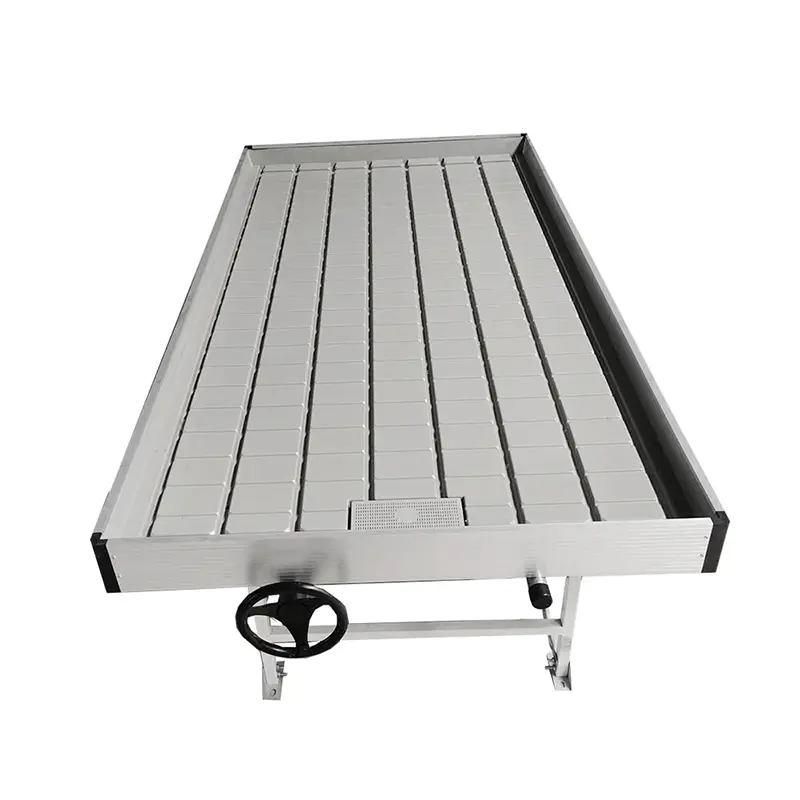
Features 1. Manual drive, ease operation and movement. Seedbed border for the aluminum alloy, The ...
Features:1. Manual drive, ease operation and movement. Seedbed border for the aluminum alloy, The su...
Innovation Team
Patented Technology
Quality Assurance
Efficient Response.jpg)