 英语
英语 俄语
俄语 德语
德语 西班牙语
西班牙语 法语
法语

OEM/ODM Garden System & Hydroponic Grow
Home / Products

All
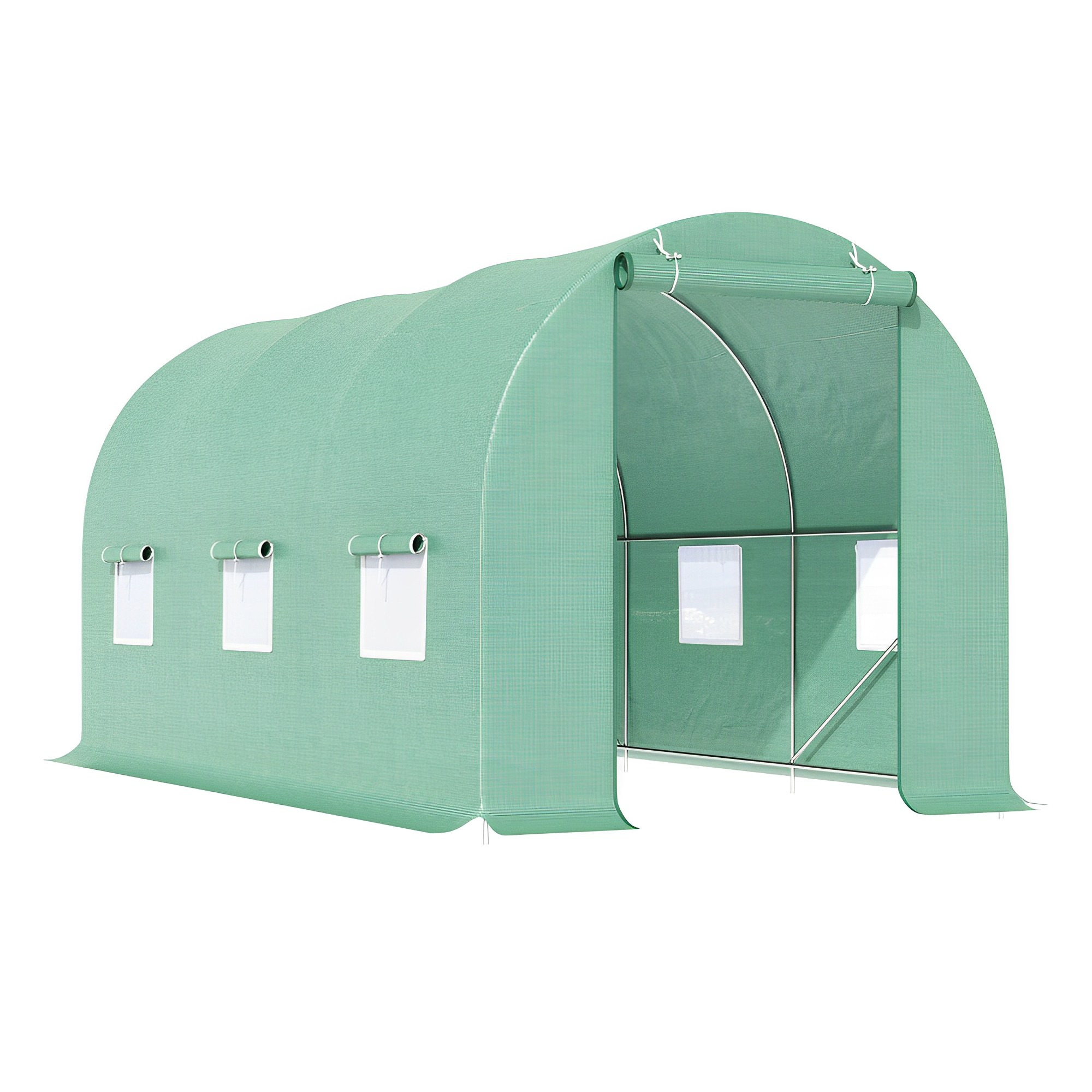
Greenhouse
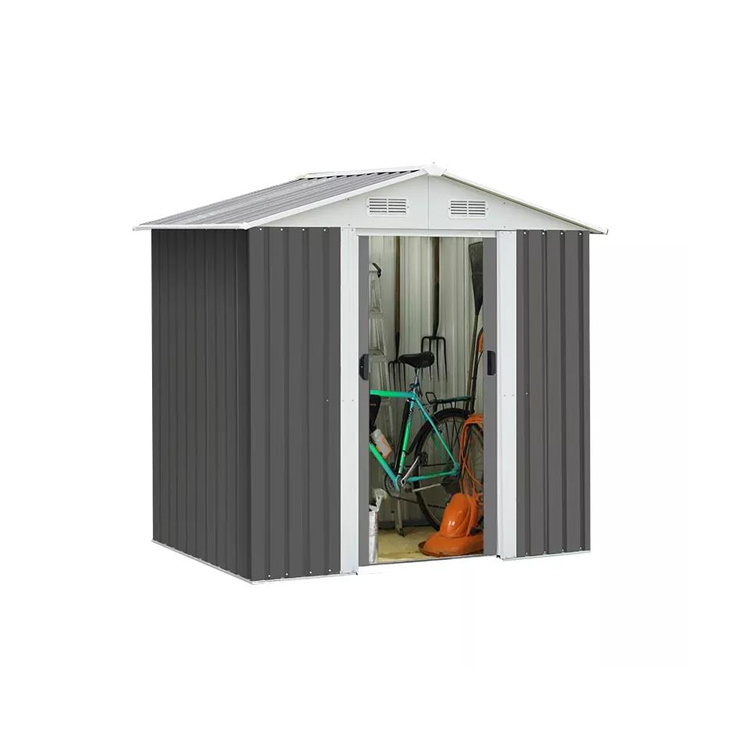
Garden Storage Shed

Grow Tent & Kit
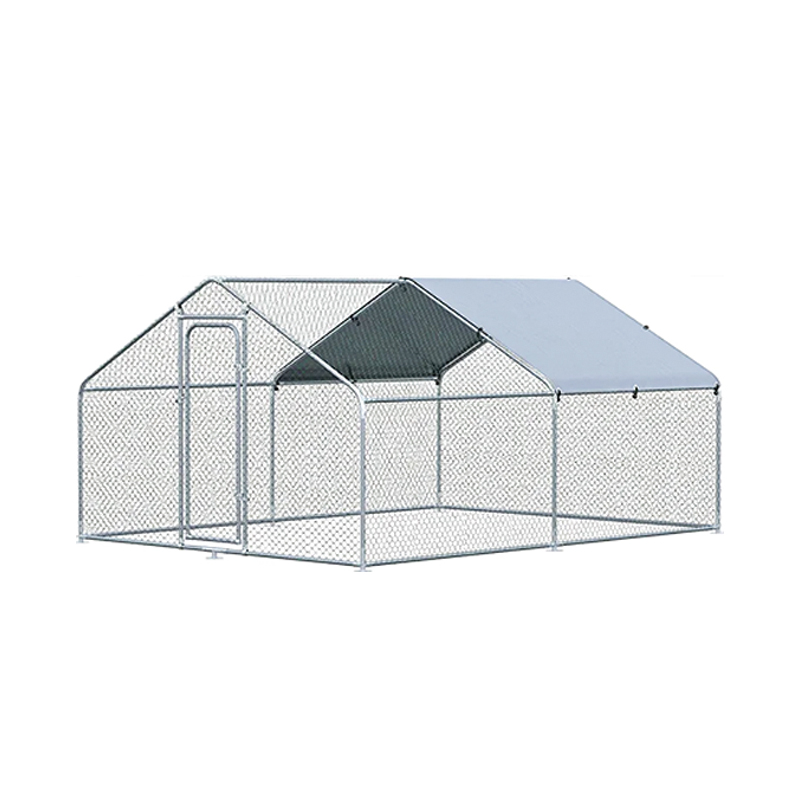
Pet Cages

Rolling Bench & Tray
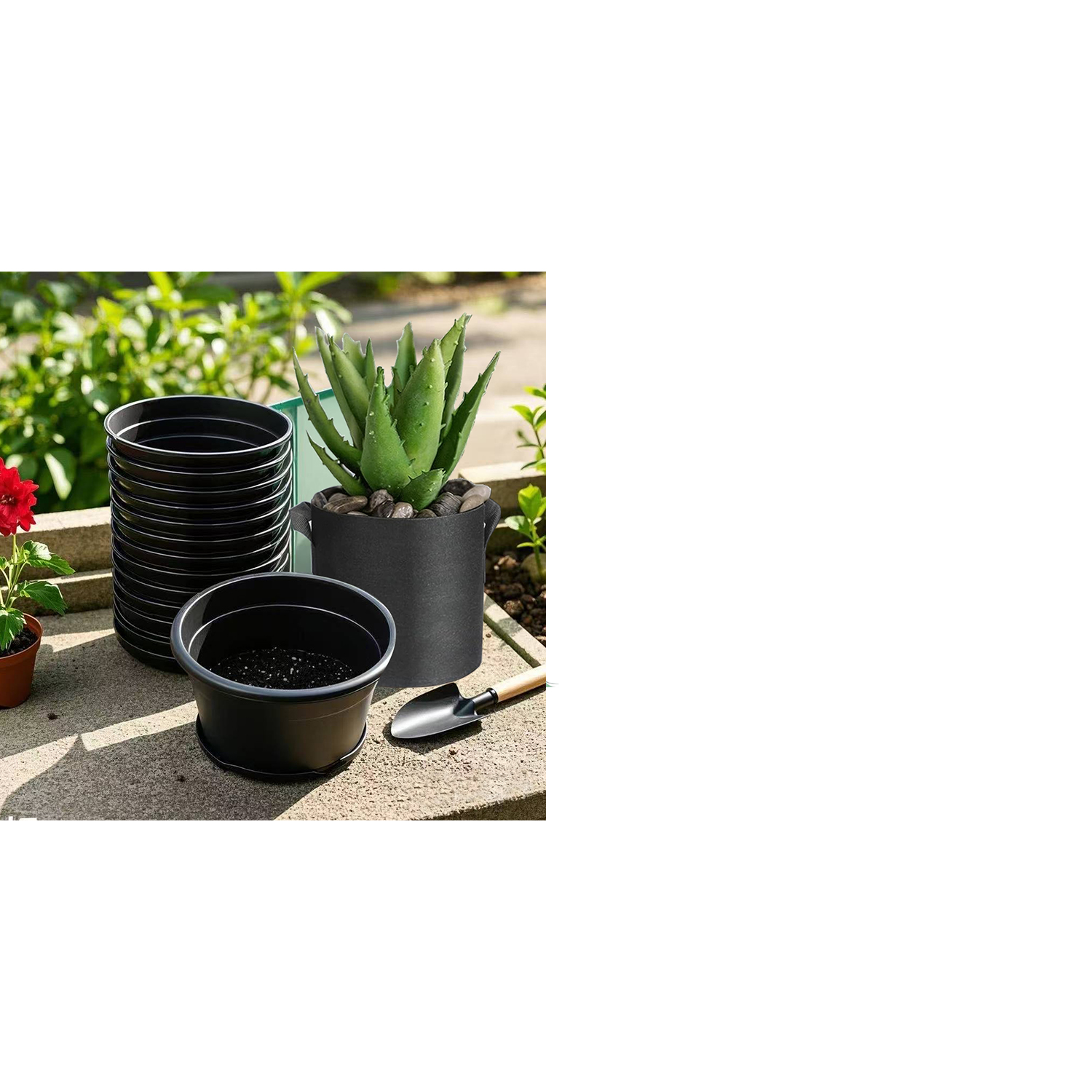
Garden Pots & Planters

Grow Light

More Garden Supplies

Air-Ventilation
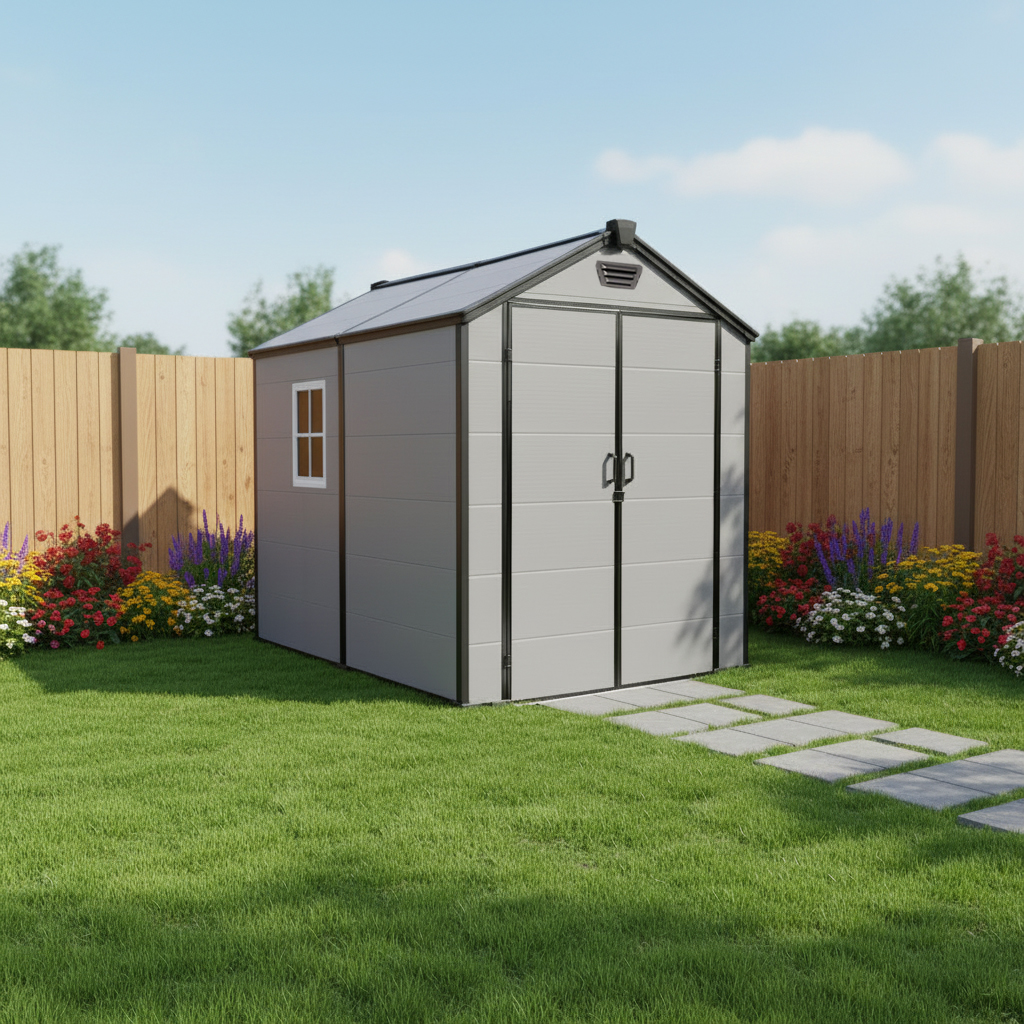
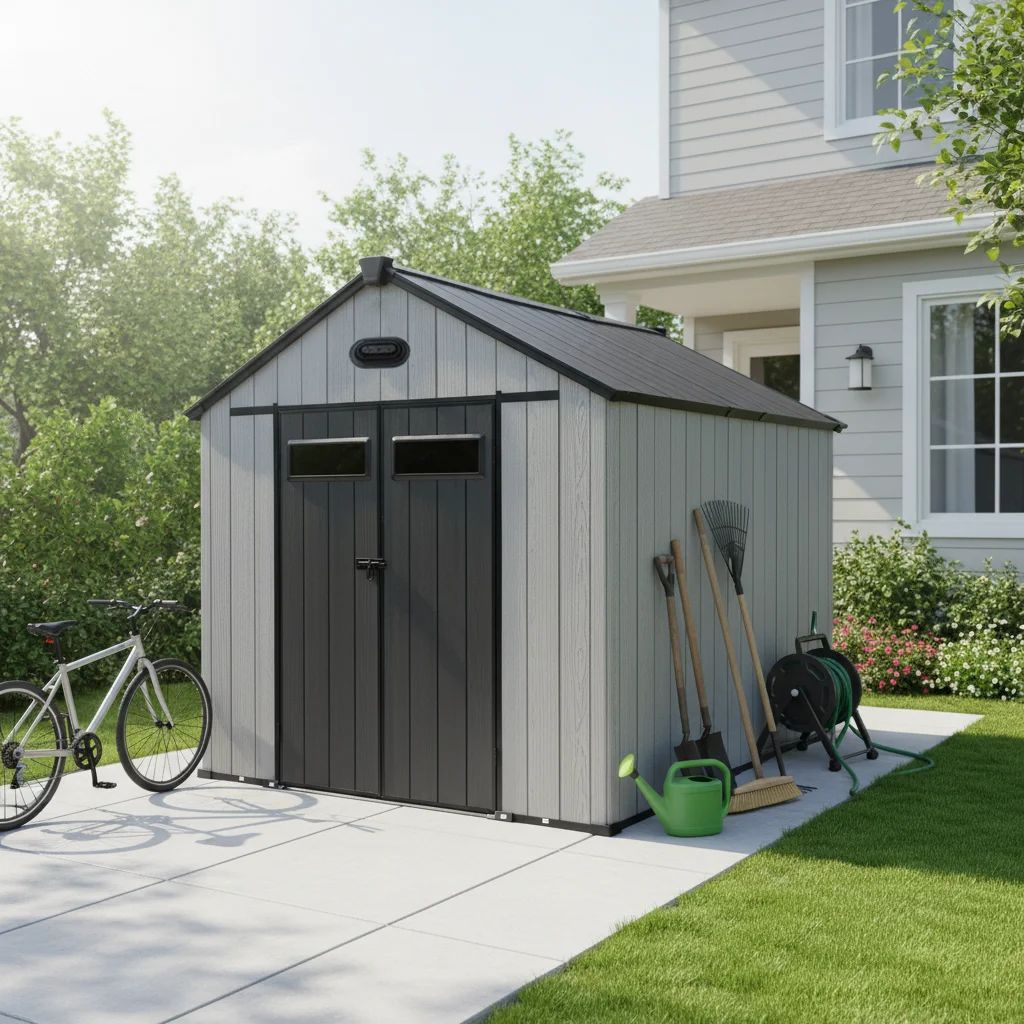
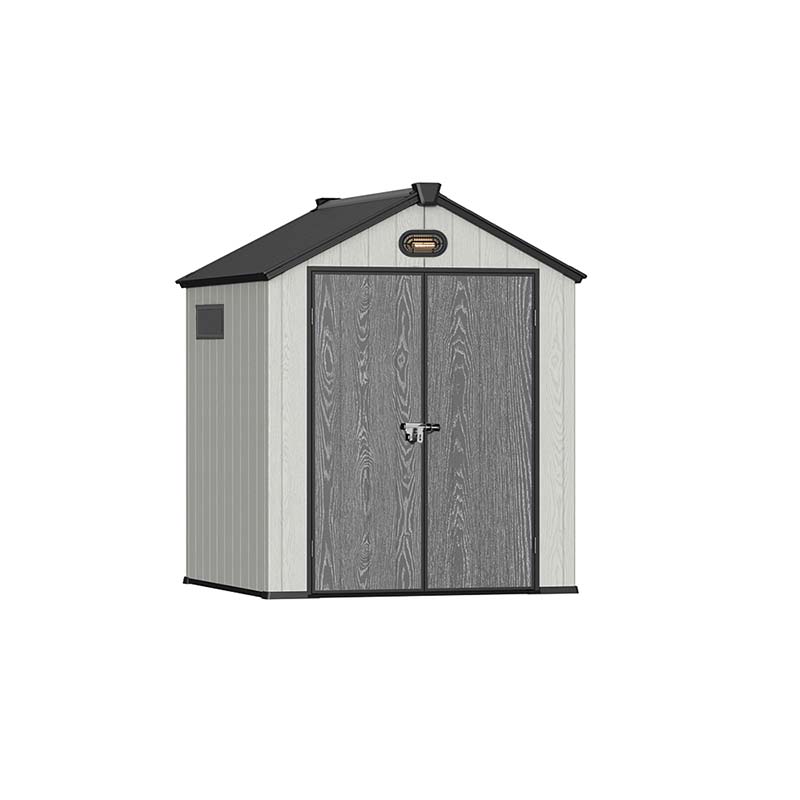

Taizhou Sunshine Garden Products Co.,Ltd is a leading home garden and hydroponic grow equipments manufacturer and supplier from China with 12 years OEM & ODM experience. Specialized in Complete home Garden System And Indoor Hydroponic Grow System, Our main products can be divided into two series, including Hydroponic Grow Equipmentslike Full completed grow tents and kits, Grow tables and trays, Grow bags, Seeding propagation, another series is Home Garden Products like Mini Greenhouses, Hanging planters, Garden waste bags and so on. We wholesale Garden System And Indoor Hydroponic Grow System, We could also make customized products according to your needs. We helped a lot of clients creating their own brand with our strict quality raw material select, higher quality production technology and professional services. Warmly welcome to visit our Garden System equipment And Hydroponic Grow System factory.
Our factories are supervised carefully, we have strict quality assurance test and lab test and multiple inspections. This means we find glitches before they become problems, thus preventing you from disastrous quality problems. We guarantee your satisfaction from start to finish.
We helped a lot of clients creating their own brand with our strict quality raw material select, higher quality production technology and professional services.
We could also make customized products according to your needs. you can talk to our customer service center about your sourcing requirements, whether selecting a current product from our catalog or seeking assistance for your application.

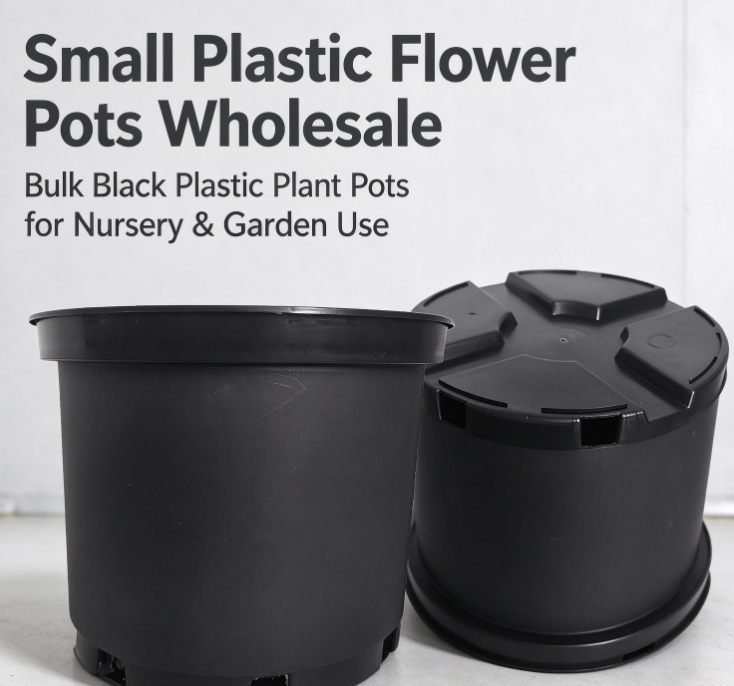 Small plastic flower pots quietly carry a lot of weight in modern plant production. They're everywhere — greenhouses, commercial nurseries, garden centers, propagation facilities — doing the unglamorous work of growing seedlings, rooting cuttings, raising young plants, and getting stock ready for sale. Their compact size also helps growers keep plants organized by species, growth stage, and care needs without things turning into chaos.
Inside a greenhouse, space and growing conditions need careful management. Different plants want different amounts of water, light, room for their roots to spread. Small plastic flower pots let growers handle individual plants on their own terms, rather than tossing every seedling into one shared growing bed where nothing gets individual attention. That makes routine care and moving plants around a lot more manageable day to day.
Plant nurseries lean on these pots for similar reasons. Young plants typically start life in small containers before graduating to larger pots or heading into the ground. A suitable container supports those early growth stages while letting nursery staff keep an eye on each plant's progress.
Small plastic flower pots might look like the simplest piece of equipment in the whole operation, but their design actually shapes daily nursery work more than people realize. Pot shape, drainage, material, handling features — all of it determines how well a pot fits into a working growing system. Understanding these roles helps growers, nursery operators, and Small Plastic Flower Pots Wholesale buyers pick containers that genuinely match what their production actually needs.
Why Are Small Plastic Flower Pots Common in Greenhouses?
Greenhouses offer a controlled environment, sure, but managing a sea of individual plants inside one still takes real planning. Small plastic flower pots help growers arrange seedlings and young plants in a way that stays clear and organized rather than becoming a tangled mess.
Each pot carves out a separate growing space. That matters a lot when different plant varieties need different care routines running side by side. A grower can shift a pot to another bench, adjust where it's sitting, or pull it for a closer look without disturbing anything nearby. Individual containers also make identifying plants and tracking their progress a lot more straightforward.
Small pots earn their keep especially during early growth stages. Seeds and young seedlings usually have fairly limited root systems at that point. A large container just ends up holding more growing medium than the plant actually needs yet. A smaller pot gives a manageable space while letting the grower keep tabs on moisture and root development closely.
Greenhouse staff also benefit from how easy plastic containers are to handle generally. Most small plastic pots are lightweight and line up neatly in rows or sit in trays without fuss. That makes efficient use of benches and growing tables a lot easier to pull off. When plants need moving for watering, inspection, or shifts in light exposure, the containers handle fine individually or in groups.
Their role doesn't stop at seedling production either. Small pots turn up for herbs, compact ornamental plants, young vegetable plants, and other crops that get sold while still sitting in their containers.
The right pot really comes down to the plant and the growing process at hand. Growers need to weigh root development, water management, container stability, and how plants will actually get handled throughout production.
How Do Nurseries Use Small Plastic Pots to Grow Seedlings?
Seedling production is probably the biggest use case for small plastic flower pots in plant nurseries. Most plants start as seeds in some protected growing area before moving on to larger containers or outdoor planting spots.
A small pot gives the seedling and its growing medium a defined space to work within. That makes managing individual plants and watching their condition a lot easier for nursery staff. If a seedling's growing slowly, showing stress, or just needs different care, staff can check it out without disturbing an entire growing bed in the process.
Separate containers also cut down the risk of root systems tangling together. Seedlings growing shoulder-to-shoulder in shared soil often end up with roots that are genuinely hard to separate later. Individual pots keep clearer boundaries between plants, which makes later handling a lot less of a hassle.
Nurseries often group small pots into trays to keep production organized. Trays hold containers together and make moving batches of seedlings between growing areas much simpler. They also help staff maintain a consistent layout through watering and inspection rounds.
The pot has to actually suit the seedling's growth stage, though. Too small, and it restricts root development as the plant grows. Too much growing medium in there, and the pot can stay wet longer than it should under certain conditions. Either situation ends up affecting plant care down the line.
Nursery operators should also think through how long seedlings will actually sit in their original containers. Plants headed for a quick transfer might need a different container setup than ones staying in pots for an extended stretch.
Matching pot size and design to what the seedling actually needs lets nurseries build a growing process that's easier to manage and adjust as plants develop over time.
How Are Small Plastic Flower Pots Used for Propagation?
Plant propagation means producing new plants from seeds, cuttings, or other plant parts. Small plastic flower pots suit this work well because they give young plants separate spaces while growers track root formation and early growth closely.
Cuttings typically go into a suitable growing medium while they work on developing roots. During that stretch, the cutting can be genuinely sensitive to changes in moisture and handling. A small container lets the grower manage each cutting on its own without disturbing the others nearby. It also makes checking whether the plant's established a healthy root system a lot simpler.
Different plants bring different propagation needs to the table. Some cuttings want a loose growing medium with good air movement around the roots. Others need careful moisture management so the cutting doesn't dry out. The pot itself doesn't decide the outcome, but its drainage and shape genuinely shape how easily growers manage these conditions.
Small pots also pay off when propagating plants in batches. Nursery staff can label containers, group similar varieties, and separate plants by how far along they are. If some cuttings root more slowly than others, the grower just keeps them in the propagation area a bit longer without throwing off the rest of the batch.
For plants started from seed, small containers support early development right after germination. Once seedlings build up stronger roots and leaves, they move on to larger pots or get prepped for planting out.
Reusable plastic pots can suit propagation setups built around repeated growing cycles. That said, containers need proper inspection and cleaning between uses. Old growing medium, plant debris, disease-causing organisms can all linger in used pots if they're not handled correctly.
The real value small plastic pots bring to propagation is the control they hand growers over individual plants. They help growers track progress, manage growing conditions, and move young plants along once they're ready for the next stage.
What Pot Features Matter for Greenhouse and Nursery Use?
Not every small plastic flower pot gets designed for the same growing conditions. Some are built for short-term seedling production; others serve ornamental plants that'll sit in containers for a lot longer. A handful of features shape how a pot actually performs in a greenhouse or nursery setting.
Drainage holes let excess water escape the container. Their design needs to suit the growing medium, watering method, and the plant's moisture needs specifically. Poor drainage leaves the root area sitting too wet; drainage that's too fast demands more frequent watering to compensate.
Pot shape shapes how the growing medium sits and how roots actually develop within the available space. A pot needs enough room for the plant's current growth stage without turning routine handling into a chore.
Material flexibility affects how easily staff can pull a plant free when it's ready for transplanting. Some containers squeeze gently to release the root ball; others hold a more rigid shape throughout.
Rim and base design shapes stability and handling quite a bit. A pot needs to sit securely on benches or in trays. A well-designed rim also makes lifting and moving containers easier during the daily grind.
Labeling space matters when nurseries are juggling many varieties at once. A clear spot for a label helps staff identify plant type, growing batch, or where it's headed next.
These features really deserve consideration together, not in isolation. A pot with great drainage might still be a poor fit if it tips over easily in a crowded tray. A flexible container helps with transplanting, sure, but it still needs enough strength to survive normal handling without falling apart.
Pot Feature
Role in Greenhouses and Nurseries
What Growers Should Consider
Drainage holes
Allow excess water to escape
Growing medium, watering routine, and plant needs
Pot shape
Provides space for root growth
Plant type and growth stage
Material flexibility
Helps with plant removal and transplanting
Handling needs and container durability
Stable base
Supports safe placement on benches and trays
Tray design and movement between growing areas
Labeling area
Helps identify varieties and growing batches
Label size and record-keeping practices
Stackable design
Helps organize unused containers
Storage space and ease of separation
What combination actually works depends on the nursery's own workflow. Growers should pick containers based on how plants actually get grown, moved, and prepped for wherever they're headed next.
How Do Small Plastic Pots Help Manage Water and Root Growth?
Water management sits right at the center of greenhouse and nursery production. Young plants need enough moisture, sure, but their roots also need access to air at the same time. Small plastic flower pots give you a contained growing space that makes observing and managing these conditions a lot more practical.
The growing medium plays a huge role here. Some mixtures hold water for a long stretch; others drain fast. The pot's drainage design works alongside the growing medium to shape how moisture actually moves through the root area.
A small container really helps when plants need close monitoring. Staff can check the surface of the growing medium, feel the weight of a pot, watch for signs of moisture stress. These checks let them adjust watering based on the plant's actual condition rather than running one blanket routine across every crop in the house.
Small pots can dry out fast, though, under warm, bright, or windy conditions. Plants in small containers often need more frequent attention, especially once they've built up a lot of foliage or roots. Greenhouse operators need to account for this shift as plants grow and their needs change.
Root development shapes container choice too. A healthy root system needs room to actually expand within the growing medium. Leave a plant in a too-small pot for too long, and roots get crowded fast. That makes watering trickier and can slow further growth right down.
Go too far the other way, and moving a small seedling into an unnecessarily large pot can make moisture management harder instead of easier. The unused growing medium can stay wet longer than the plant's root system can actually use, depending on conditions.
Growers really should inspect the root system and overall growth before deciding when to move a plant along. A pot good for the early seedling stage might not cut it anymore as the plant develops further. Choosing containers that fit each stage keeps the growing process a lot more manageable overall.
How Are Small Plastic Flower Pots Used in Plant Handling and Sales?
Small plastic flower pots matter a lot too once plants start moving from production areas toward garden centers, retail displays, or customers directly. The container needs to support the plant while keeping handling, identification, and transport genuinely practical.
Inside a nursery, plants often get grouped by variety, size, or intended use. Small pots let staff organize these groups across benches and in trays easily. That helps locate specific plants fast during order prep and cuts down on handling roots directly, which nobody really wants to do more than necessary.
Before plants leave the nursery, staff often check leaves, stems, growing medium, root condition. Individual pots make pulling a plant from a group for inspection — and returning it to the right spot afterward — a lot simpler.
Plastic pots also support display arrangements well. Their light weight makes moving plants around a retail area or reshuffling the layout a lot easier as stock changes. For businesses selling young herbs, flowers, starter plants, small containers offer a practical format for showing off living plants.
Transport brings its own set of considerations. Pots can tip if they're not sitting securely in trays or boxes. Growing medium spills if the container's overfilled or handled roughly. Tall or leafy plants can turn unstable too, even when the pot underneath is perfectly sturdy.
Packaging and tray compatibility matter here, then. A pot needs to fit whatever handling system the nursery or distributor's actually using. Secure placement protects plants as they move between production, storage, and sales areas.
Labeling is another feature worth having. Plant names, care instructions, other identifying details can get attached to the pot or slotted into a suitable holder. Clear labeling cuts down confusion fast when different varieties look nearly identical during early growth stages.
For wholesale buyers, it pays to think through the plant's full journey rather than fixating on how the container looks sitting on a shelf. A suitable pot should mesh with the nursery's growing methods, storage arrangements, order prep process, and delivery needs — all together, not as separate boxes to check.
How Should Nurseries Choose Small Plastic Flower Pots for Different Plants?
Picking small plastic flower pots starts with genuinely understanding the plants and how they'll actually get produced. A container that suits vegetable seedlings might be completely wrong for a slow-growing ornamental or a cutting that needs tight moisture control.
Identify the plant's growth stage. Seedlings and freshly rooted cuttings generally need different container setups than plants that have already built out larger root systems. The pot should offer enough growing space for however long it'll sit there before transplanting or sale.
Consider the growing environment. Greenhouses, outdoor nursery areas, shaded propagation spaces all run different moisture and temperature conditions. These differences shape how fast growing medium dries out and how often staff need to water.
Match the pot to the growing medium. The container and medium work as a pair. A mixture that holds moisture well might need a different drainage setup than one that drains freely. Growers should look at the complete growing setup rather than picking a pot in isolation from everything else.
Review daily handling needs. Pots get lifted individually, carried in trays, moved on carts, packed for delivery — whatever the nursery's usual routine looks like. Shape and stability need to fit that workflow specifically.
Consider reuse and cleaning. Some nurseries run containers through just one growing cycle; others clean and reuse suitable pots repeatedly. What works depends on the container's condition, the crop, sanitation practices, and how the nursery actually operates day to day.
Check storage and supply requirements. Wholesale buyers often need pots that fit existing trays and storage setups already in place. Consistent container dimensions simplify handling a lot, but the design still has to suit the plants actually being grown.
The choice also hinges on what comes next in production. Plants headed for garden-bed transplanting often need containers that release the root ball easily. Plants sold straight to customers need pots that stay stable and look presentable through display and transport.
Weighing plant needs, growing conditions, and handling requirements together lets greenhouse operators and nursery buyers land on small plastic flower pots that genuinely fit how their operation actually runs.
Small plastic flower pots quietly carry a lot of weight in modern plant production. They're everywhere — greenhouses, commercial nurseries, garden centers, propagation facilities — doing the unglamorous work of growing seedlings, rooting cuttings, raising young plants, and getting stock ready for sale. Their compact size also helps growers keep plants organized by species, growth stage, and care needs without things turning into chaos.
Inside a greenhouse, space and growing conditions need careful management. Different plants want different amounts of water, light, room for their roots to spread. Small plastic flower pots let growers handle individual plants on their own terms, rather than tossing every seedling into one shared growing bed where nothing gets individual attention. That makes routine care and moving plants around a lot more manageable day to day.
Plant nurseries lean on these pots for similar reasons. Young plants typically start life in small containers before graduating to larger pots or heading into the ground. A suitable container supports those early growth stages while letting nursery staff keep an eye on each plant's progress.
Small plastic flower pots might look like the simplest piece of equipment in the whole operation, but their design actually shapes daily nursery work more than people realize. Pot shape, drainage, material, handling features — all of it determines how well a pot fits into a working growing system. Understanding these roles helps growers, nursery operators, and Small Plastic Flower Pots Wholesale buyers pick containers that genuinely match what their production actually needs.
Why Are Small Plastic Flower Pots Common in Greenhouses?
Greenhouses offer a controlled environment, sure, but managing a sea of individual plants inside one still takes real planning. Small plastic flower pots help growers arrange seedlings and young plants in a way that stays clear and organized rather than becoming a tangled mess.
Each pot carves out a separate growing space. That matters a lot when different plant varieties need different care routines running side by side. A grower can shift a pot to another bench, adjust where it's sitting, or pull it for a closer look without disturbing anything nearby. Individual containers also make identifying plants and tracking their progress a lot more straightforward.
Small pots earn their keep especially during early growth stages. Seeds and young seedlings usually have fairly limited root systems at that point. A large container just ends up holding more growing medium than the plant actually needs yet. A smaller pot gives a manageable space while letting the grower keep tabs on moisture and root development closely.
Greenhouse staff also benefit from how easy plastic containers are to handle generally. Most small plastic pots are lightweight and line up neatly in rows or sit in trays without fuss. That makes efficient use of benches and growing tables a lot easier to pull off. When plants need moving for watering, inspection, or shifts in light exposure, the containers handle fine individually or in groups.
Their role doesn't stop at seedling production either. Small pots turn up for herbs, compact ornamental plants, young vegetable plants, and other crops that get sold while still sitting in their containers.
The right pot really comes down to the plant and the growing process at hand. Growers need to weigh root development, water management, container stability, and how plants will actually get handled throughout production.
How Do Nurseries Use Small Plastic Pots to Grow Seedlings?
Seedling production is probably the biggest use case for small plastic flower pots in plant nurseries. Most plants start as seeds in some protected growing area before moving on to larger containers or outdoor planting spots.
A small pot gives the seedling and its growing medium a defined space to work within. That makes managing individual plants and watching their condition a lot easier for nursery staff. If a seedling's growing slowly, showing stress, or just needs different care, staff can check it out without disturbing an entire growing bed in the process.
Separate containers also cut down the risk of root systems tangling together. Seedlings growing shoulder-to-shoulder in shared soil often end up with roots that are genuinely hard to separate later. Individual pots keep clearer boundaries between plants, which makes later handling a lot less of a hassle.
Nurseries often group small pots into trays to keep production organized. Trays hold containers together and make moving batches of seedlings between growing areas much simpler. They also help staff maintain a consistent layout through watering and inspection rounds.
The pot has to actually suit the seedling's growth stage, though. Too small, and it restricts root development as the plant grows. Too much growing medium in there, and the pot can stay wet longer than it should under certain conditions. Either situation ends up affecting plant care down the line.
Nursery operators should also think through how long seedlings will actually sit in their original containers. Plants headed for a quick transfer might need a different container setup than ones staying in pots for an extended stretch.
Matching pot size and design to what the seedling actually needs lets nurseries build a growing process that's easier to manage and adjust as plants develop over time.
How Are Small Plastic Flower Pots Used for Propagation?
Plant propagation means producing new plants from seeds, cuttings, or other plant parts. Small plastic flower pots suit this work well because they give young plants separate spaces while growers track root formation and early growth closely.
Cuttings typically go into a suitable growing medium while they work on developing roots. During that stretch, the cutting can be genuinely sensitive to changes in moisture and handling. A small container lets the grower manage each cutting on its own without disturbing the others nearby. It also makes checking whether the plant's established a healthy root system a lot simpler.
Different plants bring different propagation needs to the table. Some cuttings want a loose growing medium with good air movement around the roots. Others need careful moisture management so the cutting doesn't dry out. The pot itself doesn't decide the outcome, but its drainage and shape genuinely shape how easily growers manage these conditions.
Small pots also pay off when propagating plants in batches. Nursery staff can label containers, group similar varieties, and separate plants by how far along they are. If some cuttings root more slowly than others, the grower just keeps them in the propagation area a bit longer without throwing off the rest of the batch.
For plants started from seed, small containers support early development right after germination. Once seedlings build up stronger roots and leaves, they move on to larger pots or get prepped for planting out.
Reusable plastic pots can suit propagation setups built around repeated growing cycles. That said, containers need proper inspection and cleaning between uses. Old growing medium, plant debris, disease-causing organisms can all linger in used pots if they're not handled correctly.
The real value small plastic pots bring to propagation is the control they hand growers over individual plants. They help growers track progress, manage growing conditions, and move young plants along once they're ready for the next stage.
What Pot Features Matter for Greenhouse and Nursery Use?
Not every small plastic flower pot gets designed for the same growing conditions. Some are built for short-term seedling production; others serve ornamental plants that'll sit in containers for a lot longer. A handful of features shape how a pot actually performs in a greenhouse or nursery setting.
Drainage holes let excess water escape the container. Their design needs to suit the growing medium, watering method, and the plant's moisture needs specifically. Poor drainage leaves the root area sitting too wet; drainage that's too fast demands more frequent watering to compensate.
Pot shape shapes how the growing medium sits and how roots actually develop within the available space. A pot needs enough room for the plant's current growth stage without turning routine handling into a chore.
Material flexibility affects how easily staff can pull a plant free when it's ready for transplanting. Some containers squeeze gently to release the root ball; others hold a more rigid shape throughout.
Rim and base design shapes stability and handling quite a bit. A pot needs to sit securely on benches or in trays. A well-designed rim also makes lifting and moving containers easier during the daily grind.
Labeling space matters when nurseries are juggling many varieties at once. A clear spot for a label helps staff identify plant type, growing batch, or where it's headed next.
These features really deserve consideration together, not in isolation. A pot with great drainage might still be a poor fit if it tips over easily in a crowded tray. A flexible container helps with transplanting, sure, but it still needs enough strength to survive normal handling without falling apart.
Pot Feature
Role in Greenhouses and Nurseries
What Growers Should Consider
Drainage holes
Allow excess water to escape
Growing medium, watering routine, and plant needs
Pot shape
Provides space for root growth
Plant type and growth stage
Material flexibility
Helps with plant removal and transplanting
Handling needs and container durability
Stable base
Supports safe placement on benches and trays
Tray design and movement between growing areas
Labeling area
Helps identify varieties and growing batches
Label size and record-keeping practices
Stackable design
Helps organize unused containers
Storage space and ease of separation
What combination actually works depends on the nursery's own workflow. Growers should pick containers based on how plants actually get grown, moved, and prepped for wherever they're headed next.
How Do Small Plastic Pots Help Manage Water and Root Growth?
Water management sits right at the center of greenhouse and nursery production. Young plants need enough moisture, sure, but their roots also need access to air at the same time. Small plastic flower pots give you a contained growing space that makes observing and managing these conditions a lot more practical.
The growing medium plays a huge role here. Some mixtures hold water for a long stretch; others drain fast. The pot's drainage design works alongside the growing medium to shape how moisture actually moves through the root area.
A small container really helps when plants need close monitoring. Staff can check the surface of the growing medium, feel the weight of a pot, watch for signs of moisture stress. These checks let them adjust watering based on the plant's actual condition rather than running one blanket routine across every crop in the house.
Small pots can dry out fast, though, under warm, bright, or windy conditions. Plants in small containers often need more frequent attention, especially once they've built up a lot of foliage or roots. Greenhouse operators need to account for this shift as plants grow and their needs change.
Root development shapes container choice too. A healthy root system needs room to actually expand within the growing medium. Leave a plant in a too-small pot for too long, and roots get crowded fast. That makes watering trickier and can slow further growth right down.
Go too far the other way, and moving a small seedling into an unnecessarily large pot can make moisture management harder instead of easier. The unused growing medium can stay wet longer than the plant's root system can actually use, depending on conditions.
Growers really should inspect the root system and overall growth before deciding when to move a plant along. A pot good for the early seedling stage might not cut it anymore as the plant develops further. Choosing containers that fit each stage keeps the growing process a lot more manageable overall.
How Are Small Plastic Flower Pots Used in Plant Handling and Sales?
Small plastic flower pots matter a lot too once plants start moving from production areas toward garden centers, retail displays, or customers directly. The container needs to support the plant while keeping handling, identification, and transport genuinely practical.
Inside a nursery, plants often get grouped by variety, size, or intended use. Small pots let staff organize these groups across benches and in trays easily. That helps locate specific plants fast during order prep and cuts down on handling roots directly, which nobody really wants to do more than necessary.
Before plants leave the nursery, staff often check leaves, stems, growing medium, root condition. Individual pots make pulling a plant from a group for inspection — and returning it to the right spot afterward — a lot simpler.
Plastic pots also support display arrangements well. Their light weight makes moving plants around a retail area or reshuffling the layout a lot easier as stock changes. For businesses selling young herbs, flowers, starter plants, small containers offer a practical format for showing off living plants.
Transport brings its own set of considerations. Pots can tip if they're not sitting securely in trays or boxes. Growing medium spills if the container's overfilled or handled roughly. Tall or leafy plants can turn unstable too, even when the pot underneath is perfectly sturdy.
Packaging and tray compatibility matter here, then. A pot needs to fit whatever handling system the nursery or distributor's actually using. Secure placement protects plants as they move between production, storage, and sales areas.
Labeling is another feature worth having. Plant names, care instructions, other identifying details can get attached to the pot or slotted into a suitable holder. Clear labeling cuts down confusion fast when different varieties look nearly identical during early growth stages.
For wholesale buyers, it pays to think through the plant's full journey rather than fixating on how the container looks sitting on a shelf. A suitable pot should mesh with the nursery's growing methods, storage arrangements, order prep process, and delivery needs — all together, not as separate boxes to check.
How Should Nurseries Choose Small Plastic Flower Pots for Different Plants?
Picking small plastic flower pots starts with genuinely understanding the plants and how they'll actually get produced. A container that suits vegetable seedlings might be completely wrong for a slow-growing ornamental or a cutting that needs tight moisture control.
Identify the plant's growth stage. Seedlings and freshly rooted cuttings generally need different container setups than plants that have already built out larger root systems. The pot should offer enough growing space for however long it'll sit there before transplanting or sale.
Consider the growing environment. Greenhouses, outdoor nursery areas, shaded propagation spaces all run different moisture and temperature conditions. These differences shape how fast growing medium dries out and how often staff need to water.
Match the pot to the growing medium. The container and medium work as a pair. A mixture that holds moisture well might need a different drainage setup than one that drains freely. Growers should look at the complete growing setup rather than picking a pot in isolation from everything else.
Review daily handling needs. Pots get lifted individually, carried in trays, moved on carts, packed for delivery — whatever the nursery's usual routine looks like. Shape and stability need to fit that workflow specifically.
Consider reuse and cleaning. Some nurseries run containers through just one growing cycle; others clean and reuse suitable pots repeatedly. What works depends on the container's condition, the crop, sanitation practices, and how the nursery actually operates day to day.
Check storage and supply requirements. Wholesale buyers often need pots that fit existing trays and storage setups already in place. Consistent container dimensions simplify handling a lot, but the design still has to suit the plants actually being grown.
The choice also hinges on what comes next in production. Plants headed for garden-bed transplanting often need containers that release the root ball easily. Plants sold straight to customers need pots that stay stable and look presentable through display and transport.
Weighing plant needs, growing conditions, and handling requirements together lets greenhouse operators and nursery buyers land on small plastic flower pots that genuinely fit how their operation actually runs.
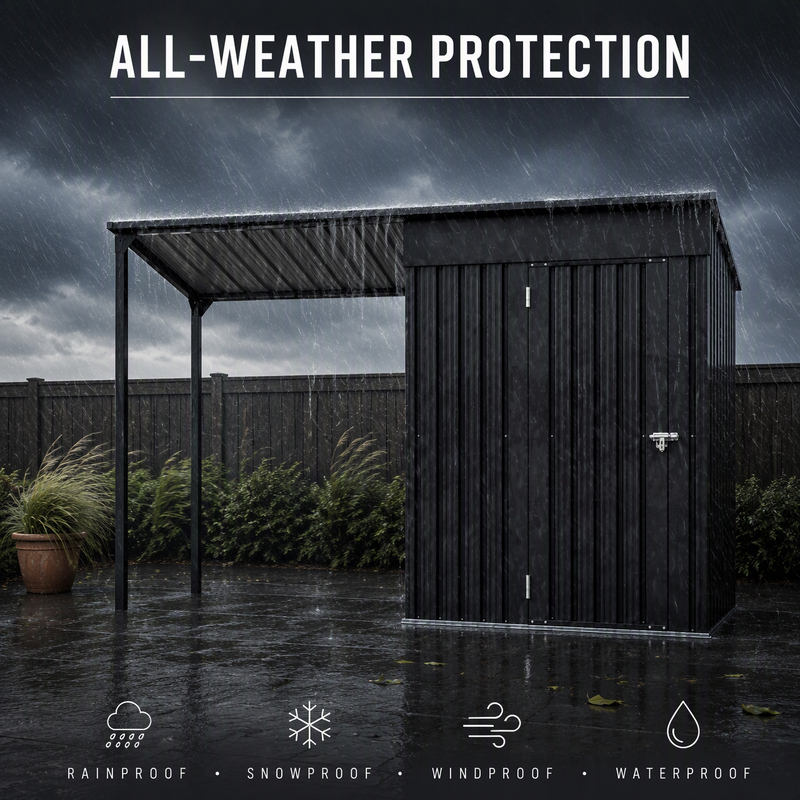 Key Factors Determining Lifespan
Galvanizing Process and Steel Quality: This is very critical factor. High-quality hot-dip galvanized steel, due to the protective zinc layer, can provide maintenance-free corrosion protection for 50 years or even 75 years in general atmospheric environments. In contrast, low-priced thin steel sheets may begin to rust and perforate within a few years.
Manufacturer Warranty and Actual Performance: Warranties directly reflect manufacturer confidence. Common brands in the market typically offer 10 to 20 years anti-corrosion or anti-perforation warranties. Some high-end brands have cases where sheds remain in good condition after 15 years of use.
Usage Environment: In coastal areas (high salt mist) or heavily polluted industrial environments, corrosion rates will accelerate, and lifespan will be correspondingly reduced. Adequate drainage (such as preventing roof water accumulation) and avoiding scratches can extend service life.
Practical Advice
When purchasing, do not only focus on the "steel" material itself. Be sure to check the specific galvanizing level and warranty period. A product that clearly states "hot-dip galvanized" and comes with a 15-year or even 20-year anti-corrosion warranty will be far more durable than an ordinary painted steel shed.
Key Factors Determining Lifespan
Galvanizing Process and Steel Quality: This is very critical factor. High-quality hot-dip galvanized steel, due to the protective zinc layer, can provide maintenance-free corrosion protection for 50 years or even 75 years in general atmospheric environments. In contrast, low-priced thin steel sheets may begin to rust and perforate within a few years.
Manufacturer Warranty and Actual Performance: Warranties directly reflect manufacturer confidence. Common brands in the market typically offer 10 to 20 years anti-corrosion or anti-perforation warranties. Some high-end brands have cases where sheds remain in good condition after 15 years of use.
Usage Environment: In coastal areas (high salt mist) or heavily polluted industrial environments, corrosion rates will accelerate, and lifespan will be correspondingly reduced. Adequate drainage (such as preventing roof water accumulation) and avoiding scratches can extend service life.
Practical Advice
When purchasing, do not only focus on the "steel" material itself. Be sure to check the specific galvanizing level and warranty period. A product that clearly states "hot-dip galvanized" and comes with a 15-year or even 20-year anti-corrosion warranty will be far more durable than an ordinary painted steel shed.
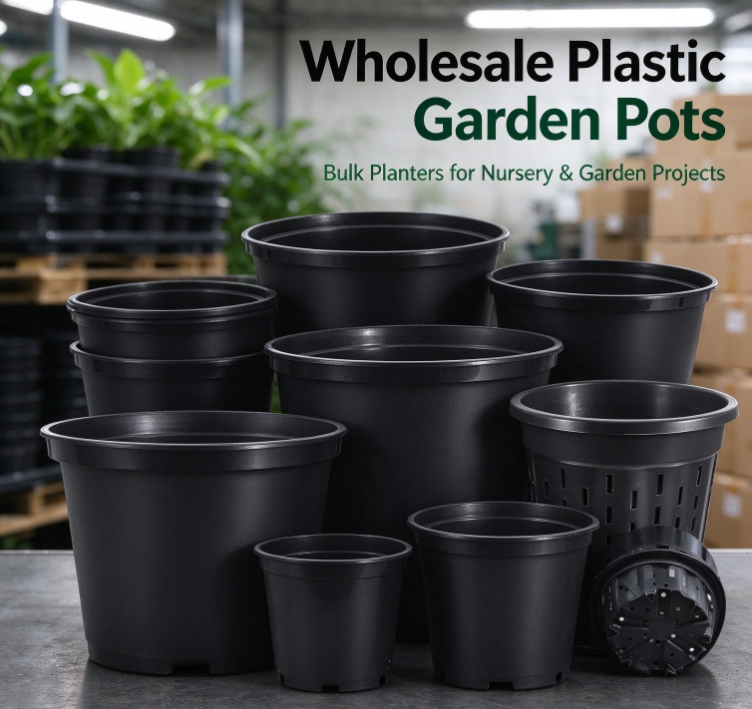 Plastic garden pots are used in many places where plants need to be grown, displayed, moved, or sold. A small plant may start in a nursery pot, move to a garden center, and later be transferred to a larger container. Commercial growers may also use many pots at the same time to organize plants during different stages of growth.
This makes plastic pots more than simple containers. Their shape, opening, drainage design, weight, and overall structure can affect how they fit into a growing or selling process.
For businesses that handle plants in larger quantities, buying pots through wholesale channels can make it easier to maintain a consistent supply. Wholesale Plastic Garden Pots can be used by nurseries, garden centers, landscapers, commercial growers, retailers, and other plant-related businesses.
The actual use depends on the type of plant, the growing environment, and how the pots are handled. Different applications may also call for different pot designs.
Where Are Wholesale Plastic Garden Pots Used in Plant Nurseries?
Plant nurseries are one of the common places where plastic garden pots are used. Young plants often need to be grown in containers before they are moved to a garden, landscape project, or larger growing space.
A nursery may handle many types of plants. Some may have compact root systems, while others need more room as they develop. Plastic pots can be selected in different shapes and sizes to match these growing stages.
The pots also help nurseries organize plants. A group of similar plants can be placed together for watering, care, transportation, and display. This can make daily work easier when many plants are being managed at the same time.
Wholesale purchasing can be useful for nurseries because pots are often needed as part of ongoing plant production. Instead of purchasing individual containers as needed, a nursery can source larger quantities according to its regular operations.
Common nursery uses include:
Growing young plants
Holding seedlings
Developing flowering plants
Preparing plants for sale
Moving plants between growing areas
Organizing plants by type or growth stage
The choice of pot can change as the plant develops. A nursery may therefore use several types of plastic garden pots within the same production process.
How Are Plastic Garden Pots Used in Garden Centers?
Garden centers have a different role from nurseries. Plants are not only grown there. They are also displayed for customers and prepared for sale.
Plastic pots can support both functions. Plants can remain in their growing containers while being arranged in display areas. Staff can move the plants when the layout changes or when certain products need to be placed in a more visible location.
The appearance of the pot can also matter in a retail environment. Some plants may be sold directly in simple growing pots, while others may be transferred into containers that are more suitable for customer use.
Garden centers may need different pot designs for indoor plants, outdoor plants, flowering plants, herbs, and decorative products. The container should match the plant and the way the product will be presented.
Wholesale supply can help garden centers keep a suitable range of pots available. A business may need containers for new plant arrivals, repotting, seasonal displays, or customer orders.
Garden Center Activity
Possible Pot Use
Plant display
Holding plants for customer viewing
Plant sales
Providing containers for finished products
Repotting
Moving plants into suitable containers
Stock preparation
Organizing plants before display
Customer orders
Preparing plants for collection or delivery
The pot becomes part of the retail process. It needs to be practical for staff while also being suitable for the plant and customer.
Are Wholesale Plastic Garden Pots Used by Commercial Growers?
Yes. Commercial growers may use plastic garden pots across different stages of plant production.
The scale of commercial growing can make container selection an important part of daily operations. Plants may be moved, grouped, watered, inspected, and prepared for delivery. Pots need to fit naturally into these activities.
Plastic containers can be useful because they are relatively easy to move. A grower may need to rearrange plants within a growing area or prepare groups of plants for shipment. The container becomes part of the handling process.
Commercial growers may also need different pot designs for different plant categories. Flowering plants, foliage plants, herbs, shrubs, and other products do not always have the same container requirements.
Wholesale purchasing allows growers to plan their container supply around production needs. Instead of treating pots as occasional purchases, they can be included in regular material sourcing.
This can be particularly useful when a grower produces plants continuously. The pots are not simply storage items. They are part of the growing system and remain with the plant until the next stage of the product journey.
How Are Plastic Garden Pots Used in Landscaping?
Landscaping businesses may use plastic pots when plants are being prepared for outdoor projects.
A landscaping company may purchase plants from a nursery and then transport them to a customer's property. The plants can remain in their plastic containers during part of this process. This gives the company a convenient way to handle plants before they are placed into the ground or transferred to another container.
Plastic pots can also be useful when landscaping teams need to temporarily hold plants. A project may not be ready for planting when the plants arrive. Keeping the plants in suitable containers can provide a practical solution during the preparation stage.
Different plants may require different container arrangements. Small plants may be handled as individual units, while larger plants may need more space and stronger support.
Landscaping businesses can therefore use wholesale pots for:
Temporary plant holding.
Plant transportation.
Project preparation.
Plant grouping.
Nursery-to-site handling.
Customer plant orders.
The pot is usually not the final destination for a landscape plant. Its value comes from helping the plant move through the preparation and handling process.
Can Wholesale Plastic Garden Pots Be Used for Indoor Plants?
Plastic garden pots can also be used for indoor plant growing. Many indoor plants are sold and grown in containers because they are easier to move and place within homes, offices, shops, and other indoor spaces.
Indoor plants can vary greatly in appearance and growth habits. Small decorative plants may need compact containers, while larger foliage plants may require more room.
Drainage is an important consideration for indoor containers. Water needs to be managed carefully because excessive moisture can create problems for many plants. The pot design should therefore match the growing requirements of the plant and the way it will be maintained indoors.
The appearance of the container may also have greater importance indoors. A simple plastic growing pot can be placed inside a decorative cover, while some plastic pots are designed to be displayed directly.
Wholesale buyers may include:
Indoor plant retailers
Office plant service companies
Garden stores
Plant nurseries
Interior decoration businesses
Home and garden retailers
The application is not limited to homes. Offices, restaurants, hotels, stores, and other indoor spaces may also use container-grown plants.
Where Else Are Wholesale Plastic Garden Pots Commonly Used?
The use of plastic garden pots extends beyond traditional nurseries and garden centers.
Educational institutions may use containers for gardening activities or plant projects. Community gardens can also use pots when planting space is limited. Urban gardening is another area where containers can be useful.
Retail businesses may sell plants as part of a wider home and garden product range. In this setting, the pot can be part of the finished retail product.
Event and decoration businesses may also handle container-grown plants. Plants can be moved between locations and arranged according to the needs of a space.
Small growers and home gardening businesses can use wholesale pots as well. A business does not need to operate a large nursery to benefit from buying containers in larger quantities.
Application
Why Plastic Pots May Be Used
Community gardening
Container-based plant growing
Urban gardening
Flexible use where soil space is limited
Education
Plant-growing activities
Retail
Plant presentation and sales
Interior plant services
Indoor plant handling
Decoration
Moving and arranging container plants
Small-scale growing
Managing multiple plants
These applications show why the wholesale garden pot market can serve a wide range of plant-related businesses.
Can Different Plants Require Different Plastic Garden Pots?
Yes. Plant type can influence the choice of container.
A plant with a compact root system may not need the same container structure as a plant that develops a larger root area. Plants with different growth habits may also require different depths or shapes.
The growing environment matters as well. Outdoor plants may face conditions that are different from indoor plants. Containers used in a nursery may have different practical requirements from those used for final retail display.
Drainage is another consideration. Plants have different water needs, so the pot should allow growers to manage moisture in a suitable way.
Handling can also affect the choice. A nursery may prefer pots that are easy to group and move. A retail business may pay more attention to how the container looks alongside the plant.
For wholesale buyers, it can be useful to classify pots according to application rather than simply buying one design for every plant.
A buyer may consider:
Plant type
Root growth
Growing location
Water management
Plant size
Handling method
Display requirements
Expected use period
This approach can help businesses build a more practical pot selection.
What Should Wholesale Buyers Consider When Choosing Plastic Garden Pots?
Wholesale purchasing is not only about obtaining a large quantity of containers. Buyers also need to consider whether the pots fit their actual operations.
The material should be suitable for the intended use. The pot structure should also be practical for planting, watering, handling, and storage.
Stacking and storage can matter when large quantities of empty pots are kept on site. A pot that can be organized efficiently may be easier for staff to manage.
The design should also match the plants. A nursery may have different requirements from a retailer or landscaping company. Buyers should explain the intended application when discussing products with a supplier.
For businesses with special requirements, customization may also be possible. A manufacturer may be able to develop pot designs around particular shapes, surface features, drainage arrangements, or branding needs, depending on the production process and order requirements.
When evaluating a Wholesale Plastic Garden Pots supplier, buyers can ask:
What types of garden pots are available?
Which plants are the pots designed to support?
Can different pot designs be supplied?
Are custom designs available?
How are the pots packed and prepared for delivery?
Can the supplier support regular wholesale orders?
Can the manufacturer discuss special product requirements?
A clear conversation about plant types, application, handling, and purchasing needs can make it easier to select suitable plastic garden pots for different business environments.
Plastic garden pots are used in many places where plants need to be grown, displayed, moved, or sold. A small plant may start in a nursery pot, move to a garden center, and later be transferred to a larger container. Commercial growers may also use many pots at the same time to organize plants during different stages of growth.
This makes plastic pots more than simple containers. Their shape, opening, drainage design, weight, and overall structure can affect how they fit into a growing or selling process.
For businesses that handle plants in larger quantities, buying pots through wholesale channels can make it easier to maintain a consistent supply. Wholesale Plastic Garden Pots can be used by nurseries, garden centers, landscapers, commercial growers, retailers, and other plant-related businesses.
The actual use depends on the type of plant, the growing environment, and how the pots are handled. Different applications may also call for different pot designs.
Where Are Wholesale Plastic Garden Pots Used in Plant Nurseries?
Plant nurseries are one of the common places where plastic garden pots are used. Young plants often need to be grown in containers before they are moved to a garden, landscape project, or larger growing space.
A nursery may handle many types of plants. Some may have compact root systems, while others need more room as they develop. Plastic pots can be selected in different shapes and sizes to match these growing stages.
The pots also help nurseries organize plants. A group of similar plants can be placed together for watering, care, transportation, and display. This can make daily work easier when many plants are being managed at the same time.
Wholesale purchasing can be useful for nurseries because pots are often needed as part of ongoing plant production. Instead of purchasing individual containers as needed, a nursery can source larger quantities according to its regular operations.
Common nursery uses include:
Growing young plants
Holding seedlings
Developing flowering plants
Preparing plants for sale
Moving plants between growing areas
Organizing plants by type or growth stage
The choice of pot can change as the plant develops. A nursery may therefore use several types of plastic garden pots within the same production process.
How Are Plastic Garden Pots Used in Garden Centers?
Garden centers have a different role from nurseries. Plants are not only grown there. They are also displayed for customers and prepared for sale.
Plastic pots can support both functions. Plants can remain in their growing containers while being arranged in display areas. Staff can move the plants when the layout changes or when certain products need to be placed in a more visible location.
The appearance of the pot can also matter in a retail environment. Some plants may be sold directly in simple growing pots, while others may be transferred into containers that are more suitable for customer use.
Garden centers may need different pot designs for indoor plants, outdoor plants, flowering plants, herbs, and decorative products. The container should match the plant and the way the product will be presented.
Wholesale supply can help garden centers keep a suitable range of pots available. A business may need containers for new plant arrivals, repotting, seasonal displays, or customer orders.
Garden Center Activity
Possible Pot Use
Plant display
Holding plants for customer viewing
Plant sales
Providing containers for finished products
Repotting
Moving plants into suitable containers
Stock preparation
Organizing plants before display
Customer orders
Preparing plants for collection or delivery
The pot becomes part of the retail process. It needs to be practical for staff while also being suitable for the plant and customer.
Are Wholesale Plastic Garden Pots Used by Commercial Growers?
Yes. Commercial growers may use plastic garden pots across different stages of plant production.
The scale of commercial growing can make container selection an important part of daily operations. Plants may be moved, grouped, watered, inspected, and prepared for delivery. Pots need to fit naturally into these activities.
Plastic containers can be useful because they are relatively easy to move. A grower may need to rearrange plants within a growing area or prepare groups of plants for shipment. The container becomes part of the handling process.
Commercial growers may also need different pot designs for different plant categories. Flowering plants, foliage plants, herbs, shrubs, and other products do not always have the same container requirements.
Wholesale purchasing allows growers to plan their container supply around production needs. Instead of treating pots as occasional purchases, they can be included in regular material sourcing.
This can be particularly useful when a grower produces plants continuously. The pots are not simply storage items. They are part of the growing system and remain with the plant until the next stage of the product journey.
How Are Plastic Garden Pots Used in Landscaping?
Landscaping businesses may use plastic pots when plants are being prepared for outdoor projects.
A landscaping company may purchase plants from a nursery and then transport them to a customer's property. The plants can remain in their plastic containers during part of this process. This gives the company a convenient way to handle plants before they are placed into the ground or transferred to another container.
Plastic pots can also be useful when landscaping teams need to temporarily hold plants. A project may not be ready for planting when the plants arrive. Keeping the plants in suitable containers can provide a practical solution during the preparation stage.
Different plants may require different container arrangements. Small plants may be handled as individual units, while larger plants may need more space and stronger support.
Landscaping businesses can therefore use wholesale pots for:
Temporary plant holding.
Plant transportation.
Project preparation.
Plant grouping.
Nursery-to-site handling.
Customer plant orders.
The pot is usually not the final destination for a landscape plant. Its value comes from helping the plant move through the preparation and handling process.
Can Wholesale Plastic Garden Pots Be Used for Indoor Plants?
Plastic garden pots can also be used for indoor plant growing. Many indoor plants are sold and grown in containers because they are easier to move and place within homes, offices, shops, and other indoor spaces.
Indoor plants can vary greatly in appearance and growth habits. Small decorative plants may need compact containers, while larger foliage plants may require more room.
Drainage is an important consideration for indoor containers. Water needs to be managed carefully because excessive moisture can create problems for many plants. The pot design should therefore match the growing requirements of the plant and the way it will be maintained indoors.
The appearance of the container may also have greater importance indoors. A simple plastic growing pot can be placed inside a decorative cover, while some plastic pots are designed to be displayed directly.
Wholesale buyers may include:
Indoor plant retailers
Office plant service companies
Garden stores
Plant nurseries
Interior decoration businesses
Home and garden retailers
The application is not limited to homes. Offices, restaurants, hotels, stores, and other indoor spaces may also use container-grown plants.
Where Else Are Wholesale Plastic Garden Pots Commonly Used?
The use of plastic garden pots extends beyond traditional nurseries and garden centers.
Educational institutions may use containers for gardening activities or plant projects. Community gardens can also use pots when planting space is limited. Urban gardening is another area where containers can be useful.
Retail businesses may sell plants as part of a wider home and garden product range. In this setting, the pot can be part of the finished retail product.
Event and decoration businesses may also handle container-grown plants. Plants can be moved between locations and arranged according to the needs of a space.
Small growers and home gardening businesses can use wholesale pots as well. A business does not need to operate a large nursery to benefit from buying containers in larger quantities.
Application
Why Plastic Pots May Be Used
Community gardening
Container-based plant growing
Urban gardening
Flexible use where soil space is limited
Education
Plant-growing activities
Retail
Plant presentation and sales
Interior plant services
Indoor plant handling
Decoration
Moving and arranging container plants
Small-scale growing
Managing multiple plants
These applications show why the wholesale garden pot market can serve a wide range of plant-related businesses.
Can Different Plants Require Different Plastic Garden Pots?
Yes. Plant type can influence the choice of container.
A plant with a compact root system may not need the same container structure as a plant that develops a larger root area. Plants with different growth habits may also require different depths or shapes.
The growing environment matters as well. Outdoor plants may face conditions that are different from indoor plants. Containers used in a nursery may have different practical requirements from those used for final retail display.
Drainage is another consideration. Plants have different water needs, so the pot should allow growers to manage moisture in a suitable way.
Handling can also affect the choice. A nursery may prefer pots that are easy to group and move. A retail business may pay more attention to how the container looks alongside the plant.
For wholesale buyers, it can be useful to classify pots according to application rather than simply buying one design for every plant.
A buyer may consider:
Plant type
Root growth
Growing location
Water management
Plant size
Handling method
Display requirements
Expected use period
This approach can help businesses build a more practical pot selection.
What Should Wholesale Buyers Consider When Choosing Plastic Garden Pots?
Wholesale purchasing is not only about obtaining a large quantity of containers. Buyers also need to consider whether the pots fit their actual operations.
The material should be suitable for the intended use. The pot structure should also be practical for planting, watering, handling, and storage.
Stacking and storage can matter when large quantities of empty pots are kept on site. A pot that can be organized efficiently may be easier for staff to manage.
The design should also match the plants. A nursery may have different requirements from a retailer or landscaping company. Buyers should explain the intended application when discussing products with a supplier.
For businesses with special requirements, customization may also be possible. A manufacturer may be able to develop pot designs around particular shapes, surface features, drainage arrangements, or branding needs, depending on the production process and order requirements.
When evaluating a Wholesale Plastic Garden Pots supplier, buyers can ask:
What types of garden pots are available?
Which plants are the pots designed to support?
Can different pot designs be supplied?
Are custom designs available?
How are the pots packed and prepared for delivery?
Can the supplier support regular wholesale orders?
Can the manufacturer discuss special product requirements?
A clear conversation about plant types, application, handling, and purchasing needs can make it easier to select suitable plastic garden pots for different business environments.
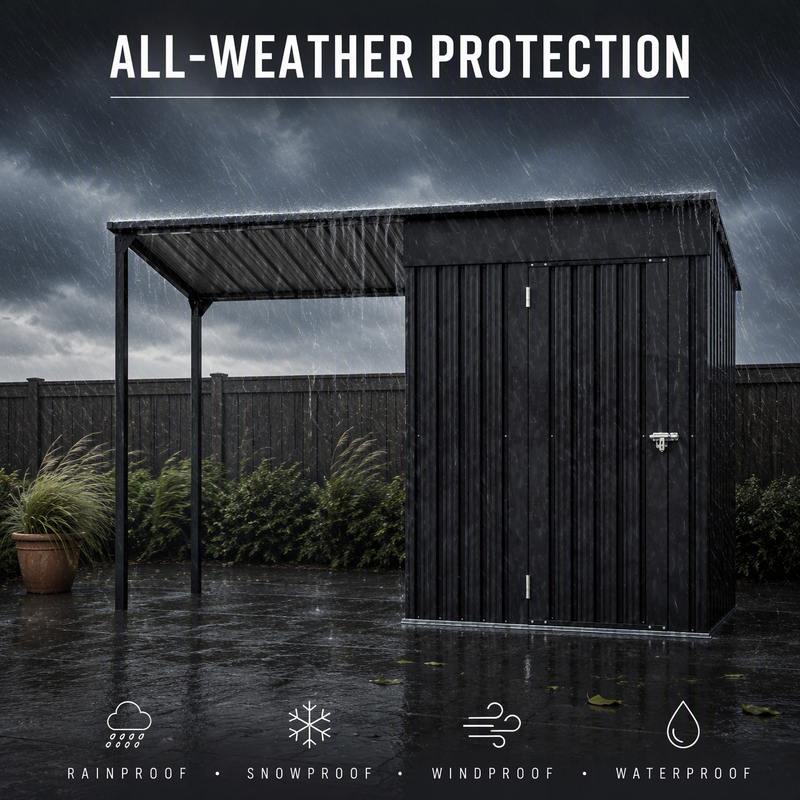 Choosing a metal garden shed with windows is a balance between getting the natural light you want and maintaining the security your stored items need. The right choice depends heavily on what you plan to keep inside and where the shed will sit in your garden.
Decide the Primary Purpose FirstThe main factor in choosing window features is the shed's intended use. This determines the ideal balance between light and security.
For Storage Only: If you are storing high-value tools, bikes, or mowers, security is the priority. A windowless option or one with high, small windows is often best, as it prevents people from easily seeing inside.
For a Workshop or Hobby Room: If you plan to work inside, natural light becomes much more important for comfort and safety. In this case, larger windows or door-side windows are practical for bringing light to your workspace.
For a Garden Office: For working or relaxing, you'll want good daylight. Opening windows are beneficial for ventilation, and considering insulation becomes key for year-round comfort.
Assess Window Placement and SecurityWhere the windows face makes a big difference in how secure the shed feels.
Best Positions: Windows facing your house, a private patio, or a fenced area are safer. They let in light without exposing your belongings to the public.
High-Risk Positions: Be cautious with windows facing public footpaths, side lanes, or open fields. These allow people to see inside and assess what you have.
Internal Screening: If you have windows in less private areas, you can plan to use tall shelving or opaque storage boxes inside to block the view of valuables from outside.
Practical Considerations for WindowsWhen evaluating specific models, look beyond just the presence of glass.
Glazing Material: Tempered glass or polycarbonate are good choices for safety and durability. Polycarbonate is very impact-resistant, while tempered glass is stronger than standard glass. Avoid acrylic, which can scratch easily.
Window Type: Fixed windows are safe because they cannot be opened. Opening windows (like top-hung or side-hung) provide ventilation, which is useful for workshops or to reduce condensation, but they may require lockable hardware or restrictors for security.
Condensation Control: Metal sheds can suffer from condensation. Windows alone aren't a full ventilation system. If you store damp items or use the shed as a workspace, you'll need to think about adding insulation, a moisture barrier, or a small dehumidifier to manage moisture.
A Quick Checklist Before You BuyUse these points to compare different metal sheds with windows:
List Your Valuables: What are you storing? The more valuable the contents, the more you should prioritize security over window size.
Check Sightlines: Stand where neighbors or passersby would be. Can they see into the shed's proposed location?
Review the Hardware: Look for key-operated locks or the ability to add a heavy-duty padlock. The window frame and hinges should also feel sturdy.
Plan for Condensation: If the shed will house damp equipment or you'll work in it, budget for insulation or a dehumidifier to prevent moisture buildup.
Verify Regulations: Depending on where you live, a window facing a neighbor's property might have planning implications. It's always worth checking local rules, especially if the shed is near a boundary.
I hope this helps you find the right balance of light and security for your garden. If you have a specific use in mind, like a workshop or just storage, I can help you narrow down the window options further.
Choosing a metal garden shed with windows is a balance between getting the natural light you want and maintaining the security your stored items need. The right choice depends heavily on what you plan to keep inside and where the shed will sit in your garden.
Decide the Primary Purpose FirstThe main factor in choosing window features is the shed's intended use. This determines the ideal balance between light and security.
For Storage Only: If you are storing high-value tools, bikes, or mowers, security is the priority. A windowless option or one with high, small windows is often best, as it prevents people from easily seeing inside.
For a Workshop or Hobby Room: If you plan to work inside, natural light becomes much more important for comfort and safety. In this case, larger windows or door-side windows are practical for bringing light to your workspace.
For a Garden Office: For working or relaxing, you'll want good daylight. Opening windows are beneficial for ventilation, and considering insulation becomes key for year-round comfort.
Assess Window Placement and SecurityWhere the windows face makes a big difference in how secure the shed feels.
Best Positions: Windows facing your house, a private patio, or a fenced area are safer. They let in light without exposing your belongings to the public.
High-Risk Positions: Be cautious with windows facing public footpaths, side lanes, or open fields. These allow people to see inside and assess what you have.
Internal Screening: If you have windows in less private areas, you can plan to use tall shelving or opaque storage boxes inside to block the view of valuables from outside.
Practical Considerations for WindowsWhen evaluating specific models, look beyond just the presence of glass.
Glazing Material: Tempered glass or polycarbonate are good choices for safety and durability. Polycarbonate is very impact-resistant, while tempered glass is stronger than standard glass. Avoid acrylic, which can scratch easily.
Window Type: Fixed windows are safe because they cannot be opened. Opening windows (like top-hung or side-hung) provide ventilation, which is useful for workshops or to reduce condensation, but they may require lockable hardware or restrictors for security.
Condensation Control: Metal sheds can suffer from condensation. Windows alone aren't a full ventilation system. If you store damp items or use the shed as a workspace, you'll need to think about adding insulation, a moisture barrier, or a small dehumidifier to manage moisture.
A Quick Checklist Before You BuyUse these points to compare different metal sheds with windows:
List Your Valuables: What are you storing? The more valuable the contents, the more you should prioritize security over window size.
Check Sightlines: Stand where neighbors or passersby would be. Can they see into the shed's proposed location?
Review the Hardware: Look for key-operated locks or the ability to add a heavy-duty padlock. The window frame and hinges should also feel sturdy.
Plan for Condensation: If the shed will house damp equipment or you'll work in it, budget for insulation or a dehumidifier to prevent moisture buildup.
Verify Regulations: Depending on where you live, a window facing a neighbor's property might have planning implications. It's always worth checking local rules, especially if the shed is near a boundary.
I hope this helps you find the right balance of light and security for your garden. If you have a specific use in mind, like a workshop or just storage, I can help you narrow down the window options further.
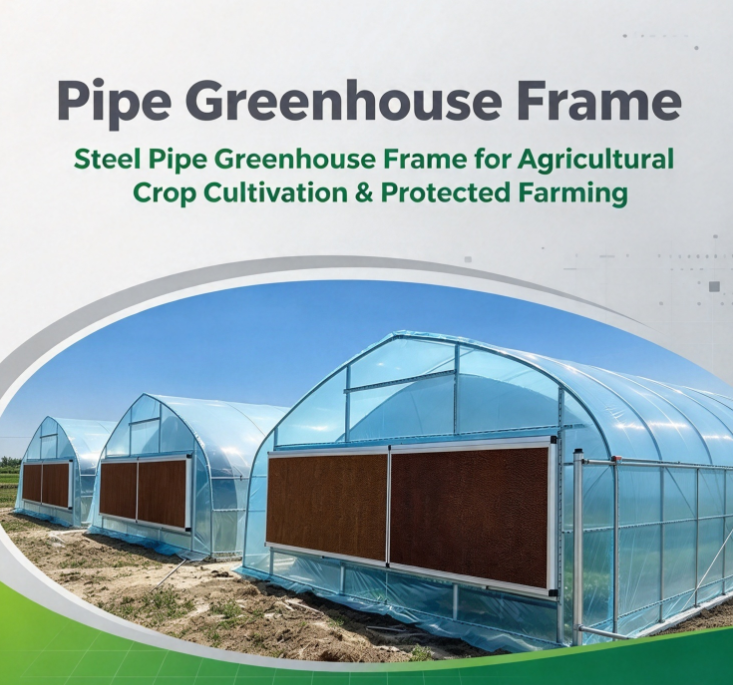 A greenhouse needs to do more than create a covered area for plants. Its structure needs to fit the growing space, the covering, the way people work inside, and the conditions around the site. When these needs change, the structure may also need to change.The frame has an important place in this process.
A Pipe Greenhouse Frame creates the basic shape of a greenhouse and gives other components a structure to connect with. Pipes can be arranged into different forms, allowing greenhouse builders to create structures for different growing purposes.
This adaptability has become an important part of greenhouse planning. Growers may have different crop arrangements, available spaces, covering choices, and working habits. A frame that can respond to these differences gives the greenhouse design more room to develop.
The idea is not simply to build a stronger structure. It is to create a structure that makes sense for the space and the way it will be used.
What Makes a Pipe Greenhouse Frame Adaptable?
A pipe frame consists of connected structural sections that can form the basic outline of a greenhouse. The arrangement can be changed according to the intended design.
This gives greenhouse builders more flexibility when working with different growing spaces.
A greenhouse may need a particular roof shape. It may require different access points. The internal area may need to remain open for planting, watering, or routine work. The frame needs to accommodate these requirements without making the overall structure unnecessarily complicated.
The pipe itself is only one part of the solution. The way the pipes are arranged matters just as much.
For example, a simple greenhouse can use a straightforward frame layout. A different project may need a more organized structure with additional connections and support points. Both can use pipe-based construction while serving different purposes.
This is where adaptability becomes useful.
Greenhouse Need
How Frame Arrangement Can Respond
Different growing spaces
The frame can follow the available area
Different roof shapes
Pipes can form different structural outlines
Different coverings
The frame can be planned around the selected covering
Different access needs
Openings can be considered during frame planning
Internal working areas
Structural sections can be arranged around usable space
Changing project requirements
The overall design can be adjusted before construction
The frame therefore becomes part of the planning process rather than simply a fixed support system.
How Can Pipe Frames Fit Different Greenhouse Designs?
Not every greenhouse looks or works the same way.
Some are designed around a simple growing area. Others need space for different plants, working paths, storage, or internal equipment. A greenhouse used for a nursery may have different priorities from one used for vegetable production.
A pipe frame can be arranged around these differences.
The shape of the greenhouse is one important consideration. Curved structures, for example, can create a different internal environment from structures with a more traditional roof shape. The frame needs to follow the intended shape so that the covering can be installed properly.
The location of entrances also matters.
An entrance may seem like a small part of a greenhouse, but it affects how people move through the space. If workers need to carry plants, tools, or other materials, the frame needs to leave suitable access areas.
Ventilation is another consideration.
A greenhouse may include openings or ventilation features as part of its design. These features need to work with the surrounding structure. A frame planned without considering them can make later changes more difficult.
This is why frame design and greenhouse design are closely connected.
Instead of choosing a frame after all other decisions have been made, builders can consider the frame at an early stage. This allows the structural arrangement to respond to the rest of the project.
Why Does Growing Space Influence Frame Selection?
The available growing space can vary greatly from one project to another.
A greenhouse may occupy a narrow area beside another building. Another may be placed in a more open agricultural space. Some projects may need to make efficient use of a limited footprint, while others may focus on creating a larger working area.
These differences affect the frame.
The frame needs to follow the intended shape of the growing area. If the structure does not match the space, the greenhouse may become harder to organize.
Growing plans also matter.
A greenhouse for leafy vegetables may be arranged differently from one for flowers or young plants. Some growers may need open areas for regular movement. Others may divide the space into separate growing sections.
The frame does not decide how the plants will be arranged, but it creates the space in which those arrangements can take place.
This makes frame selection part of a wider design decision.
A useful approach is to consider three elements together:
Available Space + Growing Purpose + Frame Design
When these three elements are considered together, it becomes easier to create a greenhouse that matches its intended use.
How Does the Frame Work With Greenhouse Coverings?
The frame and covering form two closely connected parts of a greenhouse.
The frame creates the shape. The covering follows that shape and helps create the protected growing environment.
Different coverings may have different installation requirements. Some can follow curved structures. Others may be better suited to a particular arrangement of frame sections.
This means the covering should not be treated as a separate decision.
When planning a Pipe Greenhouse Frame, builders can consider how the selected covering will be attached, supported, and maintained.
This relationship also affects future changes.
A grower may decide to replace a covering later. If the frame was designed with practical access and connection points, such changes may be easier to manage.
The same idea applies to ventilation and access.
A greenhouse is not simply a frame covered with material. It is a group of connected components that need to work together.
Component
Relationship With the Frame
Greenhouse Covering
Follows and attaches to the structural shape
Doors
Need suitable openings within the structure
Ventilation Features
Need space within the frame arrangement
Internal Equipment
Requires usable space around structural sections
Growing Areas
Depend on the shape and available space
Working Paths
Need to remain practical within the structure
Looking at these relationships early can help avoid unnecessary changes later.
Can Pipe Greenhouse Frames Adapt to Different Growing Applications?
Different growing applications create different demands.
A vegetable greenhouse may need clear areas for planting and harvesting. A flower-growing space may place more attention on organization and access. A nursery may require room for young plants at different stages.
Commercial and small-scale projects can also have different priorities.
A small greenhouse may focus on convenient use and straightforward construction. A larger project may require a more organized structural layout that can accommodate different working areas.
Pipe frames can be arranged around these different purposes.
The important point is not that one frame design can serve every application. Instead, the pipe frame approach allows the structure to be planned around the application.
This gives growers more room to consider how the greenhouse will actually be used.
For example, a grower can think about:
Where plants will be placed.
How people will move through the greenhouse.
Where the entrance should be located.
How the covering will be supported.
Where ventilation areas may be needed.
Whether internal equipment will be installed.
Whether the growing space may change later.
These questions help turn a basic frame into part of a practical growing environment.
What Should Buyers Consider When Choosing a Pipe Greenhouse Frame?
Buying a greenhouse frame is easier when the project is clearly defined.
The frame should not be selected only because it looks suitable in a product image. Buyers need to understand how it will fit into the intended greenhouse.
Several practical points can guide the decision.
1. Consider the intended use
The purpose of the greenhouse should guide the structural design.
A frame intended for a home garden may have different requirements from one used for commercial plant production.
2. Look at the available space
The physical site influences the greenhouse shape. The frame needs to fit the available area without making access or daily work unnecessarily difficult.
3. Think about the covering
The frame and covering need to work together. Buyers should understand how the covering will be attached and how it follows the frame.
4. Consider access and maintenance
Doors, openings, and working areas should be considered during planning.
A greenhouse needs to be used and maintained regularly. Structural choices should support that practical work.
5. Consider future changes
Growing plans may change. A greenhouse may later need different internal arrangements, a different covering, or another use.
Thinking about possible changes during the planning stage can help create a more adaptable structure.
These considerations can also help buyers communicate more clearly with greenhouse suppliers. Instead of asking for a general frame, they can describe the growing space, intended use, covering, and structural preferences.
Why Does Frame Design Matter for Future Greenhouse Changes?
A greenhouse can change after construction.
Plants may change. Growing methods may change. Equipment may be added. A different covering may be needed. Even the way people move through the space can change.
A rigid design may make these adjustments more difficult.
A pipe-based frame can provide room for different arrangements when the original design takes future needs into account.
This does not mean that every part of a greenhouse can be changed easily. Structural modifications still need careful planning. The important point is that adaptability can be considered before construction begins.
For greenhouse builders, this creates another way to approach design.
Instead of thinking only about the greenhouse as it looks on the day it is completed, they can consider how the structure may be used over time.
This can influence the position of entrances, the arrangement of structural sections, the connection between the frame and covering, and the space available for internal equipment.
For growers, this approach can make the greenhouse feel less like a fixed structure and more like a growing environment that can respond to changing needs.
Could Pipe Greenhouse Frames Give Greenhouse Projects More Design Options?
The demand for protected growing spaces covers many different applications. There is no single layout that fits every grower, site, or crop.
This creates a need for structural options.
Pipe Greenhouse Frames can support this variety because the pipes can be arranged into different structural forms. The basic material remains familiar, while the final greenhouse can be designed around its intended use.
This flexibility can be useful during both new construction and renovation.
For a new greenhouse, the frame can be considered alongside the site, covering, growing plan, and access requirements.
For an existing greenhouse, replacement or modification work may require a frame that fits the current structure.
The frame therefore has a role beyond simply holding up the covering.
It can influence how space is organized, how components are connected, and how easily the greenhouse can respond to changing requirements.
As greenhouse projects become more varied, this relationship between frame design and growing needs gives Pipe Greenhouse Frames a practical place in the development of adaptable greenhouse structures.
A greenhouse needs to do more than create a covered area for plants. Its structure needs to fit the growing space, the covering, the way people work inside, and the conditions around the site. When these needs change, the structure may also need to change.The frame has an important place in this process.
A Pipe Greenhouse Frame creates the basic shape of a greenhouse and gives other components a structure to connect with. Pipes can be arranged into different forms, allowing greenhouse builders to create structures for different growing purposes.
This adaptability has become an important part of greenhouse planning. Growers may have different crop arrangements, available spaces, covering choices, and working habits. A frame that can respond to these differences gives the greenhouse design more room to develop.
The idea is not simply to build a stronger structure. It is to create a structure that makes sense for the space and the way it will be used.
What Makes a Pipe Greenhouse Frame Adaptable?
A pipe frame consists of connected structural sections that can form the basic outline of a greenhouse. The arrangement can be changed according to the intended design.
This gives greenhouse builders more flexibility when working with different growing spaces.
A greenhouse may need a particular roof shape. It may require different access points. The internal area may need to remain open for planting, watering, or routine work. The frame needs to accommodate these requirements without making the overall structure unnecessarily complicated.
The pipe itself is only one part of the solution. The way the pipes are arranged matters just as much.
For example, a simple greenhouse can use a straightforward frame layout. A different project may need a more organized structure with additional connections and support points. Both can use pipe-based construction while serving different purposes.
This is where adaptability becomes useful.
Greenhouse Need
How Frame Arrangement Can Respond
Different growing spaces
The frame can follow the available area
Different roof shapes
Pipes can form different structural outlines
Different coverings
The frame can be planned around the selected covering
Different access needs
Openings can be considered during frame planning
Internal working areas
Structural sections can be arranged around usable space
Changing project requirements
The overall design can be adjusted before construction
The frame therefore becomes part of the planning process rather than simply a fixed support system.
How Can Pipe Frames Fit Different Greenhouse Designs?
Not every greenhouse looks or works the same way.
Some are designed around a simple growing area. Others need space for different plants, working paths, storage, or internal equipment. A greenhouse used for a nursery may have different priorities from one used for vegetable production.
A pipe frame can be arranged around these differences.
The shape of the greenhouse is one important consideration. Curved structures, for example, can create a different internal environment from structures with a more traditional roof shape. The frame needs to follow the intended shape so that the covering can be installed properly.
The location of entrances also matters.
An entrance may seem like a small part of a greenhouse, but it affects how people move through the space. If workers need to carry plants, tools, or other materials, the frame needs to leave suitable access areas.
Ventilation is another consideration.
A greenhouse may include openings or ventilation features as part of its design. These features need to work with the surrounding structure. A frame planned without considering them can make later changes more difficult.
This is why frame design and greenhouse design are closely connected.
Instead of choosing a frame after all other decisions have been made, builders can consider the frame at an early stage. This allows the structural arrangement to respond to the rest of the project.
Why Does Growing Space Influence Frame Selection?
The available growing space can vary greatly from one project to another.
A greenhouse may occupy a narrow area beside another building. Another may be placed in a more open agricultural space. Some projects may need to make efficient use of a limited footprint, while others may focus on creating a larger working area.
These differences affect the frame.
The frame needs to follow the intended shape of the growing area. If the structure does not match the space, the greenhouse may become harder to organize.
Growing plans also matter.
A greenhouse for leafy vegetables may be arranged differently from one for flowers or young plants. Some growers may need open areas for regular movement. Others may divide the space into separate growing sections.
The frame does not decide how the plants will be arranged, but it creates the space in which those arrangements can take place.
This makes frame selection part of a wider design decision.
A useful approach is to consider three elements together:
Available Space + Growing Purpose + Frame Design
When these three elements are considered together, it becomes easier to create a greenhouse that matches its intended use.
How Does the Frame Work With Greenhouse Coverings?
The frame and covering form two closely connected parts of a greenhouse.
The frame creates the shape. The covering follows that shape and helps create the protected growing environment.
Different coverings may have different installation requirements. Some can follow curved structures. Others may be better suited to a particular arrangement of frame sections.
This means the covering should not be treated as a separate decision.
When planning a Pipe Greenhouse Frame, builders can consider how the selected covering will be attached, supported, and maintained.
This relationship also affects future changes.
A grower may decide to replace a covering later. If the frame was designed with practical access and connection points, such changes may be easier to manage.
The same idea applies to ventilation and access.
A greenhouse is not simply a frame covered with material. It is a group of connected components that need to work together.
Component
Relationship With the Frame
Greenhouse Covering
Follows and attaches to the structural shape
Doors
Need suitable openings within the structure
Ventilation Features
Need space within the frame arrangement
Internal Equipment
Requires usable space around structural sections
Growing Areas
Depend on the shape and available space
Working Paths
Need to remain practical within the structure
Looking at these relationships early can help avoid unnecessary changes later.
Can Pipe Greenhouse Frames Adapt to Different Growing Applications?
Different growing applications create different demands.
A vegetable greenhouse may need clear areas for planting and harvesting. A flower-growing space may place more attention on organization and access. A nursery may require room for young plants at different stages.
Commercial and small-scale projects can also have different priorities.
A small greenhouse may focus on convenient use and straightforward construction. A larger project may require a more organized structural layout that can accommodate different working areas.
Pipe frames can be arranged around these different purposes.
The important point is not that one frame design can serve every application. Instead, the pipe frame approach allows the structure to be planned around the application.
This gives growers more room to consider how the greenhouse will actually be used.
For example, a grower can think about:
Where plants will be placed.
How people will move through the greenhouse.
Where the entrance should be located.
How the covering will be supported.
Where ventilation areas may be needed.
Whether internal equipment will be installed.
Whether the growing space may change later.
These questions help turn a basic frame into part of a practical growing environment.
What Should Buyers Consider When Choosing a Pipe Greenhouse Frame?
Buying a greenhouse frame is easier when the project is clearly defined.
The frame should not be selected only because it looks suitable in a product image. Buyers need to understand how it will fit into the intended greenhouse.
Several practical points can guide the decision.
1. Consider the intended use
The purpose of the greenhouse should guide the structural design.
A frame intended for a home garden may have different requirements from one used for commercial plant production.
2. Look at the available space
The physical site influences the greenhouse shape. The frame needs to fit the available area without making access or daily work unnecessarily difficult.
3. Think about the covering
The frame and covering need to work together. Buyers should understand how the covering will be attached and how it follows the frame.
4. Consider access and maintenance
Doors, openings, and working areas should be considered during planning.
A greenhouse needs to be used and maintained regularly. Structural choices should support that practical work.
5. Consider future changes
Growing plans may change. A greenhouse may later need different internal arrangements, a different covering, or another use.
Thinking about possible changes during the planning stage can help create a more adaptable structure.
These considerations can also help buyers communicate more clearly with greenhouse suppliers. Instead of asking for a general frame, they can describe the growing space, intended use, covering, and structural preferences.
Why Does Frame Design Matter for Future Greenhouse Changes?
A greenhouse can change after construction.
Plants may change. Growing methods may change. Equipment may be added. A different covering may be needed. Even the way people move through the space can change.
A rigid design may make these adjustments more difficult.
A pipe-based frame can provide room for different arrangements when the original design takes future needs into account.
This does not mean that every part of a greenhouse can be changed easily. Structural modifications still need careful planning. The important point is that adaptability can be considered before construction begins.
For greenhouse builders, this creates another way to approach design.
Instead of thinking only about the greenhouse as it looks on the day it is completed, they can consider how the structure may be used over time.
This can influence the position of entrances, the arrangement of structural sections, the connection between the frame and covering, and the space available for internal equipment.
For growers, this approach can make the greenhouse feel less like a fixed structure and more like a growing environment that can respond to changing needs.
Could Pipe Greenhouse Frames Give Greenhouse Projects More Design Options?
The demand for protected growing spaces covers many different applications. There is no single layout that fits every grower, site, or crop.
This creates a need for structural options.
Pipe Greenhouse Frames can support this variety because the pipes can be arranged into different structural forms. The basic material remains familiar, while the final greenhouse can be designed around its intended use.
This flexibility can be useful during both new construction and renovation.
For a new greenhouse, the frame can be considered alongside the site, covering, growing plan, and access requirements.
For an existing greenhouse, replacement or modification work may require a frame that fits the current structure.
The frame therefore has a role beyond simply holding up the covering.
It can influence how space is organized, how components are connected, and how easily the greenhouse can respond to changing requirements.
As greenhouse projects become more varied, this relationship between frame design and growing needs gives Pipe Greenhouse Frames a practical place in the development of adaptable greenhouse structures.
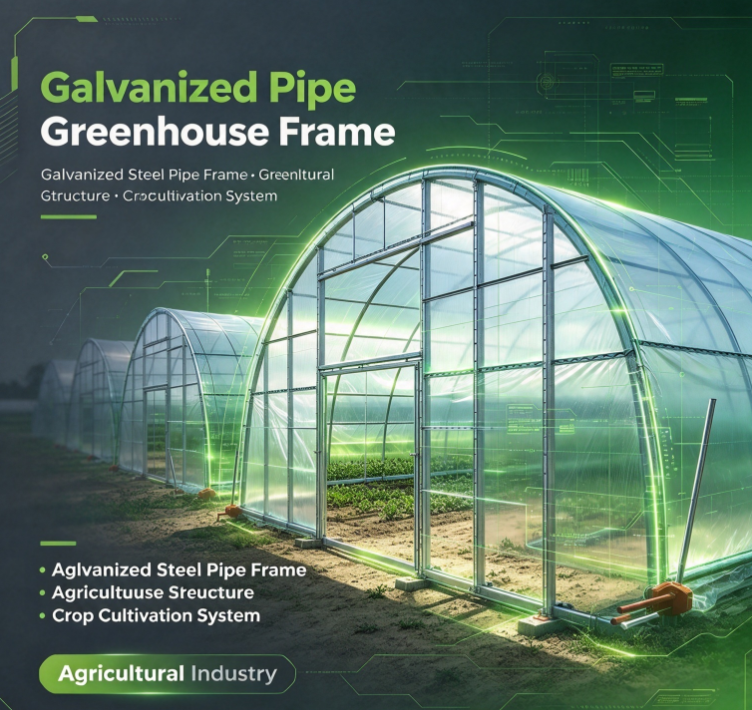 A greenhouse is more than a covered growing space. Its structure needs to support the covering, create an organized growing area, and provide a stable shape for daily use. The frame sits at the center of this structure.
Among different frame options, the Galvanized Pipe Greenhouse Frame is used in many types of greenhouse projects. It provides the basic structure around which other parts of the greenhouse can be arranged.
The frame may support a greenhouse covering, connect different structural sections, and help define the available growing space. Its role can change with the design of the greenhouse, but the main idea remains simple. It creates the framework that allows the rest of the greenhouse to come together.
For growers, greenhouse builders, and agricultural equipment buyers, understanding this role can make frame selection easier. It also explains why different greenhouse projects may require different frame designs.
What Is a Galvanized Pipe Greenhouse Frame?
A Galvanized Pipe Greenhouse Frame is a structural framework made from galvanized pipe and used to form the main shape of a greenhouse.
The frame can include upright sections, curved sections, connecting parts, and other structural elements. Together, these pieces create the basic outline of the growing space.
The greenhouse covering is then arranged around this framework. Depending on the project, the covering may be made from different materials and installed in different ways.
The frame therefore works as a foundation for the rest of the structure.
It is useful to separate the frame from the other parts of a greenhouse. The covering helps create the enclosed environment. Doors provide access. Ventilation parts can help manage air movement. Growing equipment supports the plants.
The frame has a different role.
It provides the structure that allows these elements to be positioned and used together.
The use of galvanized pipe also gives the frame a surface designed for outdoor agricultural environments. This makes galvanized pipe a practical material to consider when a greenhouse needs a structural system that can remain part of the growing space over an extended period.
Where Is a Galvanized Pipe Greenhouse Frame Used?
The application of a galvanized pipe greenhouse frame can vary according to the type of growing project.
Some greenhouses are designed for household or small-scale growing. Others are used for commercial cultivation or plant production. There are also greenhouse structures designed for nurseries, seasonal growing, research-related cultivation, and other agricultural activities.
A galvanized pipe frame can be adapted to different structural layouts.
Common applications include:
Application
Role of the Greenhouse Frame
Vegetable Growing
Creates the structure for a protected growing area
Flower Cultivation
Provides support for the greenhouse covering and growing space
Plant Nurseries
Helps organize an enclosed area for young plants
Seasonal Growing
Supports temporary or changing growing arrangements
Commercial Greenhouses
Forms part of a larger protected cultivation structure
Garden Greenhouses
Creates a practical structure for home or small-scale growing
The frame itself does not determine what can be grown inside the greenhouse.
Instead, it creates the physical space in which the growing activity takes place.
This distinction is important when selecting greenhouse components. A frame should be considered according to the intended application, overall greenhouse design, and other parts that need to work with it.
A structure designed for one growing environment may not need exactly the same arrangement as another.
How Does the Frame Support a Greenhouse Structure?
A greenhouse needs a defined shape before its covering and internal components can be installed.
This is where the frame becomes important.
The frame creates the outline of the greenhouse. Vertical sections can define the sides. Curved or connected sections can create the roof shape. Other parts can connect these sections and help keep the structure organized.
The covering then follows the shape created by the frame.
Frame → Greenhouse Shape → Covering → Protected Growing Space
The frame does not work alone. It becomes part of a larger system.
For example, a greenhouse may need doors positioned at specific locations. It may also include ventilation openings, internal growing areas, irrigation equipment, or other supporting components.
The frame needs to leave enough room for these features.
This is why greenhouse design should not focus on the frame as an isolated product. The structure needs to work with the intended use of the entire greenhouse.
A well-planned frame can make the rest of the installation easier to organize. It gives the greenhouse a clear physical structure and provides points around which other components can be arranged.
Why Is Galvanized Pipe Used for Greenhouse Frames?
Greenhouses are commonly placed outdoors. Their frames therefore need to remain exposed to changing environmental conditions.
Galvanized pipe is used because the surface treatment provides additional protection for the metal.
This is particularly relevant in greenhouse environments, where moisture can be part of normal daily operation. Water may come from irrigation, cleaning, humidity, or outdoor weather.
The galvanized surface helps protect the pipe from corrosion and makes it suitable for structural use in many agricultural settings.
However, material selection is only one part of greenhouse design.
The shape of the frame also matters. Connection methods, structural arrangement, greenhouse size, covering material, and intended use all influence the overall design.
A galvanized pipe frame should therefore be viewed as one component within a complete greenhouse structure.
Its value comes from how it fits into that structure.
For buyers, this can lead to a more practical purchasing approach. Instead of asking only whether galvanized pipe is suitable, they can also ask whether the particular frame design fits the greenhouse project.
That question connects material choice with actual application.
What Types of Greenhouse Designs Can Use This Frame?
Greenhouses do not all have the same appearance.
Some use curved roofs. Others have more traditional shapes. Some are compact and designed for limited growing areas. Others are built around larger cultivation spaces.
Galvanized pipe can be used in different frame arrangements because pipes can form connected structural sections.
The design can be adjusted according to the intended greenhouse layout.
For example, a simple growing structure may use a straightforward frame arrangement. A greenhouse intended for a more organized growing operation may include additional structural sections to support its layout.
The covering also influences the frame design.
A flexible covering may follow a curved frame. A different greenhouse design may require another arrangement. Doors, ventilation areas, and internal equipment can also affect how the frame is organized.
This creates a useful relationship between structure and application.
Greenhouse Consideration
Possible Influence on Frame Design
Growing Space
Determines the general structure of the greenhouse
Covering Material
Influences how the frame supports the covering
Access Points
Affects the arrangement of frame sections
Ventilation
Requires suitable space within the greenhouse structure
Internal Equipment
May influence available structural space
Growing Method
Can affect the overall greenhouse layout
The frame should therefore be selected with the greenhouse design in mind rather than treated as a standard part that fits every project in exactly the same way.
How Can a Galvanized Pipe Greenhouse Frame Adapt to Different Growing Needs?
Growing needs can change from one project to another.
A greenhouse used for vegetables may have different internal arrangements from one used for flowers. A nursery may need space for young plants and working areas. A home greenhouse may focus on simple access and convenient use.
The frame needs to accommodate these differences.
Its role is not to determine the entire growing method. Instead, it provides the structure that makes different layouts possible.
This flexibility can be useful when planning a greenhouse.
A grower may want more open space in one area and additional internal organization in another. The frame can be designed around those requirements. Openings, access points, and supporting structures can also be considered during the planning stage.
This approach moves the conversation away from simply asking, "Which frame should I buy?"
A more useful question is, "What kind of growing space am I trying to create?"
Once the intended space is clear, the frame can be considered in relation to it.
This is also relevant to greenhouse suppliers. Different customers may have different structural needs. Offering frame options that can fit several applications can make it easier to respond to these requirements.
What Should Buyers Consider When Choosing a Galvanized Pipe Greenhouse Frame?
The right frame depends on more than the material.
Buyers can begin by looking at the intended use of the greenhouse. This gives a basic direction for the rest of the selection process.
Several practical questions can help.
1. What will the greenhouse be used for?
Vegetables, flowers, seedlings, and other plants can require different growing arrangements.
Understanding the application helps define the type of structure that makes sense.
2. What type of covering will be used?
The covering and frame need to work together. A buyer should consider how the covering will be attached and supported by the frame.
3. How will people enter and work inside?
Access is easy to overlook during early planning.
Doors, pathways, working areas, and internal equipment can influence the frame arrangement.
4. What environmental conditions should be considered?
A greenhouse frame remains outdoors and may encounter moisture, wind, rain, and changing temperatures.
Material and structural design should therefore be considered in relation to the intended environment.
5. Will the greenhouse layout change later?
Some growers may expand or adjust their growing space over time.
If future changes are expected, a frame design that allows practical adjustment may be worth considering during the planning stage.
These questions help shift attention from individual product features to the actual needs of the greenhouse.
Could Galvanized Pipe Greenhouse Frames Support More Flexible Greenhouse Projects?
Greenhouse construction is not limited to one type of growing operation.
As growing methods and project layouts change, structural components need to accommodate different requirements. This creates room for more varied frame designs.
A galvanized pipe greenhouse frame can be part of this flexible approach.
Its basic function remains structural, but its arrangement can vary according to the greenhouse project. The same material category can therefore appear in different types of structures.
This is useful for both growers and greenhouse builders.
For growers, the frame can be selected around the space they want to create. For builders, different frame arrangements can provide more options when developing greenhouse structures for different customers.
The key is to consider the frame as part of the complete growing environment.
A greenhouse is made up of connected elements. The frame supports the covering. The covering helps create the protected space. Doors provide access. Ventilation features influence air movement. Internal equipment supports the growing process.
When these parts are planned together, the purpose of the frame becomes clearer.
The Galvanized Pipe Greenhouse Frame is not simply a collection of pipes. It is the structural framework around which a greenhouse can be organized, adapted, and used for different growing applications.
A greenhouse is more than a covered growing space. Its structure needs to support the covering, create an organized growing area, and provide a stable shape for daily use. The frame sits at the center of this structure.
Among different frame options, the Galvanized Pipe Greenhouse Frame is used in many types of greenhouse projects. It provides the basic structure around which other parts of the greenhouse can be arranged.
The frame may support a greenhouse covering, connect different structural sections, and help define the available growing space. Its role can change with the design of the greenhouse, but the main idea remains simple. It creates the framework that allows the rest of the greenhouse to come together.
For growers, greenhouse builders, and agricultural equipment buyers, understanding this role can make frame selection easier. It also explains why different greenhouse projects may require different frame designs.
What Is a Galvanized Pipe Greenhouse Frame?
A Galvanized Pipe Greenhouse Frame is a structural framework made from galvanized pipe and used to form the main shape of a greenhouse.
The frame can include upright sections, curved sections, connecting parts, and other structural elements. Together, these pieces create the basic outline of the growing space.
The greenhouse covering is then arranged around this framework. Depending on the project, the covering may be made from different materials and installed in different ways.
The frame therefore works as a foundation for the rest of the structure.
It is useful to separate the frame from the other parts of a greenhouse. The covering helps create the enclosed environment. Doors provide access. Ventilation parts can help manage air movement. Growing equipment supports the plants.
The frame has a different role.
It provides the structure that allows these elements to be positioned and used together.
The use of galvanized pipe also gives the frame a surface designed for outdoor agricultural environments. This makes galvanized pipe a practical material to consider when a greenhouse needs a structural system that can remain part of the growing space over an extended period.
Where Is a Galvanized Pipe Greenhouse Frame Used?
The application of a galvanized pipe greenhouse frame can vary according to the type of growing project.
Some greenhouses are designed for household or small-scale growing. Others are used for commercial cultivation or plant production. There are also greenhouse structures designed for nurseries, seasonal growing, research-related cultivation, and other agricultural activities.
A galvanized pipe frame can be adapted to different structural layouts.
Common applications include:
Application
Role of the Greenhouse Frame
Vegetable Growing
Creates the structure for a protected growing area
Flower Cultivation
Provides support for the greenhouse covering and growing space
Plant Nurseries
Helps organize an enclosed area for young plants
Seasonal Growing
Supports temporary or changing growing arrangements
Commercial Greenhouses
Forms part of a larger protected cultivation structure
Garden Greenhouses
Creates a practical structure for home or small-scale growing
The frame itself does not determine what can be grown inside the greenhouse.
Instead, it creates the physical space in which the growing activity takes place.
This distinction is important when selecting greenhouse components. A frame should be considered according to the intended application, overall greenhouse design, and other parts that need to work with it.
A structure designed for one growing environment may not need exactly the same arrangement as another.
How Does the Frame Support a Greenhouse Structure?
A greenhouse needs a defined shape before its covering and internal components can be installed.
This is where the frame becomes important.
The frame creates the outline of the greenhouse. Vertical sections can define the sides. Curved or connected sections can create the roof shape. Other parts can connect these sections and help keep the structure organized.
The covering then follows the shape created by the frame.
Frame → Greenhouse Shape → Covering → Protected Growing Space
The frame does not work alone. It becomes part of a larger system.
For example, a greenhouse may need doors positioned at specific locations. It may also include ventilation openings, internal growing areas, irrigation equipment, or other supporting components.
The frame needs to leave enough room for these features.
This is why greenhouse design should not focus on the frame as an isolated product. The structure needs to work with the intended use of the entire greenhouse.
A well-planned frame can make the rest of the installation easier to organize. It gives the greenhouse a clear physical structure and provides points around which other components can be arranged.
Why Is Galvanized Pipe Used for Greenhouse Frames?
Greenhouses are commonly placed outdoors. Their frames therefore need to remain exposed to changing environmental conditions.
Galvanized pipe is used because the surface treatment provides additional protection for the metal.
This is particularly relevant in greenhouse environments, where moisture can be part of normal daily operation. Water may come from irrigation, cleaning, humidity, or outdoor weather.
The galvanized surface helps protect the pipe from corrosion and makes it suitable for structural use in many agricultural settings.
However, material selection is only one part of greenhouse design.
The shape of the frame also matters. Connection methods, structural arrangement, greenhouse size, covering material, and intended use all influence the overall design.
A galvanized pipe frame should therefore be viewed as one component within a complete greenhouse structure.
Its value comes from how it fits into that structure.
For buyers, this can lead to a more practical purchasing approach. Instead of asking only whether galvanized pipe is suitable, they can also ask whether the particular frame design fits the greenhouse project.
That question connects material choice with actual application.
What Types of Greenhouse Designs Can Use This Frame?
Greenhouses do not all have the same appearance.
Some use curved roofs. Others have more traditional shapes. Some are compact and designed for limited growing areas. Others are built around larger cultivation spaces.
Galvanized pipe can be used in different frame arrangements because pipes can form connected structural sections.
The design can be adjusted according to the intended greenhouse layout.
For example, a simple growing structure may use a straightforward frame arrangement. A greenhouse intended for a more organized growing operation may include additional structural sections to support its layout.
The covering also influences the frame design.
A flexible covering may follow a curved frame. A different greenhouse design may require another arrangement. Doors, ventilation areas, and internal equipment can also affect how the frame is organized.
This creates a useful relationship between structure and application.
Greenhouse Consideration
Possible Influence on Frame Design
Growing Space
Determines the general structure of the greenhouse
Covering Material
Influences how the frame supports the covering
Access Points
Affects the arrangement of frame sections
Ventilation
Requires suitable space within the greenhouse structure
Internal Equipment
May influence available structural space
Growing Method
Can affect the overall greenhouse layout
The frame should therefore be selected with the greenhouse design in mind rather than treated as a standard part that fits every project in exactly the same way.
How Can a Galvanized Pipe Greenhouse Frame Adapt to Different Growing Needs?
Growing needs can change from one project to another.
A greenhouse used for vegetables may have different internal arrangements from one used for flowers. A nursery may need space for young plants and working areas. A home greenhouse may focus on simple access and convenient use.
The frame needs to accommodate these differences.
Its role is not to determine the entire growing method. Instead, it provides the structure that makes different layouts possible.
This flexibility can be useful when planning a greenhouse.
A grower may want more open space in one area and additional internal organization in another. The frame can be designed around those requirements. Openings, access points, and supporting structures can also be considered during the planning stage.
This approach moves the conversation away from simply asking, "Which frame should I buy?"
A more useful question is, "What kind of growing space am I trying to create?"
Once the intended space is clear, the frame can be considered in relation to it.
This is also relevant to greenhouse suppliers. Different customers may have different structural needs. Offering frame options that can fit several applications can make it easier to respond to these requirements.
What Should Buyers Consider When Choosing a Galvanized Pipe Greenhouse Frame?
The right frame depends on more than the material.
Buyers can begin by looking at the intended use of the greenhouse. This gives a basic direction for the rest of the selection process.
Several practical questions can help.
1. What will the greenhouse be used for?
Vegetables, flowers, seedlings, and other plants can require different growing arrangements.
Understanding the application helps define the type of structure that makes sense.
2. What type of covering will be used?
The covering and frame need to work together. A buyer should consider how the covering will be attached and supported by the frame.
3. How will people enter and work inside?
Access is easy to overlook during early planning.
Doors, pathways, working areas, and internal equipment can influence the frame arrangement.
4. What environmental conditions should be considered?
A greenhouse frame remains outdoors and may encounter moisture, wind, rain, and changing temperatures.
Material and structural design should therefore be considered in relation to the intended environment.
5. Will the greenhouse layout change later?
Some growers may expand or adjust their growing space over time.
If future changes are expected, a frame design that allows practical adjustment may be worth considering during the planning stage.
These questions help shift attention from individual product features to the actual needs of the greenhouse.
Could Galvanized Pipe Greenhouse Frames Support More Flexible Greenhouse Projects?
Greenhouse construction is not limited to one type of growing operation.
As growing methods and project layouts change, structural components need to accommodate different requirements. This creates room for more varied frame designs.
A galvanized pipe greenhouse frame can be part of this flexible approach.
Its basic function remains structural, but its arrangement can vary according to the greenhouse project. The same material category can therefore appear in different types of structures.
This is useful for both growers and greenhouse builders.
For growers, the frame can be selected around the space they want to create. For builders, different frame arrangements can provide more options when developing greenhouse structures for different customers.
The key is to consider the frame as part of the complete growing environment.
A greenhouse is made up of connected elements. The frame supports the covering. The covering helps create the protected space. Doors provide access. Ventilation features influence air movement. Internal equipment supports the growing process.
When these parts are planned together, the purpose of the frame becomes clearer.
The Galvanized Pipe Greenhouse Frame is not simply a collection of pipes. It is the structural framework around which a greenhouse can be organized, adapted, and used for different growing applications.